Algeria
 Libya
 Morocco
 Sudan
 Tunisia
 Benin
 Burkina Faso
 Cabo Verde
 Côte d'Ivoire
 Ghana
 Guinea
 Guinea-Bissau
 Liberia
 Mali
 Mauritania
 Niger
 Nigeria
 Senegal
 Sierra Leone
 The Gambia
 Togo
 Cameroon
 Central African Republic
 Chad
 DR Congo
 Equatorial Guinea
 Gabon
 Republic of the Congo
 São Tomé and Príncipe
 Burundi
 Comoros
 Djibouti
 Eritrea
 Ethiopia
 Kenya
 Madagascar
 Malawi
 Mauritius
 Mozambique
 Rwanda
 Seychelles
 Somalia
 South Sudan
 Tanzania
 Uganda
 Angola
 Botswana
 Eswatini
 Lesotho
 Namibia
 South Africa
 Zambia
 Zimbabwe
By the canal, industry is also a matter of sovereignty
Cairo is seeking to make the Suez corridor more than a maritime passage. For Egypt, the question is no longer simply how to move goods. It is now about producing more of them locally, capturing value and reducing dependence on imports that puts pressure on foreign currency reserves. Xi Jinping’s state visit to Cairo on 1 and 2 September 2026 fits into this strategy. It has brought an old issue back to the fore: how to turn a highly imbalanced trade relationship into a stronger industrial base.
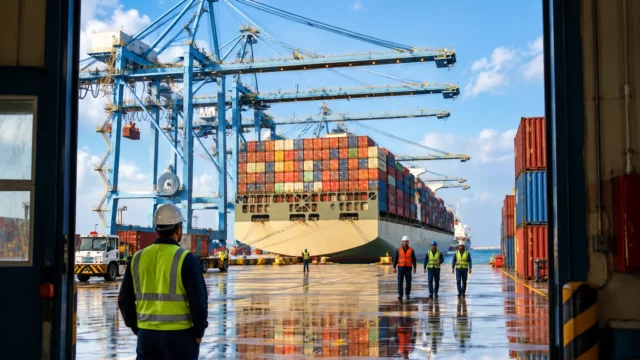
The issue extends beyond the Sino-Egyptian relationship alone. The Suez Canal Economic Zone, or SCZONE, lies at the crossroads of the Mediterranean, the Red Sea and routes to Europe, Asia and Africa. It is one of Egypt’s most strategic economic tools. The Egyptian government sees it as a lever for reindustrialisation, while Beijing is strengthening its presence in an area through which some of the trade flows to Europe pass.
A new phase for the Egyptian-Chinese zone at Suez
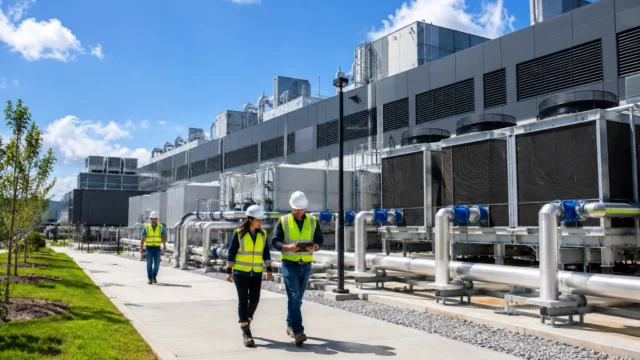
At the heart of the presidential visit, Cairo announced the launch of the third phase of the Egyptian-Chinese industrial zone within the SCZONE. Egyptian authorities note that the site already hosts around 200 companies and nearly $4 billion in investment. The expansion is expected to accommodate new projects in renewable energy, automotive, textiles, chemical fibres, as well as shipbuilding, desalination equipment, semiconductors, data centres and certain critical minerals.
Several signs had pointed in the same direction for months. In April 2026, the Egyptian government was already reviewing major industrial projects in the SCZONE with Chinese groups. In June, the foundation stone was laid for a Chinese tyre factory in the Sokhna integrated zone. In September, a new memorandum of understanding was signed with Linglong for an integrated tyre complex valued at nearly $2 billion and announced as set to create more than 5,000 jobs.
This kind of project is not isolated. The SCZONE has also attracted Chinese investment in solar power, aluminium and chemicals. The Zone Authority is promoting a clear strategy: localise manufacturing, attract suppliers and build complete value chains around ports and logistics platforms. For Egypt, the aim is to replace some imports with local production and improve its position in markets in Europe, the Middle East and Africa.
Highly imbalanced trade, despite rising Egyptian exports
Figures published by CAPMAS, Egypt’s statistics agency, show a relationship that remains highly asymmetric. In the first half of 2026, bilateral trade reached $11.3 billion. Egyptian exports to China surged 199.8% year on year, to $840.8 million. But imports from China climbed to $10.4 billion. Egypt therefore buys far more from Beijing than it sells to it.
A breakdown of trade flows confirms the gulf in scale. Egypt mainly exports fuels, fruit and vegetables, cotton and textile fibres. It mainly imports machinery and electrical equipment, cars, iron and steel. In other words, China sells goods with high industrial value, while Egypt still largely supplies raw materials or agricultural products. This is precisely the structure Cairo is seeking to change.
In this context, projects established at Suez have tangible economic significance. If they produce tyres, electrical components, chemical materials or certain metal inputs locally, they could reduce the import bill and support industrial jobs. But the effect will not be automatic. It will depend on the level of local integration, the use of Egyptian subcontractors, technology transfer and the capacity to genuinely export from Egypt.
The yuan joins Cairo’s financial toolkit
Xi Jinping’s visit also highlighted a financial aspect that has become central: settling trade in local currencies. In June 2026, the People’s Bank of China and the Central Bank of Egypt renewed their currency swap agreement for three years, raising its ceiling from 18 billion to 30 billion yuan. The mechanism is not a free windfall. It allows Egypt to obtain yuan temporarily to facilitate certain trade and financial transactions with China.
The principle is simple. When an Egyptian company pays a Chinese supplier, access to yuan limits the need to go through the dollar immediately. In a country often facing foreign exchange pressures, this kind of tool gives the treasury and the central bank some breathing room. But it does not resolve the underlying imbalance. Since the flows are mainly from China to Egypt, Cairo needs yuan more than Beijing needs Egyptian pounds.
This development is part of a broader trend. The two capitals have reaffirmed their intention to increase the use of national currencies in trade and investment. They have also backed the idea of better access for Egyptian products to the Chinese market. At the same time, Beijing continues to expand the yuan’s international use, particularly in countries of the Global South and along major industrial corridors.
A signal that matters for North Africa and beyond
For Egypt, the stakes are twofold. Domestically, the aim is to support industrial employment, boost exports and preserve foreign currency reserves for other needs, particularly external debt and strategic imports. Regionally, Cairo wants to remain a platform linking Asia, Africa and Europe. The Suez Canal is not merely a transit point. It is a geoeconomic asset.
For Africa, the signal is broader. China remains a major partner for the continent, and Egypt is one of the African countries where this relationship is most visible, spanning industrial zones, energy, transport, finance and digital technology. If the SCZONE succeeds in attracting more local subcontracting and generating regional exports, it could become a model for productive transformation. If it is limited to assembling imported goods, the impact will be more modest.
What happens next will depend above all on implementation. The coming months will show whether the announcements made in Cairo lead to factories, jobs and exports, or to another layer of logistical dependence. In an Egypt still seeking to balance economic sovereignty, the need for capital and foreign exchange constraints, Suez remains the most visible test of this strategy.