
 Algeria
 Egypt
 Libya
 Morocco
 Sudan
 Tunisia
 Benin
 Burkina Faso
 Cabo Verde
 Côte d'Ivoire
 Ghana
 Guinea
 Guinea-Bissau
 Liberia
 Mali
 Mauritania
 Niger
 Senegal
 Sierra Leone
 The Gambia
 Togo
 Cameroon
 Central African Republic
 Chad
 DR Congo
 Equatorial Guinea
 Gabon
 Republic of the Congo
 São Tomé and Príncipe
 Burundi
 Comoros
 Djibouti
 Eritrea
 Ethiopia
 Kenya
 Madagascar
 Malawi
 Mauritius
 Mozambique
 Rwanda
 Seychelles
 Somalia
 South Sudan
 Tanzania
 Uganda
 Angola
 Botswana
 Eswatini
 Lesotho
 Namibia
 South Africa
 Zambia
 Zimbabwe
In Nigeria, speaking Yoruba is once again a public act
In Lagos, language is no longer just a tool of everyday life. It is becoming a source of play, pride and, at times, cultural catch-up. In Nigeria’s largest city, entertainment centred on Yoruba is attracting an audience eager to hear, understand and speak in ways that go beyond the English inherited from colonial rule. This appetite says much about a country where English remains the official language, but more than 500 indigenous languages coexist and continue to shape identities, markets and local affiliations.
The issue goes beyond the success of a single show. In Nigeria, languages touch on education, administration, the media, family transmission and the digital economy. Lagos, the country’s economic centre, is also a place where English, Pidgin and Yoruba constantly intersect. It is in this environment that popular formats can raise the profile of a major language of south-western Nigeria.
A show that turns language into a social experience
The game has a simple rule: anyone who slips into English is penalised. The concept celebrates Yoruba, a language spoken in south-western Nigeria and well beyond the country’s borders, including by communities in Benin and Togo. The show was launched in 2024 and has become part of Nigeria’s digital and cultural landscape as an entertainment format with a strong sense of identity.
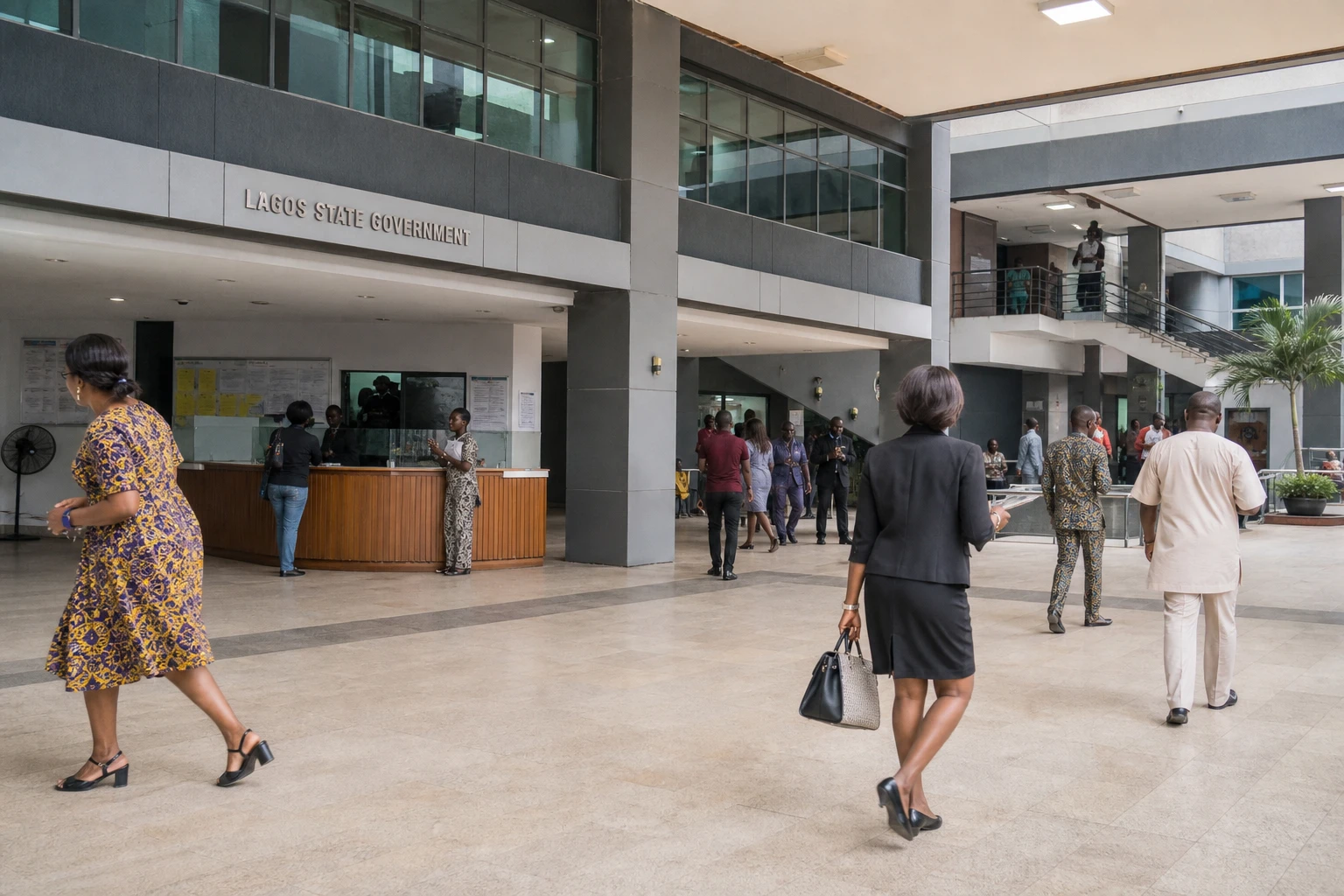
This success is not happening in isolation. In Lagos, local authorities have already taken steps to translate laws into Yoruba and increase the language’s use in public life. The Lagos State Government has presented the translation as a way to help residents understand the rules. This choice shows that the language is not merely a matter of heritage: it is also a means of accessing information and exercising citizenship.
Nigeria’s national framework is also changing. The country has adopted a new language policy, while education authorities are reaffirming the importance of local languages in learning. Implementation remains difficult, however, because the country has hundreds of languages and teaching resources are unevenly distributed. The gap between official policy and social reality therefore remains significant.
The diaspora drives the movement, digital platforms amplify it
The revival is not coming only from Nigeria’s major cities. It is being driven by the diaspora, by families living far apart and by young adults seeking to reconnect with the languages of their parents or grandparents. Online courses, reading clubs, short videos and social media now offer what schools have not always managed to provide: simple, regular and lively contact with a language. In this context, learning Yoruba or Shona is also a way of rebuilding family ties.
This movement is part of a broader continental trend. The African Union now recognises several working languages, including Kiswahili, which it has officially promoted at the level of the organisation. UNESCO, for its part, notes that the 2022–2032 decade is devoted to indigenous languages, in response to the vulnerability of many threatened languages. The message is clear: linguistic diversity is not a remnant of the past, but a political, educational and cultural resource.
The challenge in the digital sphere remains enormous. UNESCO notes that a handful of languages dominate the internet ecosystem, while only a small proportion of African languages have enough of an online presence to support translation tools or artificial intelligence systems. In other words, the struggle for languages is also taking place on servers, keyboards and in data sets. Without content, a language circulates less; without circulation, it carries less weight in education and commerce.
What Yoruba’s revival means for Nigeria and West Africa
For families, the stakes are tangible. Passing on a language makes it possible to speak to elders, understand proverbs, grasp ritualised greetings and preserve shared references. For young urban residents, it also offers a distinctive marker in a space saturated with English. For content creators, it opens up a market: online courses, cultural formats, educational programmes, subscriptions and merchandise. Heritage thus becomes an economic activity without losing its symbolic value.
For the state, the issue is more complex. English remains useful for federal administration, communication between ethnic groups and international business. But excessive dependence on a single language can deepen inequalities between educated urban residents and people with less exposure to the official language. The question, then, is not whether to replace English, but how to better connect the common language with national languages in order to reduce disparities in access to knowledge.
Across West Africa, this movement is a reminder that regional identities are not defined solely by state borders. They also live through languages, cross-border markets, diasporas and digital platforms. Nigeria’s example shows that a linguistic heritage long pushed to the margins can become visible again when it finds an audience, tools and an economy. The next question is one of longevity: can this cultural vitality be translated into public policy, school content and a lasting digital presence?



