Algeria
 Egypt
 Libya
 Morocco
 Sudan
 Tunisia
 Benin
 Burkina Faso
 Cabo Verde
 Ghana
 Guinea
 Guinea-Bissau
 Liberia
 Mali
 Mauritania
 Niger
 Nigeria
 Senegal
 Sierra Leone
 The Gambia
 Togo
 Cameroon
 Central African Republic
 Chad
 DR Congo
 Equatorial Guinea
 Gabon
 Republic of the Congo
 São Tomé and Príncipe
 Burundi
 Comoros
 Djibouti
 Eritrea
 Ethiopia
 Kenya
 Madagascar
 Malawi
 Mauritius
 Mozambique
 Rwanda
 Seychelles
 Somalia
 South Sudan
 Tanzania
 Uganda
 Angola
 Botswana
 Eswatini
 Lesotho
 Namibia
 South Africa
 Zambia
 Zimbabwe
When the land yields less than clandestine networks
In Côte d’Ivoire, gold is no longer visible only in mining statistics. It can also be seen in damaged fields, muddied rivers and villages watching their young people leave for clandestine sites. In Yamoussoukro, the country’s political capital, the state has put illegal gold mining back at the centre of its security and environmental agenda, with a clear promise: to regain control of the ground within six months.
This promise says much about the situation. On the one hand, the government wants to show that it controls its production zones. On the other, regional prefects are being ordered to act quickly, close to the communities they serve. Between these two levels lies a more complex reality: illegal gold mining is not just a policing problem. It is a problem of land, water, food security and the local economy.
A territorial response, from Yamoussoukro
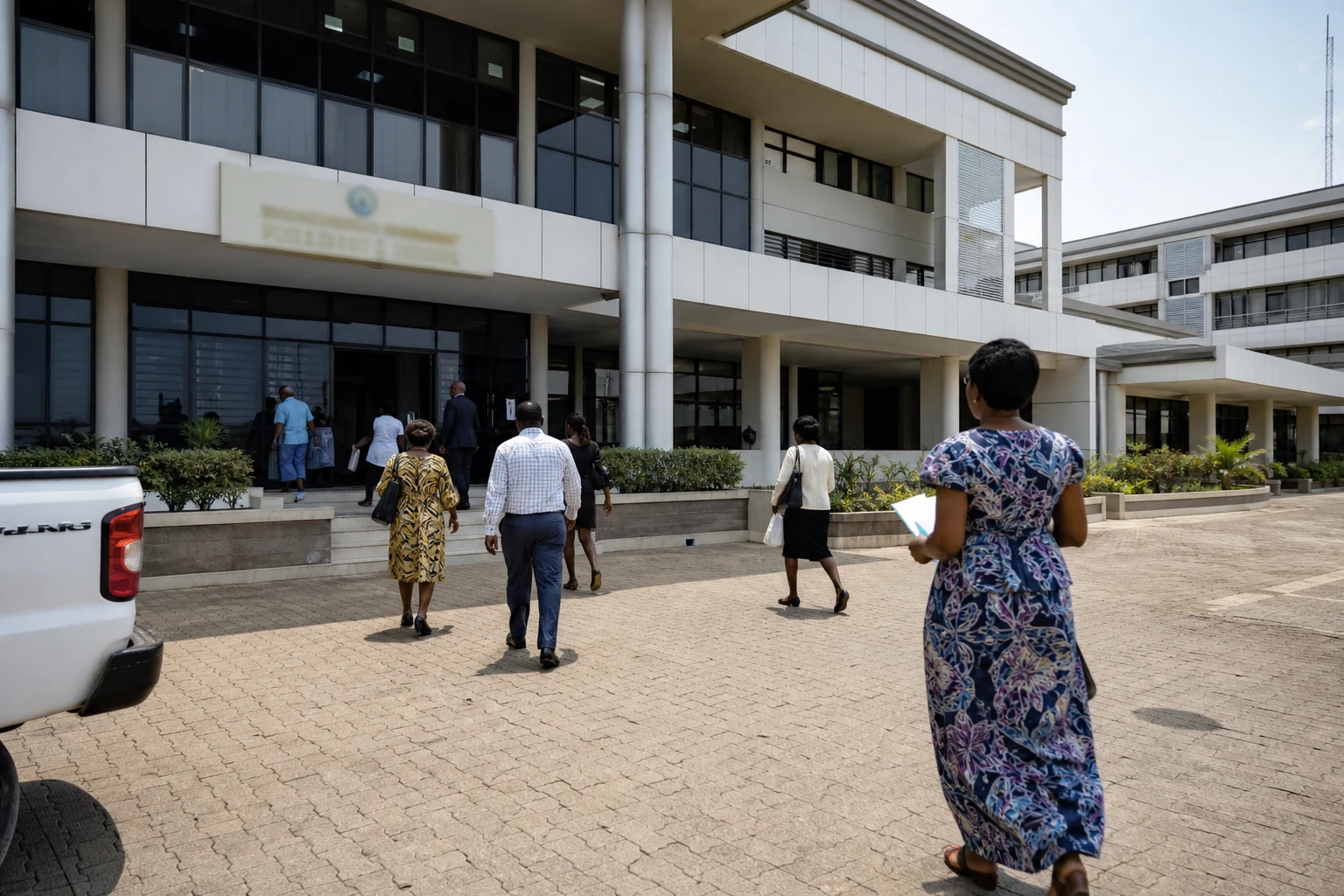
From 3 to 5 September 2026, a national workshop to consult on and harmonise mechanisms for combating illegal gold mining was held in Yamoussoukro, under the chairmanship of Fidèle Sarassoro, minister and executive secretary of the National Security Council. The ministries responsible for the Environment and Ecological Transition, the Interior and Security, and Water and Forests took part. Regional prefects pledged to put an end to the phenomenon in their jurisdictions within six months.
The choice of Yamoussoukro is no coincidence. The city, home to the political institutions, serves here as a command centre for a response that must then be deployed in border regions, forest areas and the most exposed agricultural zones. In Côte d’Ivoire, the fight now relies on intelligence, early warning, coordination between services and the ability to return to sites often reoccupied after clearance operations.
The authorities have also highlighted more practical tools, such as drone surveillance. In Indénié-Djuablin, a prefect explained that the devices fly over the department at least once a week to detect new installations and relay information. This approach reflects a change in method: it is no longer enough to dismantle sites; they must be detected earlier, action must be taken more quickly and their reoccupation prevented.
High figures, but a phenomenon still on the move
The official figures released in early September remain stark. Since July 2021, more than 8,500 sites have been dismantled, 4,474 people have been referred to prosecutors, CFA francs 960 million have been seized and about 136 kilograms of gold recovered. The authorities also say that 65% of those referred were foreign nationals. These figures show the scale of the networks, but also their ability to move from one area to another.
The government says it has also strengthened its operational capacity with the Brigade for the Suppression of Mining Code Offences and the Special Unit for Combating Illegal Gold Mining. On the ground, recent operations in Hambol and the north show that pressure is being maintained. But the persistence of the phenomenon, particularly near the borders, shows that repression alone is not enough to stamp out the activity.
This is where the issue becomes economic and social. Illegal gold mining provides quick income in areas where formal employment is scarce. It attracts young people, sometimes regional migrants, and creates revenue streams that are difficult to break. The state must offer more than a ban in response: enforcement, legal alternatives, land restoration and local integration. Without this, every destroyed site risks being rebuilt elsewhere.
Repairing the soil, keeping communities
Côte d’Ivoire’s strategy is no longer limited to repression. It includes restoring degraded areas, notably through labour-intensive public works (THIMO), to rehabilitate land while providing temporary income for local people. This approach has already been incorporated into mapping and restoration projects led by the Abidjan Legacy Program, supported by ECOWAS.
On 27 February 2026 in Daoukro, the programme launched a project to rehabilitate 4,500 hectares of degraded land by 2030. The aim is clear: restore the soil, rebuild vegetation cover and offer more sustainable economic activities to affected communities. This matters as much as security action, because restored land is also less vulnerable to clandestine operations starting up again.
The environmental risk remains immediate. Clandestine mining degrades soil, pollutes waterways and weakens forests. The Environment Ministry also warns that substances used in illegal artisanal extraction can affect health and food security. In several regions, communities living alongside these sites are paying the direct price of this underground economy.
An Ivorian battle, but a response that goes beyond borders
Côte d’Ivoire no longer treats illegal gold mining as a purely domestic matter. At COP17 of the United Nations Convention to Combat Desertification, it put forward the idea of an African coalition against land degradation and environmental pollution linked to illegal artisanal and small-scale mining. The argument is simple: the movement of people, machinery, money and pollution does not stop at borders.
This view echoes that of the African Union, which for several years has been pushing for better regulation of artisanal and small-scale mining as part of its vision of mining that serves development. The point is not only to protect the environment. It is also to capture more value on the continent, formalise activities that are often informal and reduce the criminal activity surrounding some sites.
For West Africa, the issue is regional. ECOWAS is already involved in rehabilitating degraded land in Côte d’Ivoire, while the Ivorian authorities want to strengthen cooperation with neighbouring countries to combat pollution in shared waterways. What happens next will depend on states’ ability to share intelligence, harmonise penalties and monitor mining hotspots using common tools. This will determine whether the six-month announcement marks a lasting turning point or merely another spell of public pressure.