Algeria
 Egypt
 Libya
 Morocco
 Sudan
 Tunisia
 Benin
 Burkina Faso
 Cabo Verde
 Côte d'Ivoire
 Ghana
 Guinea
 Guinea-Bissau
 Liberia
 Mali
 Mauritania
 Niger
 Nigeria
 Senegal
 Sierra Leone
 The Gambia
 Togo
 Cameroon
 Central African Republic
 Chad
 DR Congo
 Equatorial Guinea
 Gabon
 Republic of the Congo
 São Tomé and Príncipe
 Burundi
 Comoros
 Djibouti
 Eritrea
 Ethiopia
 Kenya
 Madagascar
 Malawi
 Mauritius
 Mozambique
 Rwanda
 Seychelles
 Somalia
 South Sudan
 Uganda
 Angola
 Botswana
 Eswatini
 Lesotho
 Namibia
 South Africa
 Zambia
 Zimbabwe
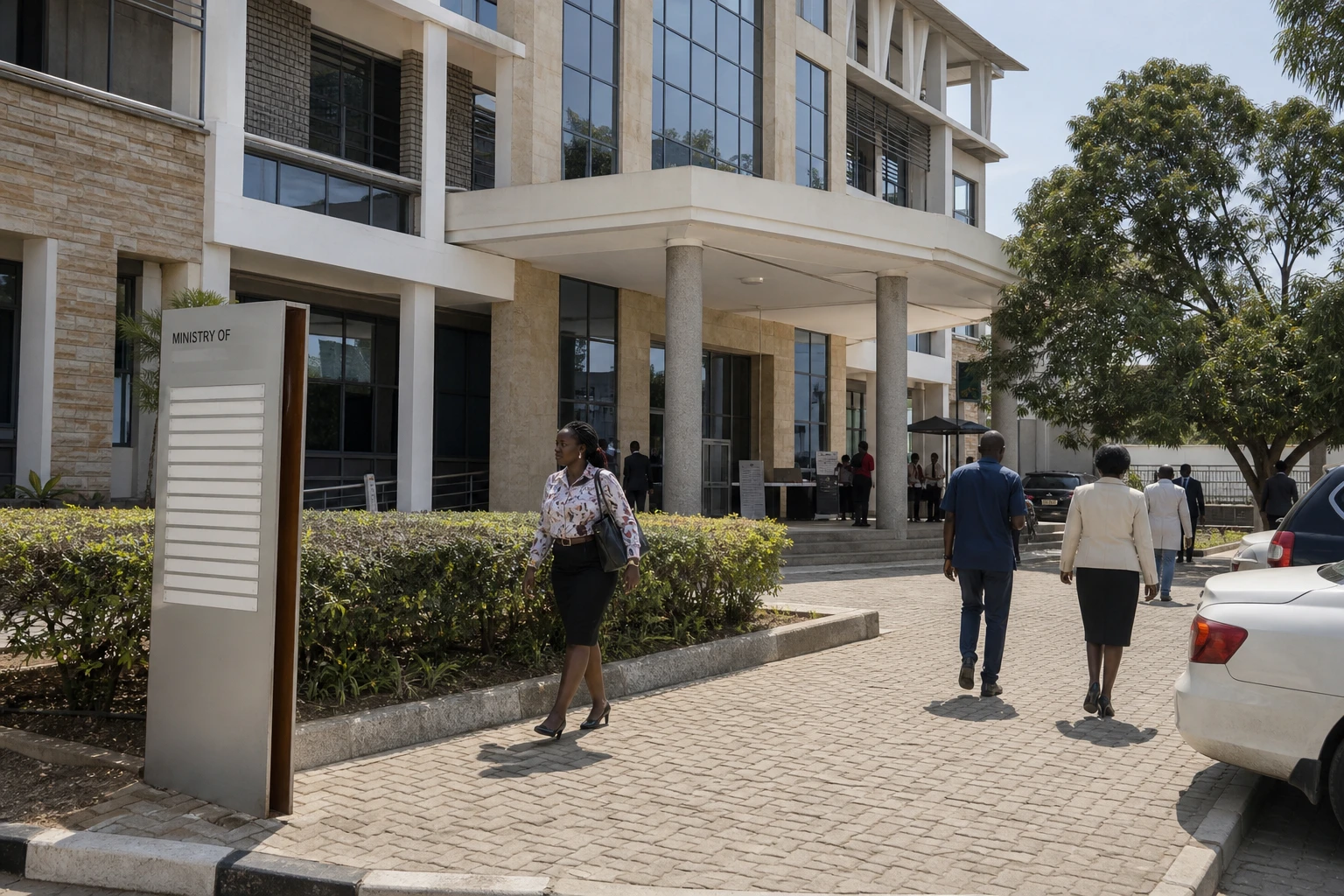
In Dodoma, the question is no longer just about an election. It is about the rules of the game.
In Tanzania, political debate is no longer simply a stand-off between the government and the opposition. It now touches the heart of the national compact: how to govern without fracturing public trust, and how to preserve stability without normalising fear. In Dar es Salaam and Dodoma, the country’s administrative capital, this question has returned with force since the 2025 election period and the tensions it left in its wake.
It was against this backdrop that Joseph Warioba, a former prime minister and former first vice-president of the Republic, chose to speak frankly at a Tanzania Centre for Democracy conference held on 7 and 8 September 2026 in Dar es Salaam. The organisation, which brings together political parties, civil society, diplomats and public officials, has for several years served as a breathing space for democratic debate often constrained elsewhere.
A warning from within the establishment
Warioba is no marginal voice. A former head of government and historic figure in Chama cha Mapinduzi, the ruling party, he belongs to the generation that built the Tanzanian state around a few simple principles: national unity, equality, honesty, patriotism and self-discipline. In his view, these foundations have eroded. And when they weaken, public life hardens, factions close ranks and collective trust diminishes.
His message is aimed first at the way the country is governed. In a country long portrayed as one of East Africa’s centres of stability, the question is no longer simply how to maintain public order. It is about the cost of maintaining it. The authorities have not acknowledged such an assessment, but human rights organisations describe a markedly more repressive climate during and after the 2025 elections. Amnesty International cites the use of lethal force against demonstrators, arbitrary arrests and severe restrictions on freedom of expression and assembly.
The wounds of 2025 still weigh on the political scene
The 29 October 2025 vote remains a turning point. Official figures put the death toll at more than 500, while several human rights organisations have spoken of several thousand victims. This discrepancy matters. It shows how difficult it remains to obtain consolidated figures amid political crises, especially when the authorities do not fully open investigations or publish their findings. Amnesty said that an inquiry commission had not made its findings public and that violence in the post-election period had not been addressed transparently.
For Tanzanians, the consequences are visible on several levels. In cities, the immediate effect is political: caution on the streets, self-censorship and distrust of public meetings. In rural areas, where CCM traditionally retains strong support, the promise of stability remains a powerful argument. But that stability loses its value if it comes with a closing of civic space. In the long term, the informal economy, small businesses, transport and services also bear the brunt when tensions lead to movement restrictions or communications blackouts.
Emerging from the crisis requires trust, not just the machinery of state
The episode involving Vice-President Emmanuel Nchimbi has added another layer of uncertainty. His resignation, announced in August 2026, followed by his removal from the party, has fuelled the perception of a rift at the top of the state. According to several Tanzanian and international media outlets, his support for a new Constitution angered some within the political establishment. In this context, Warioba’s words carry particular weight: they are a reminder that debate on institutions cannot be postponed indefinitely without political cost.
The constitutional question is not a technical detail. In Tanzania, it concerns the balance between the executive, Parliament, political parties and the judiciary, as well as guarantees for citizens. The Centre for Democracy and several legal organisations are calling for a consensus-based process before any major reform. They fear that a revision pushed through too quickly, amid distrust, could reignite rather than resolve tensions. This interpretation matters because it restores the Constitution to the level it deserves: an instrument for political reconciliation, not merely an administrative document.
At the regional level, the stakes extend far beyond Tanzania’s borders. Tanzania is a key member state of the East African Community, a region through which people, goods and political influences move. When a country known for its stability becomes mired in electoral suspicion, it sends a message to the whole region: stability cannot be decreed; it is built through credible institutions, transparent elections and a justice system that is seen to be impartial. It is also a test for the African Union, which is often called on to uphold governance standards without appearing selective.
Ultimately, what Warioba says goes beyond Samia Suluhu Hassan herself. He reminds us that a state is sustained not only by force, but by acceptance of common rules. In Tanzania, the political battle is now about that boundary: how far can authority go without damaging the promise of civil peace that has long underpinned national life?