
 Algeria
 Egypt
 Libya
 Morocco
 Sudan
 Tunisia
 Benin
 Burkina Faso
 Cabo Verde
 Côte d'Ivoire
 Ghana
 Guinea
 Guinea-Bissau
 Liberia
 Mali
 Mauritania
 Niger
 Nigeria
 Sierra Leone
 The Gambia
 Togo
 Cameroon
 Central African Republic
 Chad
 DR Congo
 Equatorial Guinea
 Gabon
 Republic of the Congo
 São Tomé and Príncipe
 Burundi
 Comoros
 Djibouti
 Eritrea
 Ethiopia
 Kenya
 Madagascar
 Malawi
 Mauritius
 Mozambique
 Rwanda
 Seychelles
 Somalia
 South Sudan
 Tanzania
 Uganda
 Angola
 Botswana
 Eswatini
 Lesotho
 Namibia
 South Africa
 Zambia
 Zimbabwe
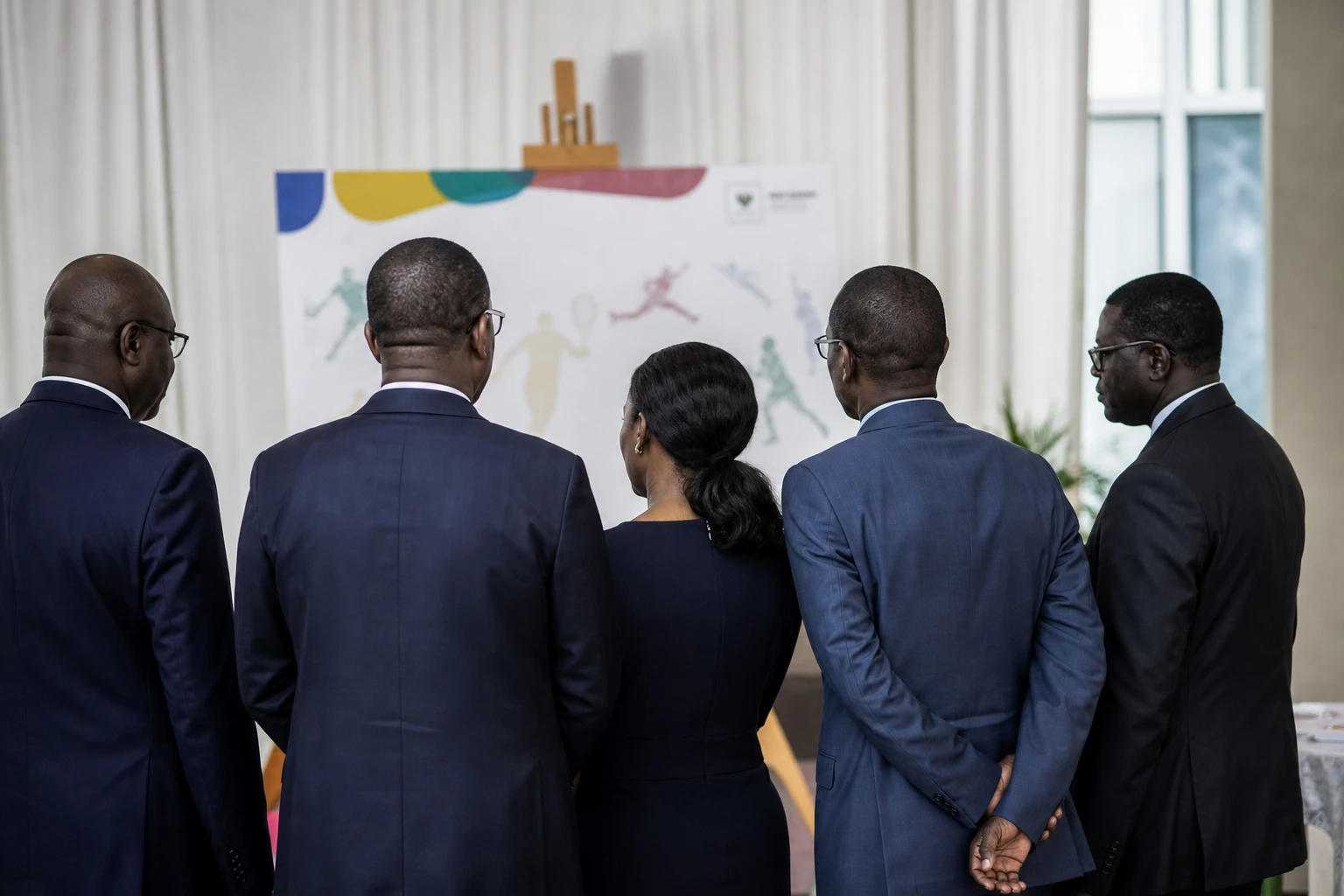
A poster that tells the story of a country, not just a competition
In Dakar, the Youth Olympic Games are about more than tracks, stadiums and medals. The image chosen to accompany them says something else: a Senegal in motion, rooted in everyday life, open to the ocean and already looking towards 2026.
This choice is no accident. The Dakar 2026 Youth Olympic Games, scheduled for 31 October to 13 November 2026, will be the first Olympic event held on the African continent. For Senegal, the challenge therefore goes beyond the logistics of sport. It is also about showing a city, a youth and a culture capable of hosting a global event without dissolving into standardised imagery. The official competition schedule also confirms a spread across Dakar, Diamniadio and Saly, with venues already identified within the Games’ ecosystem. The official competition schedule reflects this organisation across several hubs.
In this context, the official poster serves as a signal. It does not seek to make the country disappear behind the event. On the contrary, it places the country at the centre of the story.
What the poster shows: an urban and popular memory
The image features athletes, the Atlantic, infrastructure and several familiar landmarks of Senegal. The car rapide, pirogues, African Renaissance Monument and urban landscapes form a composition that speaks to Senegalese people as much as to visitors passing through. It depicts a lively city, an active coastline, human movement and a youth not floating in an abstract setting.
The intention is clear: to root sport in real life. The car rapide evokes Dakar’s mobility, daily journeys and neighbourhoods linked by iconic forms of transport. The pirogues recall the historic relationship with the ocean, work and the coastal economy. The African Renaissance Monument adds a broader symbolic dimension, between national aspiration and continental affirmation.
The graphic approach follows the same direction. The poster borrows from the conventions of 20th-century sports and tourism posters, with a texture deliberately less polished than that of a conventional digital illustration. This is no aesthetic afterthought. It is a way of giving the image depth and substance, almost a sense of memory.
The creator of this composition, Abdoulaye “Laye” Samb, is Senegalese, was born in Dakar and is based in Canada. His experience in illustration, advertising and graphic design helps explain the visual’s balance: contemporary enough to serve a global event, rooted enough to avoid an image detached from reality. The poster has also been presented as the first official poster in the history of the Youth Olympic Games, giving it particular significance in the Olympic archive itself. In parallel, the Olympic movement continues to unveil other elements of this identity, such as the mascot Ayo, a young lion presented at the one-year-to-go milestone. The official presentation of the mascot confirmed this growing visual presence.
Why this identity matters to Senegal
For Senegal, the question is not simply whether it can produce a striking poster. It is what national story will be associated with the first Olympic event in Africa. The chosen image answers with care and intelligence: a modern country, but one with roots; a dynamic capital, but one not cut off from the rest of the country; a visible youth, connected to the gestures of everyday life.
It is also a political message in the broad sense. In a country where Dakar dominates media, economic and institutional attention, the Youth Olympic Games offer a chance to project places often marginalised in major international narratives: Diamniadio, Saly, the Corniche, transport routes and the spaces where city and coast meet. Organisers have also announced an Olympic flame set to travel through Senegal’s 14 regions, leaving Athens on 10 September and arriving in Senegal on 11 September, before the national relay begins on 12 September. The flame schedule shows that the event aims to extend beyond the capital and become a territorial project.
This comes as Senegalese authorities seek to make the Youth Olympic Games a collective undertaking. President Bassirou Diomaye Faye recently called for popular mobilisation around Dakar 2026, stressing the importance of involving young people and working-class neighbourhoods more closely in the event. In the same spirit, the “Dundal JOJ” campaign aims to bring institutions, businesses and communities together around the Games’ legacy. This places the event beyond sporting protocol: the Youth Olympic Games are becoming an instrument of cohesion, visibility and urban preparation.
For the population, the most tangible impact will be felt in public spaces. As posters, the flame, ceremonies and venues begin to occupy Dakar and the other hubs, the Games’ identity will cease to be abstract communication. It will become a shared backdrop, discussed, embraced or contested. This is often the point at which a major event gains credibility.
A significance that extends beyond Senegal
Beyond Senegal’s borders, the Dakar 2026 poster speaks to the whole of Africa. It offers a way of representing the continent without reducing it to an outside perspective. Africa appears neither as an exotic backdrop nor as a mere host location. It speaks through its objects, rhythms and urban landmarks.
This approach resonates with the growing role of African institutions and the continent’s capitals in major international events. It shows that a global event can be told through a local perspective without losing its universal clarity. For the African Union and ECOWAS alike, the message is simple: the capacity to host, visual creativity and the organisation of major events are also among the new forms of power.
The most sensitive phase now remains: bringing this identity to life in the streets, on transport, in stadiums, on screens and at ceremonies. The poster sets the direction. The flame, expected in Athens and then Senegal, must now turn this promise into a tangible presence. As October 2026 approaches, it is this continuity between image, territory and population that will show whether Dakar 2026 is merely a sporting event or a moment of shared national storytelling.



