
 Algeria
 Egypt
 Libya
 Morocco
 Sudan
 Tunisia
 Benin
 Burkina Faso
 Cabo Verde
 Côte d'Ivoire
 Ghana
 Guinea
 Guinea-Bissau
 Liberia
 Mauritania
 Niger
 Nigeria
 Senegal
 Sierra Leone
 The Gambia
 Togo
 Cameroon
 Central African Republic
 Chad
 DR Congo
 Equatorial Guinea
 Gabon
 Republic of the Congo
 São Tomé and Príncipe
 Burundi
 Comoros
 Djibouti
 Eritrea
 Ethiopia
 Kenya
 Madagascar
 Malawi
 Mauritius
 Mozambique
 Rwanda
 Seychelles
 Somalia
 South Sudan
 Tanzania
 Uganda
 Angola
 Botswana
 Eswatini
 Lesotho
 Namibia
 South Africa
 Zambia
 Zimbabwe
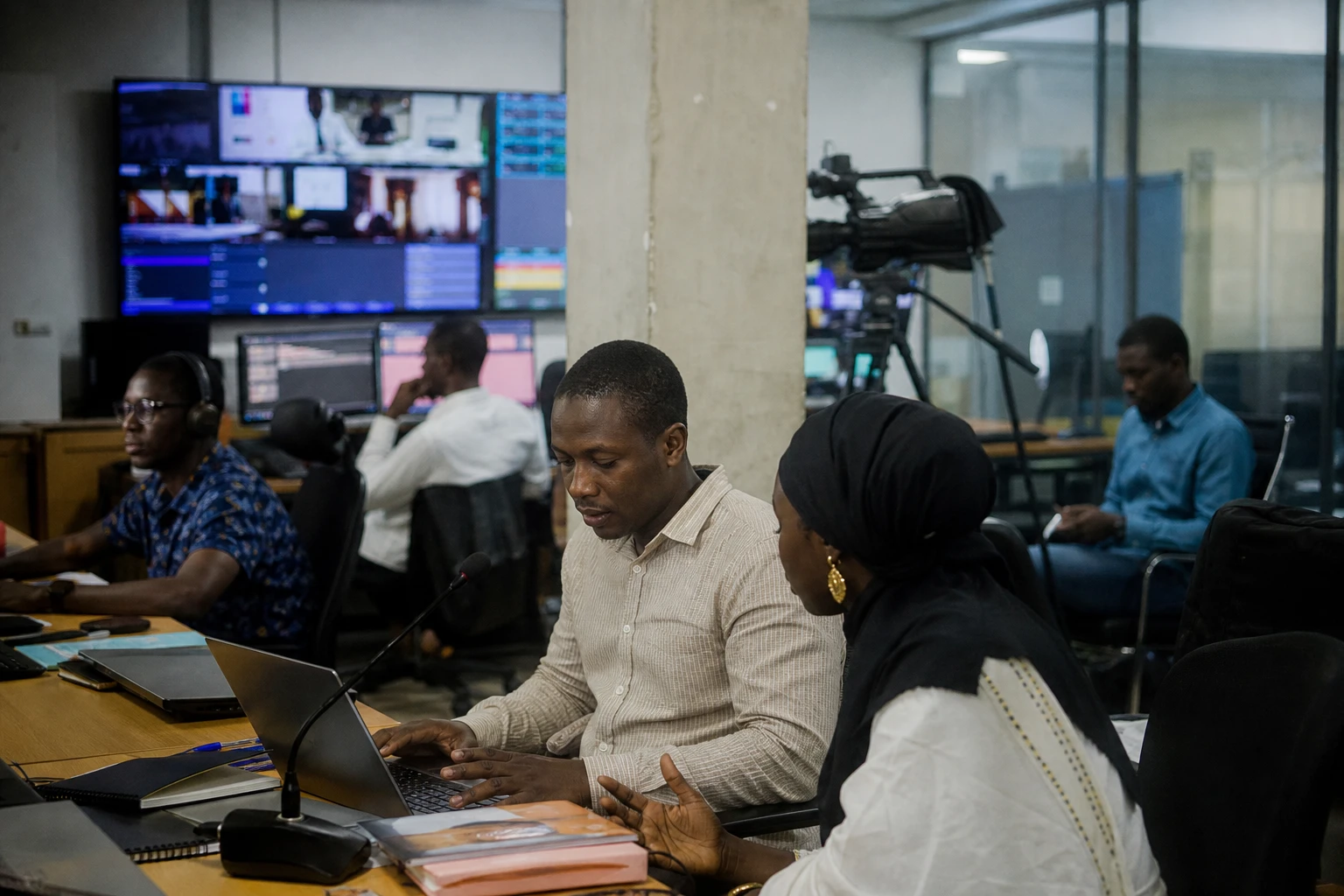
In Bamako, a legal case that goes beyond one journalist
In Mali, a sentence spoken on television can now end up before a specialist judge. The Abdrahamane Keïta case highlights one thing above all: amid a diffuse war and political tension, control of the public narrative has become an issue of power as much as a press case.
The case is being heard in Bamako, within the Judicial Division for the Fight against Cybercrime, a court created by the Malian authorities to deal with digital offences and certain crimes linked to new forms of delinquency. Mali’s Ministry of Justice describes the division as one of the sector’s major reforms.
What prosecutors accuse the director of Le Témoin of
On Monday 7 September 2026, Abdrahamane Keïta, publication director of the newspaper Le Témoin, appeared before the court in Bamako. He has been detained since 9 June 2026. His case has already been adjourned several times, and the verdict is due on 14 September 2026, according to reports published by several Malian and West African media outlets.
Prosecutors have sought a three-year prison sentence, including two years to be served in jail, as well as financial compensation of 1.5 million CFA francs to the state, according to the local press. The charges include “regionalist” offences and remarks deemed damaging to national unity and the state’s standing. The journalist’s lawyers dispute this interpretation. They say he described a security situation without intending to divide the population.
At the heart of the case is Kidal. During a televised debate, Abdrahamane Keïta said the city was now “administered” by JNIM, the Group for the Support of Islam and Muslims, a jihadist coalition linked to al-Qaeda. According to the Associated Press, the comment was the basis for his arrest. The agency also noted that in Mali, public statements suggesting military setbacks often lead to prosecution.
Kidal, a security and political turning point
The case can only be understood in the context of northern Mali. In late April 2026, Kidal fell after a coordinated offensive by JNIM and the Azawad Liberation Front, or FLA, according to several cross-checked international and African sources. Reuters, AFP in a report republished by Anadolu, Human Rights Watch and ACAPS all describe a similar sequence: the withdrawal of Malian forces and the Russian Africa Corps contingent, followed by the armed groups’ takeover of the city.
Kidal is no ordinary city. It is a focal point for tensions between Bamako, Tuareg independence groups, jihadist movements and Russia’s military partners. Since 2023, it had held symbolic importance in the official narrative of territorial recovery. Its loss, or de facto abandonment, therefore has significance beyond the military episode. It undermines the narrative of restoring state authority in the north.
Recent reports by Human Rights Watch and ACAPS say the April 2026 offensive also worsened the humanitarian and security situation in several regions of Mali, affecting schools, displacement and the movement of goods. In Kidal and Ménaka, pressure on civilians remains high. In the centre, the situation remains unstable. The north and centre therefore face the same reality: a state struggling to establish a lasting presence.
The press, caught between the right to inform and the risk of prosecution
In Mali, the Press House is following with concern the situation of several jailed journalists, including Abdrahamane Keïta. The AP reported in June 2026 that his arrest, along with that of another journalist, had prompted criticism from human rights organisations. The country remains subject to recurring debate over the role of the press during a prolonged military transition.
The central issue is not technology. The judicial division handling this case does deal with cybercrime, but the heart of the dispute lies elsewhere: it concerns public speech deemed politically sensitive. In other words, a judicial tool designed to address digital offences can also be used to regulate remarks broadcast on television or shared online. This is the shift that worries media professionals.
For the authorities, the issue is national cohesion at a time when the army is suffering setbacks and the circulation of unofficial information can fuel distrust. For journalists, the issue is simpler: whether it is still possible to describe a security situation without risking pre-trial detention. Between these two logics, the space for public debate is shrinking.
A Malian case, but a regional warning
The case resonates beyond Bamako. In the Sahel, the rise of armed groups, the militarisation of political language and the use of criminal laws to respond to public criticism have become a familiar combination. Mali, a member of ECOWAS despite its political break with several neighbours, remains one of the main testing grounds for this tension between proclaimed sovereignty, internal war and freedom of expression.
The continental significance is clear: when security becomes a justification for prosecuting speech, the boundary between public order and the stifling of debate becomes blurred. The coming days will be decisive. On 14 September 2026, the judge will decide whether Abdrahamane Keïta emerges from this episode acquitted, convicted or facing a further procedural change. In any case, the case will say something about the state of justice and the media landscape in Mali.



