Algeria
 Egypt
 Libya
 Morocco
 Sudan
 Tunisia
 Benin
 Burkina Faso
 Côte d'Ivoire
 Ghana
 Guinea
 Guinea-Bissau
 Liberia
 Mali
 Mauritania
 Niger
 Nigeria
 Senegal
 Sierra Leone
 The Gambia
 Togo
 Cameroon
 Central African Republic
 Chad
 DR Congo
 Equatorial Guinea
 Gabon
 Republic of the Congo
 São Tomé and Príncipe
 Burundi
 Comoros
 Djibouti
 Eritrea
 Ethiopia
 Kenya
 Madagascar
 Malawi
 Mauritius
 Mozambique
 Rwanda
 Seychelles
 Somalia
 South Sudan
 Tanzania
 Uganda
 Angola
 Botswana
 Eswatini
 Lesotho
 Namibia
 South Africa
 Zambia
 Zimbabwe

On Fogo, grief overtakes the shock
On the island of Fogo, in Cabo Verde, Sunday was marked by funerals held amid urgency and grief. For an island community, this kind of tragedy affects more than families: it reaches the school, the neighbourhood, the parish and the entire social fabric.
The previous day’s accident took place on a mountain road between Chã das Caldeiras and Campanas de Cima, in the municipality of São Filipe. A bus carrying pupils returning from an excursion left the road and plunged into a ravine about 30 metres deep, according to initial information corroborated by local and international media.
A local tragedy, but a national matter
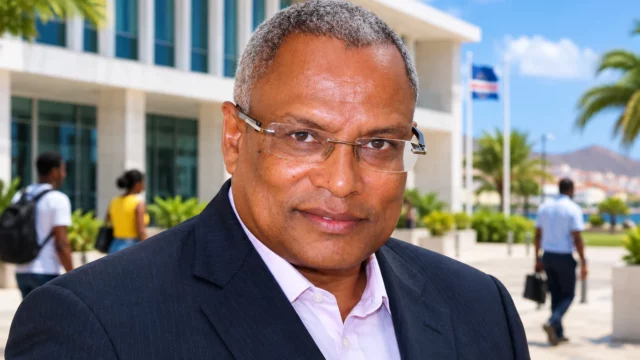
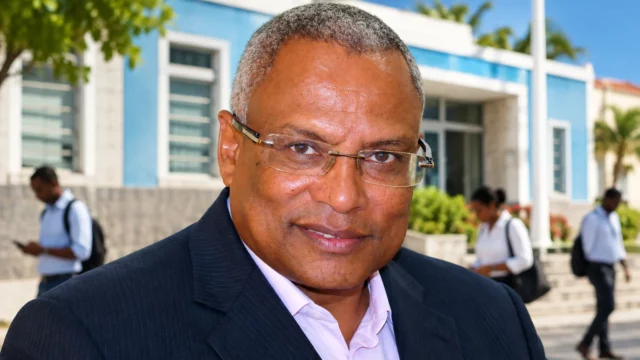
Cabo Verde, a West African archipelago and member of ECOWAS, often lives by the rhythm of its islands, road links and school travel. When a disaster strikes on Fogo, it immediately extends beyond the municipal level. The authorities in São Filipe declared two days of municipal mourning, while President José Maria Neves travelled to the island to attend the ceremonies and express the state’s solidarity.
Sunday’s funerals took place amid deep emotion. Cabo Verdean news agency Inforpress reported that seven bodies were buried early in the morning because of their condition, and that other victims were laid to rest later in the day. The death toll reported on Sunday stood at 25, with 14 people injured.
What we know about the accident
Most of the victims were children, adolescents and young pupils. Several sources agree that the bus was returning from an outing offered by the driver, who also died in the crash. Initial reports indicate that the accident site was difficult to access, complicating rescue efforts and the recovery of the bodies.
The death toll rose over the course of Saturday. Initially reported as 18 by local authorities, it was later put at 24 and then 25 by several media outlets and the national press as rescue operations progressed. This increase illustrates the need for caution in the first hours after a road disaster.
On Sunday, the Cabo Verdean president described the tragedy as “a great loss” and “a very painful moment for the country”, while announcing psychological support for families. The president’s presence in São Filipe also carried clear political weight: it underscored that in a small archipelagic state, the institutional response depends as much on being present as on the administrative chain.
The issues behind the tragedy
Beyond the shock, the accident raises a practical question: how can school journeys and group travel be made safer on rough roads, sometimes far from major routes? On Fogo, as on other volcanic islands, the topography imposes significant constraints on transport. In this kind of environment, vehicle condition, passenger loads, speed and road signs become matters of public safety, not simply traffic management.
For families, the priority is first and foremost human: identifying the bodies, burials, care for survivors and psychological support. For the authorities, it is institutional: investigating the causes, organising rescue efforts and coordinating health services, police, firefighters and the municipality. In São Filipe, local services were mobilised alongside the health delegation, national police and volunteer municipal firefighters.
The whole country is also facing a test of cohesion. Responses from parishes, neighbouring municipalities and abroad show that the Cabo Verdean diaspora is following events closely. This is an important reality in Cabo Verde: the island of Fogo is not symbolically isolated, even when it is geographically so.
A tragedy with implications beyond the archipelago
Across West Africa, this tragedy is a reminder that road risks affect the most vulnerable passengers first: pupils, young people, families and users of public transport. It also puts the issue to ECOWAS and its member states, where it is often secondary on the political agenda despite its heavy impact on everyday safety.
The follow-up to the crisis will be decisive: the full identification of victims, support for the injured, the findings of the investigation and any measures affecting school transport. In an archipelago where every road matters, the response to this disaster will also say something about Cabo Verde’s ability to turn collective grief into a lasting prevention policy.