Algeria
 Egypt
 Libya
 Morocco
 Sudan
 Tunisia
 Benin
 Burkina Faso
 Cabo Verde
 Côte d'Ivoire
 Ghana
 Guinea
 Guinea-Bissau
 Liberia
 Mali
 Mauritania
 Niger
 Nigeria
 Sierra Leone
 The Gambia
 Togo
 Cameroon
 Central African Republic
 Chad
 DR Congo
 Equatorial Guinea
 Gabon
 Republic of the Congo
 São Tomé and Príncipe
 Burundi
 Comoros
 Djibouti
 Eritrea
 Ethiopia
 Kenya
 Madagascar
 Malawi
 Mauritius
 Mozambique
 Rwanda
 Seychelles
 Somalia
 South Sudan
 Tanzania
 Uganda
 Angola
 Botswana
 Eswatini
 Lesotho
 Namibia
 South Africa
 Zambia
 Zimbabwe
Training locally for the jobs of tomorrow
In Dakar, the challenge is not limited to building venues or welcoming delegations. It is also about leaving lasting skills in a sector where experience matters as much as infrastructure. For Senegal, which is preparing to host the Youth Olympic Games from 31 October to 13 November 2026, the human legacy is becoming almost as strategic as the physical one.
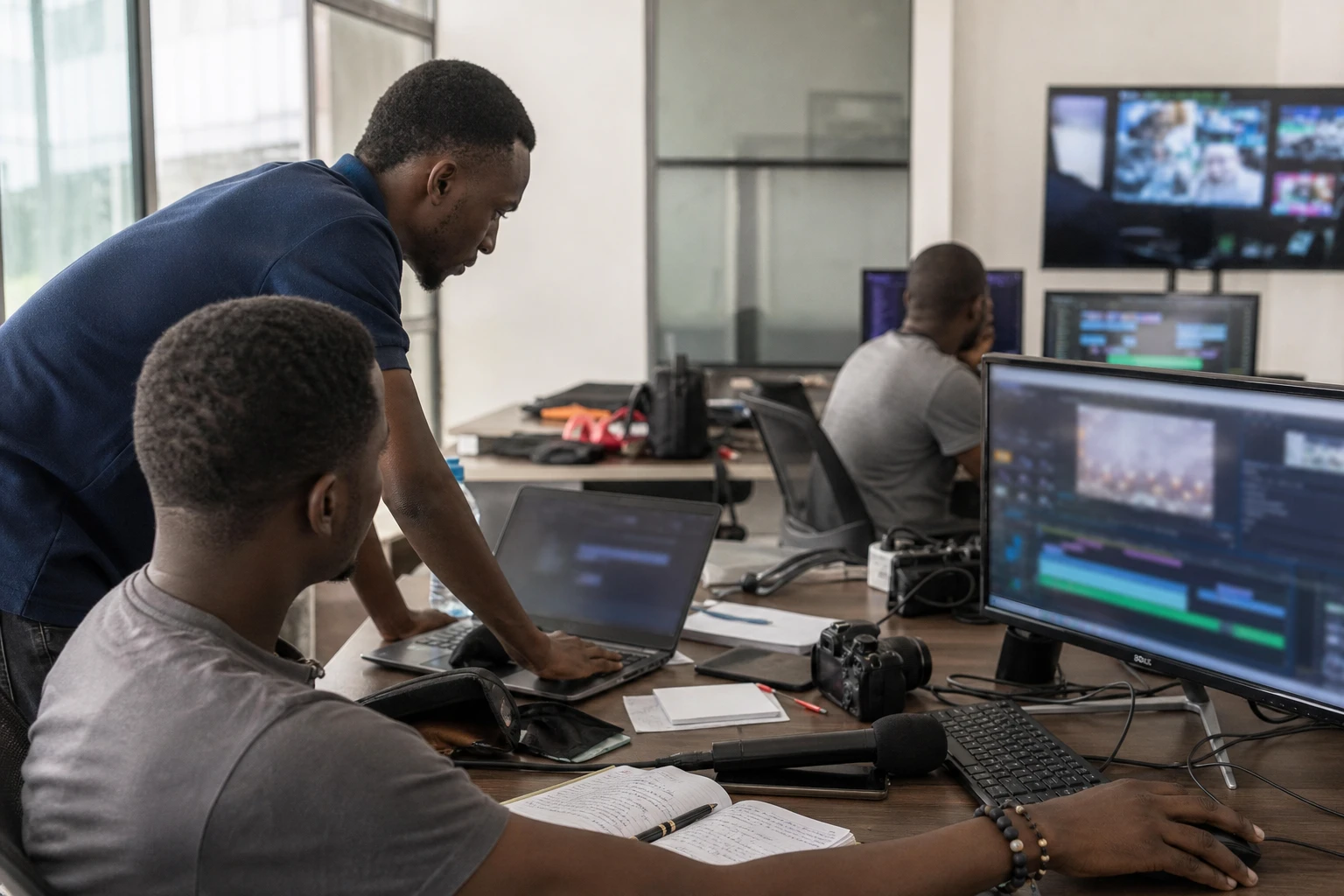
It was in this context that the Dakar 2026 Learning Academy was launched, as a programme set to train more than 400 young professionals across nine cohorts. The first cohort was designed as an entry point to careers in sports event organisation: venue operations, technology, spectator services, accreditation, logistics coordination and arrivals and departures management.
The choice is no mere detail. Dakar 2026 will be the first Olympic event to be held in Africa, and the organising committee intends to turn this historic first into a real-world training ground. The committee has also made knowledge transfer part of its approach: the Olympic Village will be in Diamniadio, and the organisers are bringing together the IOC, Senegalese authorities and local teams to make the event a skills-development laboratory.
Senegal is investing in a professional legacy, not just bricks and mortar
In Senegal, elite sport is still supported by public bodies, the Senegalese National Olympic and Sports Committee, federations and several training centres. But hosting an event such as Dakar 2026 changes the scale of the undertaking. The country is not just preparing for a competition. It is also preparing a skilled workforce able to support other African and international competitions in the future.
The approach combines classroom training with direct immersion. Participants take an initial ten-day module devoted to Games planning and sports and event operations. A second, five-day module focuses on interpersonal skills. The young people then join the organising committee’s teams, where they learn on the ground. This approach embeds skills in practical experience rather than confining them to an academic course.
This approach has already led to some unexpected career paths. The programme has highlighted Sokhna Dia, who moved from a cleaning job at the committee’s offices to a role in preparations for the Games. The IOC presented her story as a symbol of the human legacy sought by Dakar 2026. Ibrahima Wade, the committee’s general coordinator, says he wants to train leaders, not simply fill temporary posts.
Selection remains highly competitive. The first cohort reportedly brought together 41 young people selected from about 1,800 applications. This kind of screening shows that the programme is not a mass recruitment drive, but a practical route to excellence. It prioritises candidates who can learn quickly, work in mixed teams and go on to meet the standards of the sports events sector.
Training that also meets the continent’s needs
Africa’s sporting calendar gives the academy a reach beyond Senegal alone. In 2027, the Africa Cup of Nations will be hosted by Kenya, Tanzania and Uganda. In 2030, the FIFA World Cup will be held in Morocco, Portugal and Spain, with celebratory matches in Argentina, Paraguay and Uruguay. In other words, demand for skills in event organisation, ticketing, security, public services and coordination is set to grow on both sides of the continent.
For Dakar 2026, this longer-term horizon matters as much as the competition itself. The organisers want young people trained in Senegal to be able to move on to other major events, rather than see their experience fade after the closing ceremony. This is crucial: a renovated stadium remains visible, but an acquired skill spreads more widely through public administrations, clubs, federations, event agencies and service companies.
This ambition also reflects a regional environment in which professional mobility is becoming increasingly important. In West Africa, ECOWAS already facilitates the movement of people and talent across the sub-region. Although Dakar 2026 is not a free-movement project, it is creating a pool of young professionals who could work in Senegal and then in other African countries once they have built up their experience.
The programme also sends a useful political signal. It shows that a major event need not rely solely on experts from elsewhere. Senegal is building local capacity, drawing on young people from varied backgrounds, some far removed from traditional sports career paths. This approach broadens recruitment, opens up career paths to less expected candidates and strengthens the project’s social legitimacy.
What Dakar 2026 can leave behind beyond the Games
Across Africa, the stakes go beyond Olympic prestige. Dakar 2026 could serve as a demonstration: organising a global event on the continent means training technicians, coordinators, hospitality specialists, logistics professionals and communicators able to work to international standards. It is also a way to retain skills on the continent, rather than see them move to external markets for lack of local opportunities.
Senegal’s Ministry of Sports and the National Olympic Committee have an interest in building on this momentum, because the need will not end in November 2026. The post-Games legacy will depend on the ability to turn what participants have learnt into jobs, assignments and continuing training pathways. Without that, the momentum could fade. If they succeed, Dakar 2026 could establish a generation of professionals able to move from one organising committee to another, from one country to another, and help raise the standard of Africa’s sports ecosystem.
The coming months will provide an early measure of this promise. By 31 October 2026, Senegal will have to complete the final operational preparations, while the Learning Academy cohorts continue their training and placements. Success will therefore be measured not only by how the events unfold. It will also be judged by how many young Senegalese and Africans emerge from Dakar 2026 with a profession, a network and transferable experience.