Algeria
 Egypt
 Libya
 Morocco
 Sudan
 Tunisia
 Benin
 Burkina Faso
 Cabo Verde
 Côte d'Ivoire
 Ghana
 Guinea
 Guinea-Bissau
 Liberia
 Mali
 Mauritania
 Niger
 Nigeria
 Senegal
 Sierra Leone
 The Gambia
 Togo
 Cameroon
 Central African Republic
 Chad
 DR Congo
 Equatorial Guinea
 Gabon
 Republic of the Congo
 São Tomé and Príncipe
 Burundi
 Comoros
 Djibouti
 Eritrea
 Ethiopia
 Kenya
 Madagascar
 Malawi
 Mauritius
 Mozambique
 Rwanda
 Seychelles
 Somalia
 South Sudan
 Tanzania
 Uganda
 Botswana
 Eswatini
 Lesotho
 Namibia
 South Africa
 Zambia
 Zimbabwe
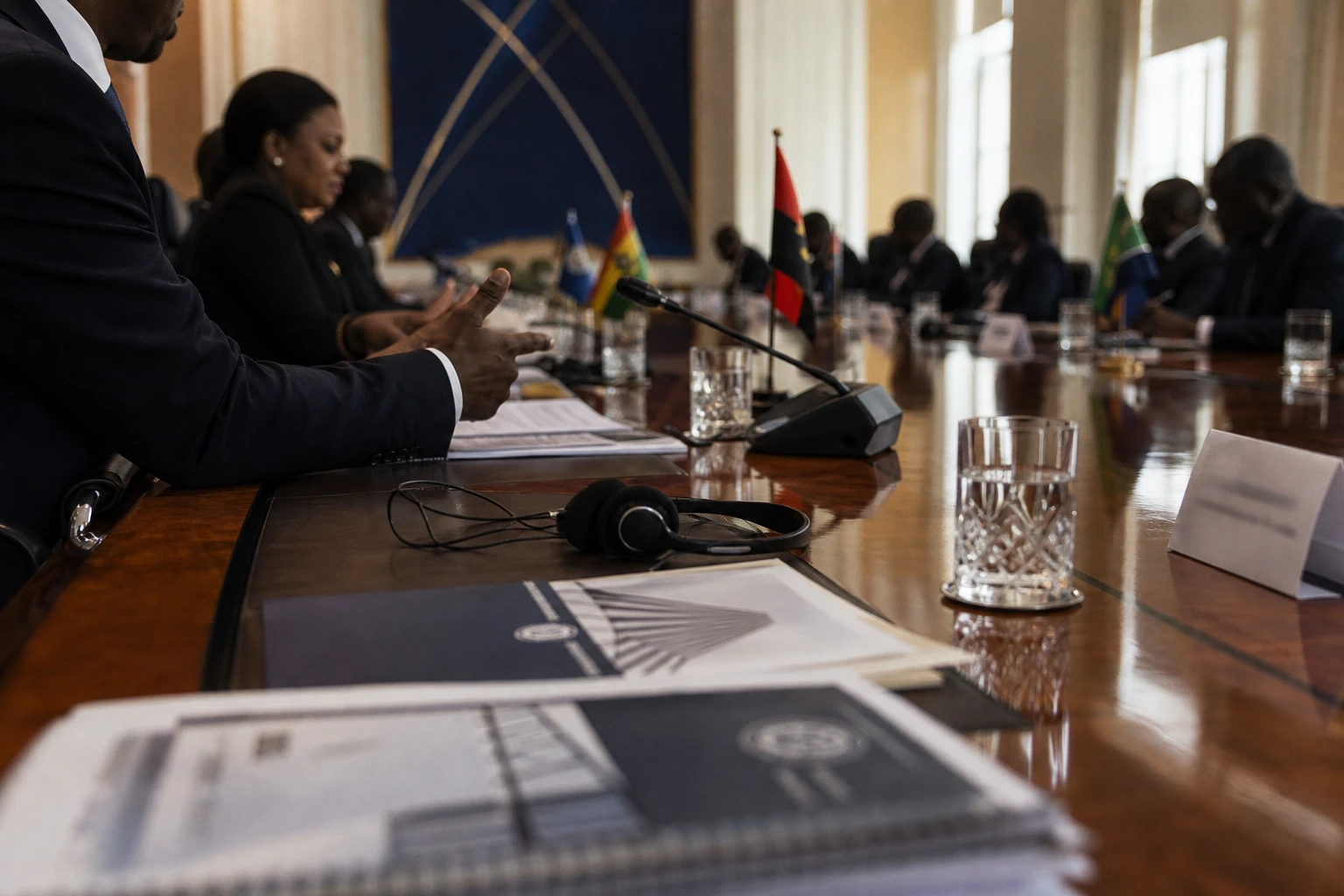
When a seized asset becomes one to be managed
In Luanda, the recovery of assets is no longer solely a matter of criminal justice. It has also become a question of public management. A seized bank stake can remain frozen, or it can be returned to the market. In a country where the fight against corruption still shapes part of the economic debate, this choice says a great deal about the new phase Angola has entered.
The case is part of the Angolan government’s trajectory since 2017, the year João Lourenço came to power. The country then accelerated the recovery of assets linked to cases of corruption, fraud and money laundering. At the same time, Angola strengthened its tools for preventing money laundering and recovering assets, a task the authorities have presented as central to financial stability and the credibility of the economic system.
What the Standard Bank Angola deal entails
The Capital Markets Commission has registered a public offering of 4.76 million ordinary shares in Standard Bank de Angola, representing 34% of the bank’s share capital. The prospectus sets a price range of 41,220 to 50,000 kwanzas per share. If this range is applied, the sale of the stake could value the deal at between $215 million and $261 million.
The timetable has already been set. The offer runs from 11 to 25 September, ahead of the shares’ admission to trading on the Angola Debt and Securities Exchange, BODIVA, announced for 30 September. This is a significant step for Angola’s still-young market, which is increasingly being used as a showcase for privatisations and asset sales.
The deal’s structure gives the historic shareholder a major role. Of the 34% being sold, 24% is reserved for Standard Bank Group, which already owns 51% of the bank. The remaining 10% is open to the public. If the South African group exercises its option in full, its stake will rise to 75%, while the state will retain 15% and the public 10%.
The shares come from a stake previously controlled by Carlos São Vicente, a former executive at AAA Seguros. Sentenced in 2022 to nine years in prison by the Luanda District Court, he was found guilty of embezzlement, tax fraud and money laundering. The authorities had already seized the stake before the final conviction and then placed it under state control.
From seizure to sale: governance is the real issue
The heart of the case is not merely financial. It is institutional. Once an asset has been recovered, what does the Angolan state do with it? Keep it, lease it, reorganise it, or sell it? The government has already discussed setting up a special fund to manage some of these assets. The sale of part of Standard Bank Angola points to another approach: quickly returning value to the market while retaining a strategic stake.
This logic also reflects a practical constraint. Seized assets do not always provide immediate value to the state. A stake in a commercial bank is not a decorative asset. It entails voting rights, supervisory requirements, compliance responsibilities and a close assessment of banking risk. By selling part of it, the state reduces its management burden while monetising a frozen asset. This is an interpretation, but one that follows directly from the structure of the deal.
For Standard Bank Group, the deal also opens a strategic window. In 2024, its chief executive told Reuters that the group wanted to increase its stakes in Angola and Nigeria. As early as 2021, the group’s African leadership had said it was examining every opportunity to expand in the country. The current offer therefore gives concrete form to a long-standing ambition.
For local investors, the stakes are different. The 10% offered to the public will introduce a new bank share on BODIVA, in a market where the supply of equities remains limited. For savers and institutional investors, the question will be one of trust: trust in the transparency of the sale, the strength of the bank and the stability of the rules of the game.
What the case says about Angola and the region
Angola is not conducting this sale in a regional vacuum. The country belongs to SADC, the Southern African Development Community, which has 16 member states. Within this bloc, capital, banks and mining or oil groups are constantly moving across borders. How Luanda handles a recovered asset is therefore also of interest to regional partners.
The continental significance is clear. For several years, African states have been seeking to better trace, confiscate and put back into circulation assets derived from corruption or financial crime. But the most difficult phase often begins after seizure. The value of the asset must be protected, political capture avoided, and a choice made between public ownership and an orderly sale. Angola offers a case study here, one being watched well beyond Luanda.
Figures cited by the authorities show the scale of the issue. In 2023, the presidency cited more than $5 billion recovered, more than $10 billion already announced earlier, and about $21 billion still subject to court decisions. The key point is not only the volume. It is the state’s ability to turn these sums into lasting value rather than allow them to erode through interminable proceedings.
In the medium term, the Standard Bank Angola case will serve as a test. It will show whether Angola can make asset recovery an instrument of economic recovery rather than a mere public relations gesture. It will also show whether BODIVA can handle more deals of this kind without becoming less transparent. In a region where financial markets remain shallow, Angola’s move will be watched as a signal of institutional maturity.