Algeria
 Egypt
 Libya
 Morocco
 Sudan
 Tunisia
 Benin
 Burkina Faso
 Côte d'Ivoire
 Ghana
 Guinea
 Guinea-Bissau
 Liberia
 Mali
 Mauritania
 Niger
 Nigeria
 Senegal
 Sierra Leone
 The Gambia
 Togo
 Cameroon
 Central African Republic
 Chad
 DR Congo
 Equatorial Guinea
 Gabon
 Republic of the Congo
 São Tomé and Príncipe
 Burundi
 Comoros
 Djibouti
 Eritrea
 Ethiopia
 Kenya
 Madagascar
 Malawi
 Mauritius
 Mozambique
 Rwanda
 Seychelles
 Somalia
 South Sudan
 Tanzania
 Uganda
 Angola
 Botswana
 Eswatini
 Lesotho
 Namibia
 South Africa
 Zambia
 Zimbabwe
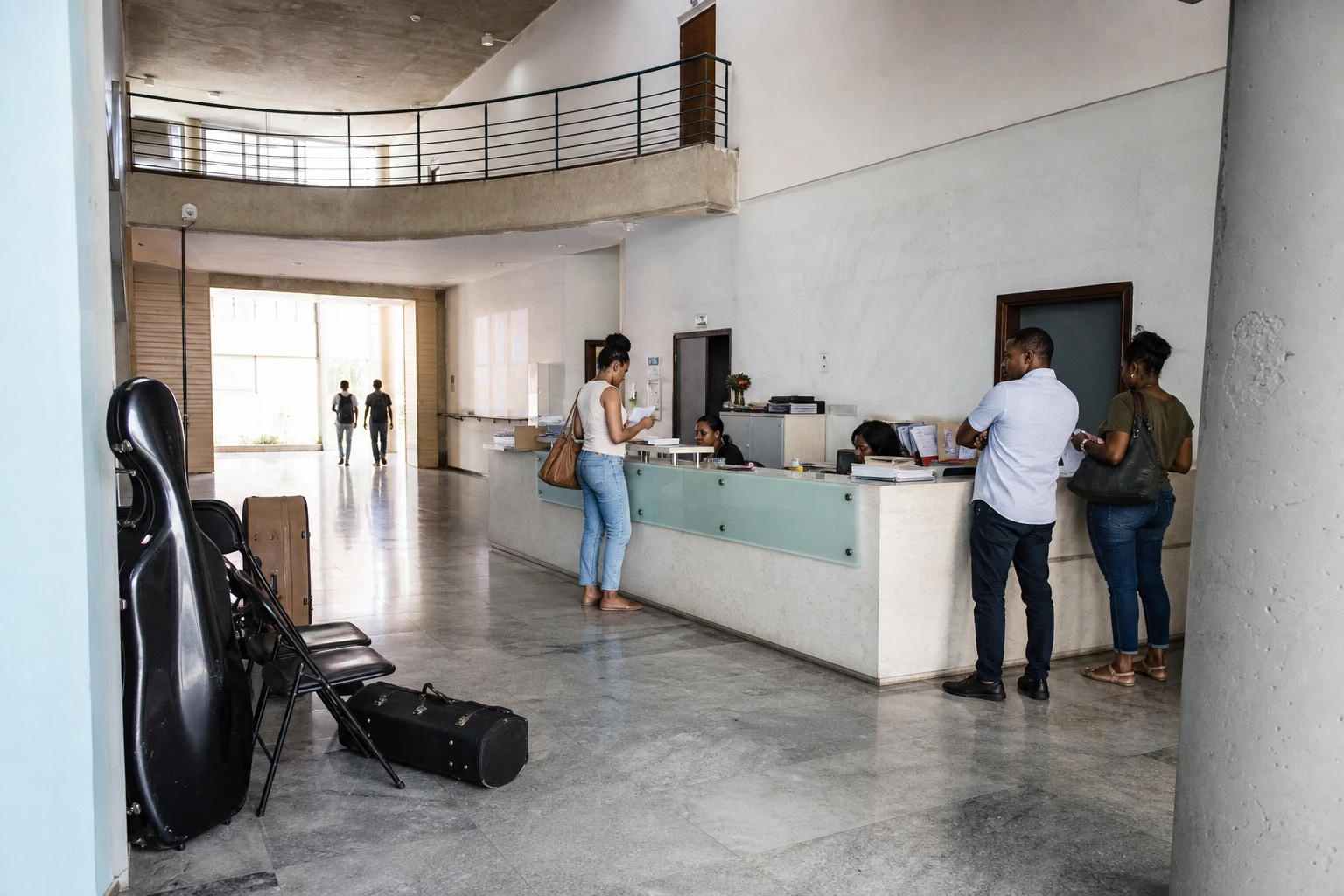
In Praia, rumba does more than cross the Atlantic
In Praia, music does not take the stage as a mere festive interlude. It becomes a space for memory, movement and African dialogue. It was there that the Kriol Jazz Festival welcomed, in April 2026, a Congolese voice carrying the history of rumba, the musical language recognised by UNESCO as intangible cultural heritage in both Congos.
Cabo Verde has made Praia a meeting point for the islands, the continent and the diaspora. The Kriol Jazz Festival, organised with the support of Cabo Verde’s Ministry of Culture and Creative Industries, is part of this cultural strategy. The 2026 edition took place from 9 to 11 April in Praia, alongside the Atlantic Music Expo, which occupies the same part of the music calendar.
Wuta Mayi, a living memory of Kinshasa
At the centre of this scene, Gaspard Wuta Mayi, known as Wuta Mayi, reminds us that rumba is more than a genre. It is a school of life. Born in Kinshasa, he built his reputation in Congolese rumba and soukous, after stints with major Congolese music ensembles. Specialist sources rank him among the figures of the generation that brought the Kinshasa scene to prominence far beyond the borders of the DRC.
The musician was also a member of Les Quatre Étoiles, a group formed in Paris in the early 1980s around several leading names in Congolese music, including Nyboma, Syran Mbenza, Bopol Mansiamina and Wuta Mayi. This trajectory says much about the movement of African musicians between Kinshasa, Paris and international stages. It also speaks to the strength of a creative tradition that was built for a long time far from the institutional spotlight, but never far from its audience.
In Praia, Wuta Mayi brought a simple idea back to the fore: music is passed on through great voices, but also through fidelity to a collective memory. His connection to Congolese rumba is part of a broader heritage, born of exchanges between the two banks of the Congo River and recognised by UNESCO in 2021. That recognition brought new visibility to an art long sustained by cities, popular dance halls and neighbourhood orchestras.
What this festival says about Cabo Verde and Africa’s music scene
The Kriol Jazz Festival is not just another exotic backdrop. It shows how Cabo Verde uses culture as a means of projecting its influence, in a position at the interface of West Africa, Europe and the Atlantic Americas. The festival embraces a broad Creole identity, shaped by African, Caribbean and diasporic influences, and has gained visibility with each edition.
This positioning also matters for the cultural economy. In Praia, the festival draws artists, technicians, producers and diverse audiences, while the Atlantic Music Expo serves as a professional marketplace. For a small island state such as Cabo Verde, this link between performance, industry and international circulation carries more weight than a single concert. It supports hotels, services, the promotion of local artists and the image of a creative capital.
The Wuta Mayi episode is a reminder, in turn, that great African musical traditions grow stronger when they meet on equal terms. Congolese rumba, a heritage shared by the Democratic Republic of the Congo and the Republic of the Congo, is in dialogue here with Cabo Verdean Creole culture. This connection does not erase identities. It broadens them. It shows that an African stage can welcome its legends without freezing them in the past.
A regional reach that goes beyond a single concert
For West Africa, the significance goes beyond music. Cabo Verde, a member of ECOWAS, illustrates another way of making its presence felt in the region: through cultural diplomacy, artistic exchanges and the organisation of events with strong symbolic value. At a time when many states are seeking to diversify their sources of influence, Praia is a reminder that culture can also be infrastructure.
For Congolese people, the resonance is just as clear. Rumba is not a heritage relic. It remains a living language, carried by artists who continue to tour, record and pass it on. Wuta Mayi’s presence in Cabo Verde extends this momentum and confirms that the musical traditions of the Congo Basin still circulate across the continent with considerable appeal.
What happens next will depend on the long term: the programme for future editions, the movement of artists between Praia, Kinshasa, Brazzaville and diaspora stages, and the ability of cultural institutions to support these bridges. On a pan-African scale, the message is clear: when a Cabo Verdean festival welcomes a Congolese legend, it is not just putting on a concert. It is staging a shared African space, built on memory, creativity and mobility.