Algeria
 Egypt
 Libya
 Morocco
 Sudan
 Tunisia
 Benin
 Burkina Faso
 Cabo Verde
 Côte d'Ivoire
 Ghana
 Guinea
 Guinea-Bissau
 Liberia
 Mali
 Mauritania
 Niger
 Nigeria
 Senegal
 Sierra Leone
 The Gambia
 Togo
 Cameroon
 Central African Republic
 Chad
 DR Congo
 Equatorial Guinea
 Gabon
 Republic of the Congo
 São Tomé and Príncipe
 Burundi
 Comoros
 Djibouti
 Eritrea
 Ethiopia
 Kenya
 Malawi
 Mauritius
 Mozambique
 Rwanda
 Seychelles
 Somalia
 South Sudan
 Tanzania
 Uganda
 Angola
 Botswana
 Eswatini
 Lesotho
 Namibia
 South Africa
 Zambia
 Zimbabwe
In Madagascar, dialogue moves forward, but the battle over its methods has already begun
In Antananarivo, the real challenge is not simply to launch a national dialogue. It is to determine who sets the rules, who arbitrates disagreements and how much weight Malagasy people’s views will carry in the political timetable ahead. In a country where institutional renewal remains tied to ending the crisis and restoring full constitutional order, the make-up of a technical committee is never merely an administrative detail. It says a great deal about the balance of forces.
Madagascar is a member of the Southern African Development Community, SADC, which has 16 member states. The regional organisation has been closely monitoring political developments in Madagascar during the ongoing transition, and recently welcomed efforts to move towards inclusive governance and a return to constitutional normality. In other words, what is at stake in Antananarivo goes beyond the island’s borders: the process’s regional credibility is also on the line.
A 35-member committee to oversee a sensitive process
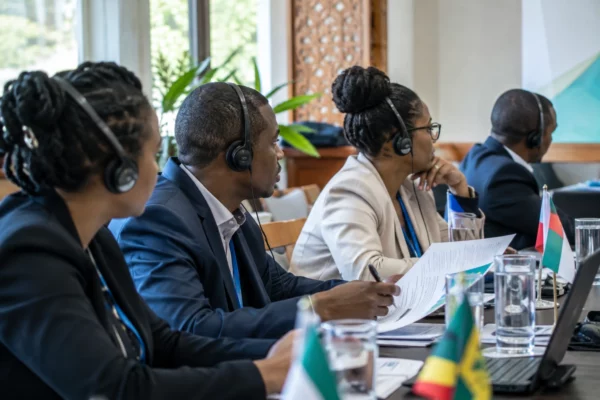
On 3 September 2026, Prime Minister Mamitiana Rajaonarison signed the order formally appointing the 35 members of the technical committee tasked with supporting the national dialogue. The committee was established by decree No. 2026-1543 of 17 June 2026. It has a dual mandate: to monitor the process and resolve any deadlock.
The committee’s make-up has drawn attention. It includes representatives of the Presidency of the Refoundation, the ministries of the Interior, Finance and Refoundation, as well as delegates of young people, the Raiamandreny, religious denominations and civil society, divided by region. Those named include Océane Ranjeva, representing youth movements in Antananarivo, and a figure from Transparency International Madagascar among the two people chosen directly by the head of government.
The sensitive issue is the role of the FFKM, the Council of Christian Churches in Madagascar, which has been called on to lead the dialogue process. The FFKM has only one full member on the technical committee, even though the body is supposed to support its work on the ground. This arrangement could be seen as an effort to maintain institutional balance. It could also be perceived as a way for the executive to retain the final say.
A lengthy timetable, grassroots consultations and a highly political final arbitration
The Malagasy government presents the dialogue as preparation for broader reforms: revising electoral laws, reforming the electoral process, strengthening the Independent National Electoral Commission, followed by a constitutional referendum and presidential elections. These plans are set out in the government’s general policy, presented by the Prime Minister’s Office. The document also emphasises fighting corruption, effective decentralisation and restoring trust in the state.
The timetable published by the FFKM envisages substantive discussions starting in August 2026 and continuing until March 2027. The first consultations are due to begin on 14 September in the fokontany, the country’s smallest administrative units. At this level, debate moves out of Antananarivo’s offices and reaches neighbourhoods, villages and communes directly. This is often where genuine participation, social expectations and the authorities’ ability to relay local concerns are put to the test.
The decision-making mechanism set out in the text puts consensus at its centre. If that fails, an absolute majority prevails. If the vote is tied, the Prime Minister decides. This detail is crucial. It shows that the committee is not merely an administrative body. It could become a forum for political arbitration. In a transitional context, this provision strengthens the executive’s ability to steer the process at a decisive moment.
What this means for institutions, society and forthcoming elections
For institutions, credibility is at stake. A broad committee may reassure people that the process is open. But the distribution of seats and the role of final arbiter affect perceptions of neutrality. In a country whose transition is being watched by SADC, form matters almost as much as substance. The region has already reiterated its support for civic participation, public accountability and a return to constitutional normality in Madagascar.
For Malagasy people, the stakes are more tangible. Young people want to be heard on employment, education and access to public services. Local authorities are looking for signs of progress on decentralisation. Religious and traditional actors are seeking to preserve their role as mediators. Civil society, meanwhile, wants to ensure that a national dialogue does not become a stage for endorsing decisions already made. This is where the presence of figures with a background in public integrity or promoting transparency becomes politically useful.
The Malagasy case also resonates across the continent. In several African countries, transitional periods face the same challenge: organising a national discussion without allowing the electoral agenda to be swallowed up by excessively unbalanced power dynamics. In Madagascar, the next stages to watch are now clear: the September consultations in the fokontany, the consolidation of regional summaries, and the committee’s ability to produce an acceptable text before the constitutional phase and announced elections. If the process holds, it could help bring about a more structured end to the crisis. If it closes too quickly, it risks adding to distrust in a transition that is already the focus of great expectations.