Algeria
 Egypt
 Libya
 Morocco
 Sudan
 Tunisia
 Benin
 Burkina Faso
 Cabo Verde
 Côte d'Ivoire
 Ghana
 Guinea
 Guinea-Bissau
 Liberia
 Mali
 Mauritania
 Niger
 Nigeria
 Senegal
 Sierra Leone
 The Gambia
 Togo
 Cameroon
 Central African Republic
 Chad
 DR Congo
 Equatorial Guinea
 Gabon
 Republic of the Congo
 São Tomé and Príncipe
 Burundi
 Comoros
 Djibouti
 Eritrea
 Ethiopia
 Kenya
 Madagascar
 Malawi
 Mauritius
 Mozambique
 Rwanda
 Seychelles
 Somalia
 South Sudan
 Tanzania
 Uganda
 Angola
 Botswana
 Eswatini
 Lesotho
 Namibia
 Zambia
 Zimbabwe
Johannesburg’s underground tells another story
Johannesburg, the city built on gold, is discovering that its mining past continues to weigh on the present. Beneath some streets, the ground is giving way and the road surface is cracking, while entire neighbourhoods live with the fear of a sudden collapse. In South Africa’s largest city, the danger comes not only from the surface: it rises from old shafts, abandoned for decades but still accessible to illegal miners.
The problem goes far beyond simple urban decay. In an economic hub such as Johannesburg, every closed road, weakened water network and sewage failure slows travel, drives up repair costs and undermines both formal and informal activity. The country’s largest city by economic weight is thus having to manage an industrial legacy that has become a public safety risk.
A mining legacy turned urban threat
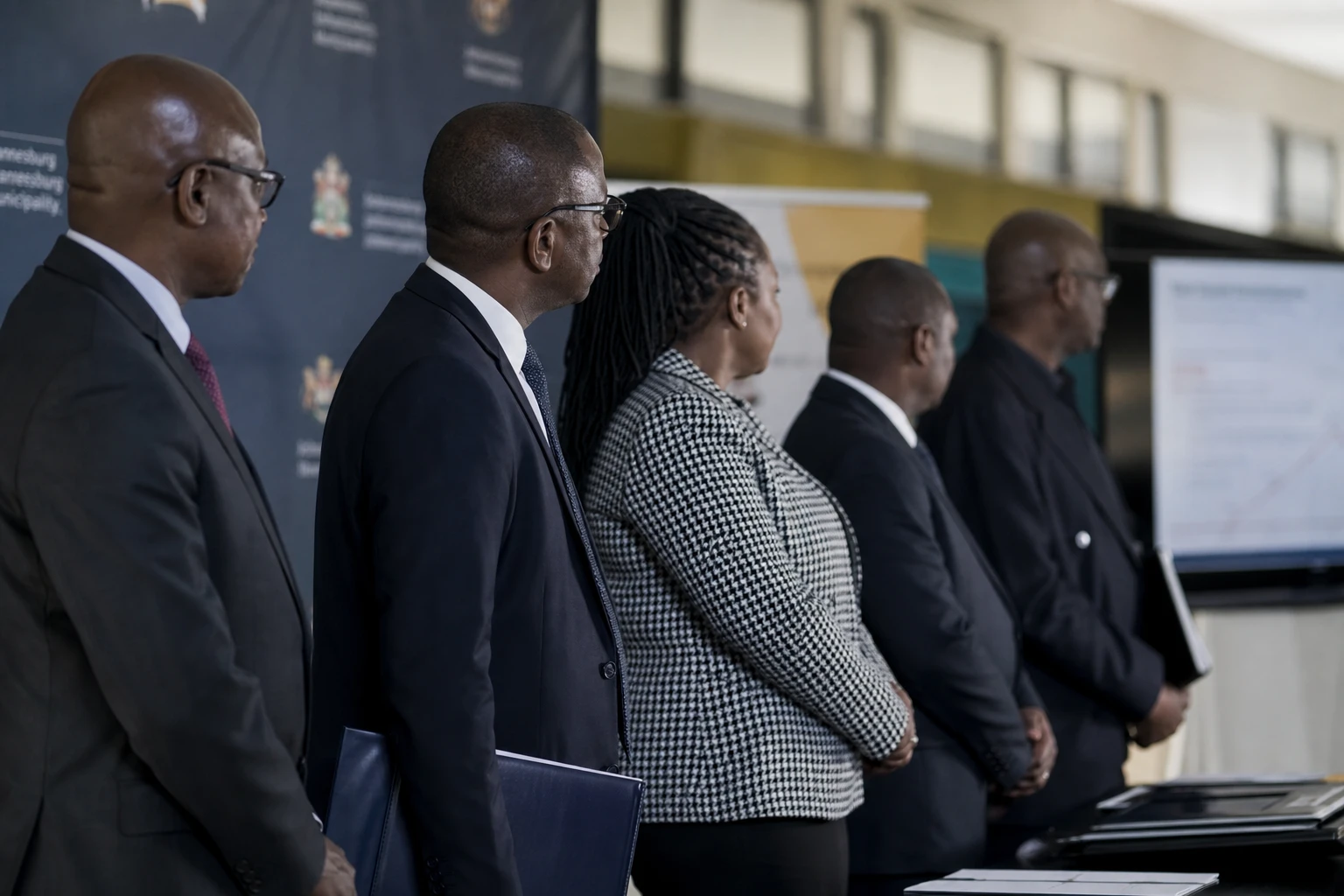
On 19 May 2026, the Johannesburg Roads Agency announced an urgent visit to areas affected by sinkholes linked to illegal mining, particularly in regions C and F of the city. The agency said it had already carried out geotechnical studies and ground-penetrating radar surveys to assess the extent of the underground cavities. Initial findings point to complex damage, with restoration costs expected to run into millions of rand.
A few days later, the municipality said the illegal activity had already caused road collapses, damaged sewage networks, business closures and cavities reaching depths of up to 22 metres in some areas. The sites inspected included Roodepoort, Witpoortjie, Booysens, Turffontein and Selby. The city also stressed that some of these operations were organised and armed, going beyond simple artisanal theft.
The phenomenon is not new. Johannesburg grew out of the late-19th-century gold rush, and hundreds of disused shafts remain beneath the city. “Zama zamas”, the common South African term for illegal miners, descend into these old workings or open new ones, often on the outskirts of residential areas. In several parts of the city, illegal mining takes place close to roads, workshops, businesses and residential neighbourhoods.
What the city loses, what the networks gain
For residents, the cost is immediate. A closed road makes journeys longer. A broken water pipe penalises households already exposed to repeated outages. A weakened sewer increases health risks. And when municipal interventions become too dangerous because of gunfire or the presence of armed groups, repairs are delayed. The City of Johannesburg acknowledges that municipal entities cannot tackle the problem alone.
The financial stakes are also considerable. The city’s 2026/27 budget already includes allocations for rehabilitating sinkholes linked to illegal mining and protecting infrastructure. At the same time, the Johannesburg Roads Agency says a significant proportion of the road network remains in very poor condition, making it even harder to distinguish normal deterioration and long-standing underinvestment from damage caused by illegal excavations. The problem is therefore cumulative: the longer repairs are delayed, the higher the cost of restoration.
The beneficiaries are not the most visible workers. Local authorities and several field investigations instead describe criminal networks that control access to the workings, organise the movement of people and goods, and capture most of the profits. In this arrangement, frontline miners take the physical risks while others collect the proceeds. This is also why the municipality has called for a co-ordinated response involving the metropolitan police, the South African Police Service, the provincial government and, as a last resort, the army.
A warning for Southern Africa
This crisis says something broader about South Africa. In an economy where former mining areas overlap with urban neighbourhoods, the issue is not only one of security. It also concerns land management, the rehabilitation of mining sites, infrastructure monitoring and the state’s ability to control areas already marked by decades of partial deindustrialisation. Johannesburg remains the country’s financial centre, but its underground workings are a reminder that the city continues to pay the price of its extractive history.
Across Southern Africa, the issue extends beyond Johannesburg. The economies of SADC, the Southern African Development Community, face similar challenges: abandoned mining sites, cross-border movement of precarious workers, mobile criminal networks and pressure on local authorities. In several countries in the region, informal extraction supports both subsistence incomes and more organised illegal activity. The South African case shows what happens when these dynamics meet a large, densely populated city, ageing infrastructure and pockets of weak governance.
For Pretoria, the challenge is now clear: secure high-risk areas, prevent further ground subsidence and treat illegal mining as an infrastructure issue as well as a criminal one. The response will be judged on that front, not by tough rhetoric alone. The next steps will be measured by the city’s ability to stabilise the most exposed roads, repair damaged networks and stop Johannesburg’s underground from continuing to dictate what happens above ground.