Algeria
 Egypt
 Libya
 Morocco
 Sudan
 Tunisia
 Benin
 Burkina Faso
 Cabo Verde
 Côte d'Ivoire
 Ghana
 Guinea
 Guinea-Bissau
 Liberia
 Mali
 Mauritania
 Niger
 Nigeria
 Senegal
 Sierra Leone
 The Gambia
 Togo
 Cameroon
 Central African Republic
 Chad
 DR Congo
 Equatorial Guinea
 Gabon
 Republic of the Congo
 São Tomé and Príncipe
 Burundi
 Comoros
 Djibouti
 Eritrea
 Ethiopia
 Kenya
 Madagascar
 Malawi
 Mauritius
 Mozambique
 Rwanda
 Seychelles
 Somalia
 South Sudan
 Tanzania
 Uganda
 Angola
 Botswana
 Eswatini
 Lesotho
 Namibia
 South Africa
 Zambia
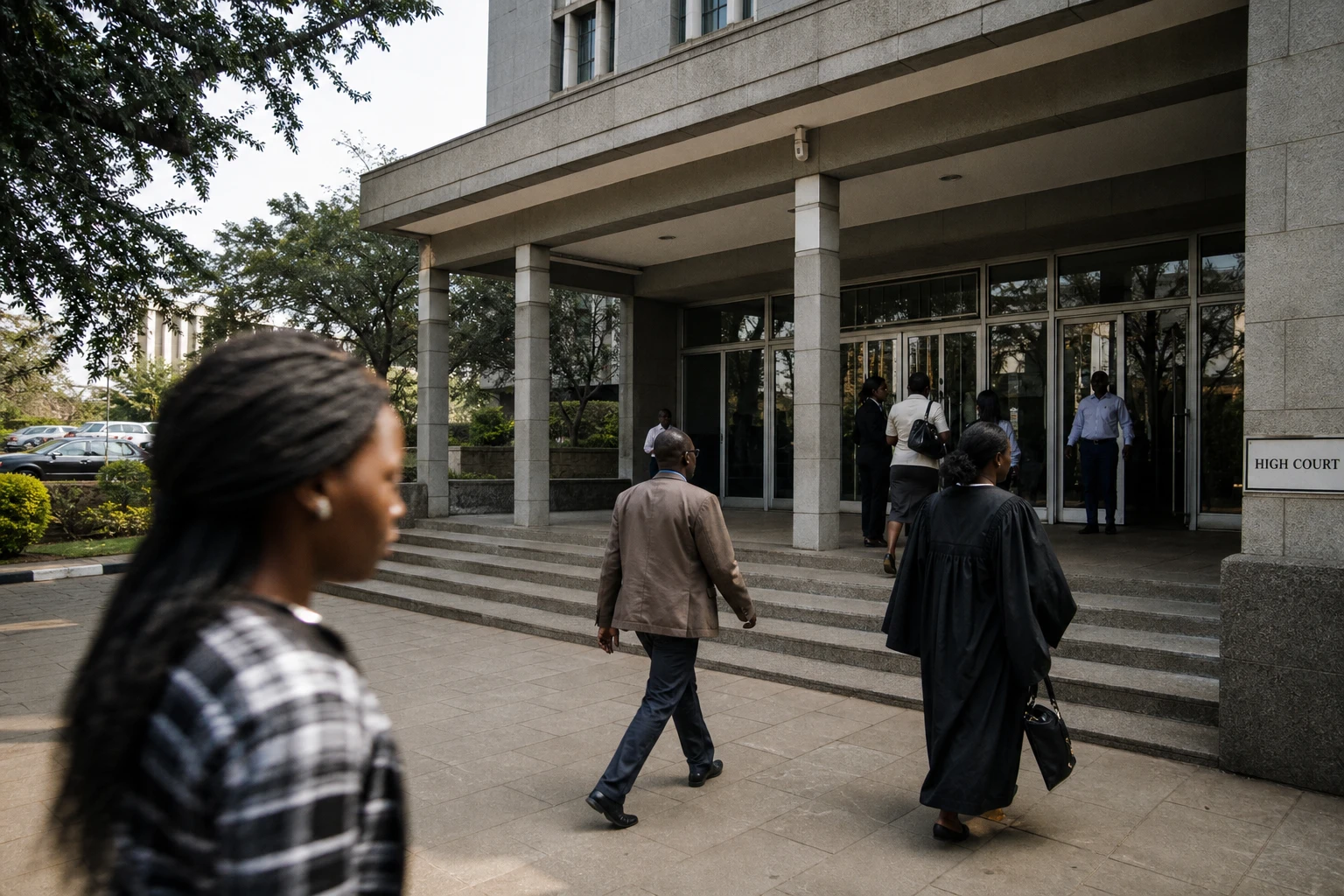
A legal case that reaches beyond the family circle
In Harare, a hearing on an application for release did not concern only a 22-year-old woman. It also brought a wider question into focus: how does Zimbabwe’s justice system handle cases involving relatives of those in power when they intersect with money, controlled medicines and suspicions of flight from the country?
In cases of this kind, symbolism matters as much as procedure. Zimbabwe has been pursuing a more forceful campaign against drugs and substance abuse for several months, with official rhetoric linking public health, security and organised crime. The Ministry of Health has also said that the misuse of prescription medicines, including pethidine, remains a major problem requiring a coordinated response.
Against this backdrop, the Kelsea Tafirenyika case is part of an even more sensitive sequence of events, because it involves the family of President Emmerson Mnangagwa and is unfolding in Harare, Zimbabwe’s capital, as the authorities seek to project a tough line on trafficking and money laundering.
What the court decided in Harare
On 13 August 2026, a Harare magistrate refused to grant bail to Kelsea Tafirenyika and her uncle, Isaac Jessub. The decision was based on what was deemed a high risk of flight and the seriousness of the charges, which relate to possession of dangerous drugs and identity documents suspected of being fraudulent. The two defendants were being held in pre-trial detention at the time.
According to information reported by the Zimbabwean press, police say they found more than 200 ampoules of pethidine and morphine in Tafirenyika’s bedroom during a search in Greystone Park, an affluent Harare suburb, as well as five rolls of cannabis in her luxury vehicle. The court also cited the existence of an identity card in the name of “Getrude Badza”, used as an indication of a possible flight risk. At this stage, these are allegations made in court, not a conviction.
A second element weighed on the case: prosecutors argued that investigators were looking into around 15 properties, valued at more than $9 million, some of them outside Zimbabwe, notably in South Africa and Dubai. That valuation, as put forward by investigators and reported in the press, will also have to be established in court.
It should be noted, however, that the case did not remain at a standstill. On 20 August 2026, the High Court ultimately granted bail of US$1,000 to Tafirenyika and Jessub, overturning the magistrate’s initial decision. The development is a reminder that, in Zimbabwe’s judicial system, an initial decision to hold someone in custody does not bring a case to an end.
A sensitive case for the state’s image
The case comes as Zimbabwe’s government seeks to show that it is no longer sparing drug networks, even when they approach influential circles. Since June 2026, the authorities have stepped up operations against dealers, medicine peddlers and unauthorised manufacturers. The Ministry of Health has also highlighted the rising number of cases involving the abuse of prescription medicines.
The problem is not only a judicial one. It is social. In Harare and other major cities, the informal market in medicines and psychotropic substances affects young people, families and neighbourhoods where the circulation of cash, high-end vehicles and property attracts attention. The contrast between public rhetoric of strictness and suspicions involving someone close to power therefore raises a straightforward political question: is the law applied with the same force to all Zimbabweans?
The defence, for its part, has rejected the idea that this is an ordinary criminal case. Tafirenyika’s lawyers have described it as a political plot targeting the Mnangagwa family. This defence is not new in cases where power, money and justice intersect. It also reflects the nervousness of a system in which public perception can carry considerable weight, especially when relatives of the head of state are named.
For the public, the stakes are tangible. Misused medicines fuel addiction, hospital emergencies and sometimes petty crime. For institutions, the challenge lies elsewhere: to show that they can investigate sensitive cases without yielding to social, political or family pressure. The Ministry of Justice also says its role is to promote justice that is accessible and applied to everyone, whatever their social background.
What the case says about Zimbabwe and the region
Beyond Harare, these events resonate across Southern Africa. The Southern African Development Community (SADC) has made the fight against illicit drugs one of its regional priorities, alongside health, cross-border crime and border security. The debate in Zimbabwe is therefore not isolated. It reflects a concern shared by several neighbouring states facing the same mix of trafficking, consumption of misused products and regional movement of illicit goods.
The decision of 13 August, followed by the reversal on 20 August, also highlights the central role of the courts in sensitive cases. In a period of intense media attention, every stage of judicial proceedings becomes a test: for prosecutors, who must prove their case without overstating it; for the defence, which must persuade without resorting to dramatics; and for the state, which must uphold the principle of equal treatment under the law. In a country where President Emmerson Mnangagwa has just seen Zimbabwe secure a non-permanent seat on the UN Security Council for 2027-2028, the need for institutional credibility also matters internationally.
The Tafirenyika case will therefore remain as much a political marker as a judicial one. It will show whether the fight against drugs can target both visible networks and spheres of influence. It will also show whether Zimbabwean institutions can handle an explosive case without being boxed into either complacency or grandstanding. Ultimately, that is where the significance of the case lies, for Harare and the region as a whole.