
 Algeria
 Egypt
 Libya
 Morocco
 Sudan
 Tunisia
 Benin
 Cabo Verde
 Côte d'Ivoire
 Ghana
 Guinea
 Guinea-Bissau
 Liberia
 Mali
 Mauritania
 Niger
 Nigeria
 Senegal
 Sierra Leone
 The Gambia
 Togo
 Cameroon
 Central African Republic
 Chad
 DR Congo
 Equatorial Guinea
 Gabon
 Republic of the Congo
 São Tomé and Príncipe
 Burundi
 Comoros
 Djibouti
 Eritrea
 Ethiopia
 Kenya
 Madagascar
 Malawi
 Mauritius
 Mozambique
 Rwanda
 Seychelles
 Somalia
 South Sudan
 Tanzania
 Uganda
 Angola
 Botswana
 Eswatini
 Lesotho
 Namibia
 South Africa
 Zambia
 Zimbabwe
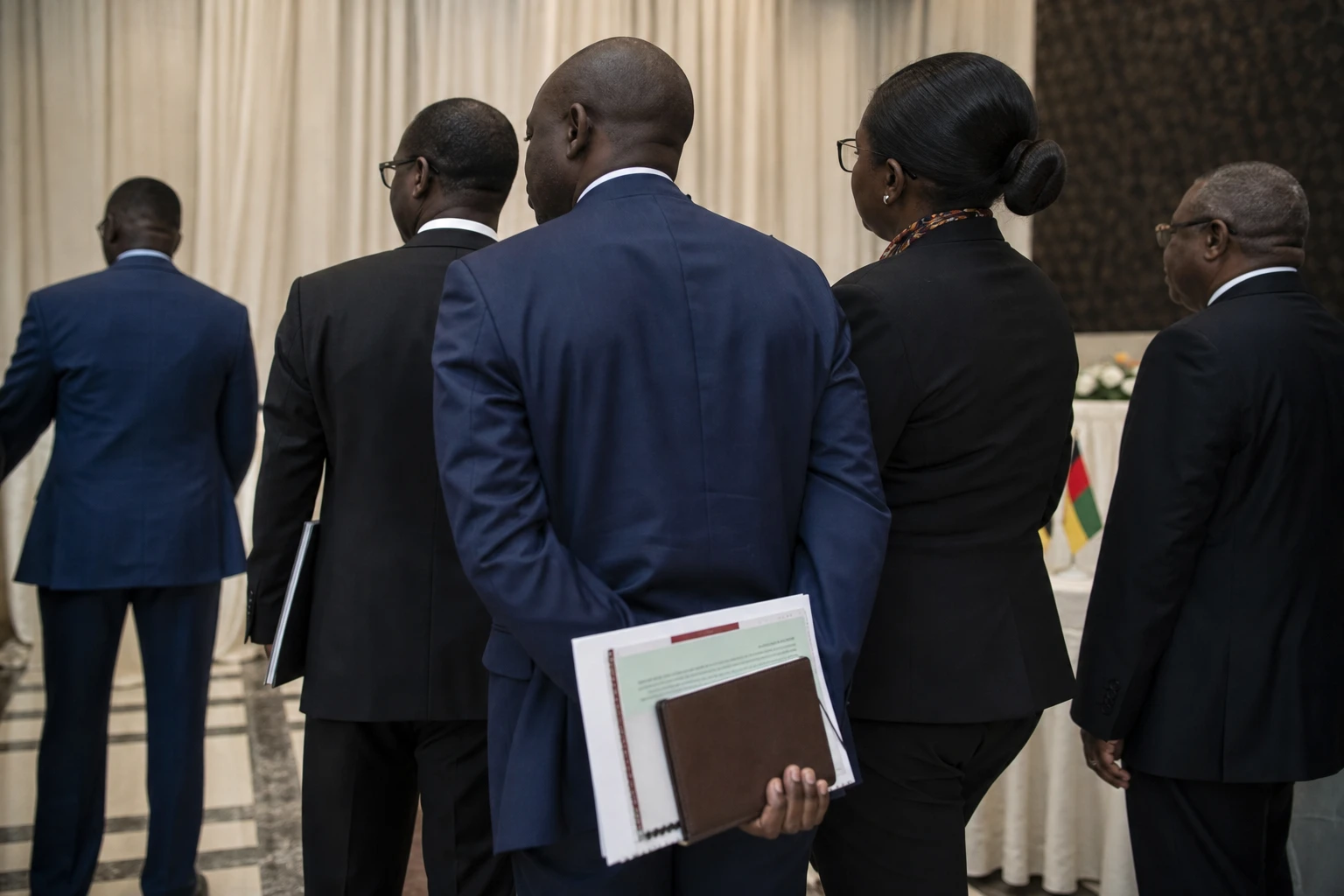
Beyond the signatures, one simple question: who can turn a meeting into a factory, a construction site or a contract?
In Cairo, Burkina Faso and Egypt have chosen to shift the debate from diplomacy to business. This is no small matter. As African economies seek to diversify their partners, economic forums matter as much for the announcements they can generate as for the networks they build among entrepreneurs, banks, government bodies and chambers of commerce. On 1 September 2026, the meeting brought together the foreign ministers of both countries, as well as private-sector representatives, in an explicitly South-South cooperation framework.
The message from Cairo and Ouagadougou is clear: bilateral exchanges must no longer be limited to intentions. Egyptian authorities presented the forum as a means of turning political ties into economic projects, focusing on specific sectors such as infrastructure, construction materials, agro-industry, pharmaceuticals, agricultural equipment, energy and mining. For Burkina Faso, the aim is to open up opportunities for companies seeking partners able to provide technology, capital and industrial expertise.
Bilateral cooperation gains momentum
This latest move builds on a relationship already shaped by several high-level contacts. Burkina Faso’s diplomatic services note that ties between Ouagadougou and Cairo have been strengthened by official visits and Egypt’s regular presence at some of Burkina Faso’s major cultural and institutional events. In July 2025, an inaugural business forum was held in Ouagadougou, confirming an approach based on regular meetings to bring projects to the political level and then channel them back to businesses.
Burkina Faso, which is reshaping its economic alliances, is seeking partners able to support its immediate priorities: local production, infrastructure, processing of raw materials and access to more suitable financing. Egypt, for its part, is highlighting its already sizeable industrial base and recognised experience in several productive sectors. This complementarity explains the forum’s focus. Each side sees a tangible benefit: markets, opportunities and visibility for Egyptian companies; transfer of expertise, joint ventures and higher-value activity for Burkinabè businesses.
What was said, what was counted and what remains to be proved
The figures reported around the meeting give an idea of the scale of engagement being sought. Some 20 business leaders from Burkina Faso took part in the trip to Cairo. On the Egyptian side, more than 80 investors and business operators were expected. Egypt’s diplomatic service presented the forum as a step towards translating political relations into investment and jobs, while also highlighting follow-up to a visit to Ouagadougou in July 2025. The possibility of a direct air link between Ouagadougou and Cairo was also raised, as was easing visa rules for businesspeople.
In addition to the talks, the Burkinabè delegation visited Egyptian companies, including one specialising in fish feed and another in reinforcing steel. Such visits are often revealing. They move beyond the general language of communiqués to examine real production lines, technical standards, output volumes and subcontracting opportunities. In other words, the forum is more than a group photograph: it aims to develop sector-specific partnerships, where contracts, skills transfers and sometimes co-investment are secured.
Announcements, however, are only worth anything if they are followed by action. Experience from African economic forums shows that declarations on business mobility, an air link or simpler visa procedures can come to nothing if government bodies do not then agree on clear timetables. That is where the issue becomes political. Businesses expect clear points of contact, stable rules and short processing times. Without them, forums generate talk but not investment. Burkina Faso has, moreover, made improving the business climate and investment appeal part of its economic policy priorities, providing an official framework for this kind of initiative.
Stakes that extend beyond the two capitals
This cooperation also has regional significance. Burkina Faso is part of a Sahelian region undergoing major change, while Egypt is increasingly positioning itself as a bridge between North Africa, sub-Saharan Africa and the Arab world. In this context, bilateral economic ties are diplomatic tools in their own right. They can bypass some of the rigidities of established channels, build sectoral alliances and create value chains between African countries without waiting for an external intermediary.
The Cairo forum is also taking place against a security backdrop that neither country can ignore. Official discussions highlighted a shared approach to cutting off terrorist financing, a particularly sensitive issue for Burkina Faso, which has faced insecurity in several parts of its territory for several years. In this context, the economy and security go hand in hand: attracting investors means reassuring them about the continuity of business, logistics corridors and states’ ability to protect trade.
The continental significance of this latest move lies less in the announcements than in the approach. The two capitals are testing a model of cooperation between government bodies and the private sector, with a simple goal: to produce more agreements that can be implemented rather than general promises. If plans for air transport, visas, industrial subcontracting and joint projects move forward, the forum could serve as a model for other intra-African partnerships. If it leads only to statements of intent, it will join the long list of economic meetings that came to nothing. The next meaningful signal will therefore be concrete: signed contracts, an implementation timetable or a further meeting between the two private sectors.



