Algeria
 Egypt
 Libya
 Morocco
 Sudan
 Tunisia
 Benin
 Burkina Faso
 Cabo Verde
 Côte d'Ivoire
 Ghana
 Guinea
 Guinea-Bissau
 Liberia
 Mali
 Mauritania
 Niger
 Nigeria
 Sierra Leone
 The Gambia
 Togo
 Cameroon
 Central African Republic
 Chad
 DR Congo
 Equatorial Guinea
 Gabon
 Republic of the Congo
 São Tomé and Príncipe
 Burundi
 Comoros
 Djibouti
 Eritrea
 Ethiopia
 Kenya
 Madagascar
 Malawi
 Mauritius
 Mozambique
 Rwanda
 Seychelles
 Somalia
 South Sudan
 Tanzania
 Uganda
 Angola
 Botswana
 Eswatini
 Lesotho
 Namibia
 South Africa
 Zambia
 Zimbabwe
A deal that matters as much for public finances as for confidence
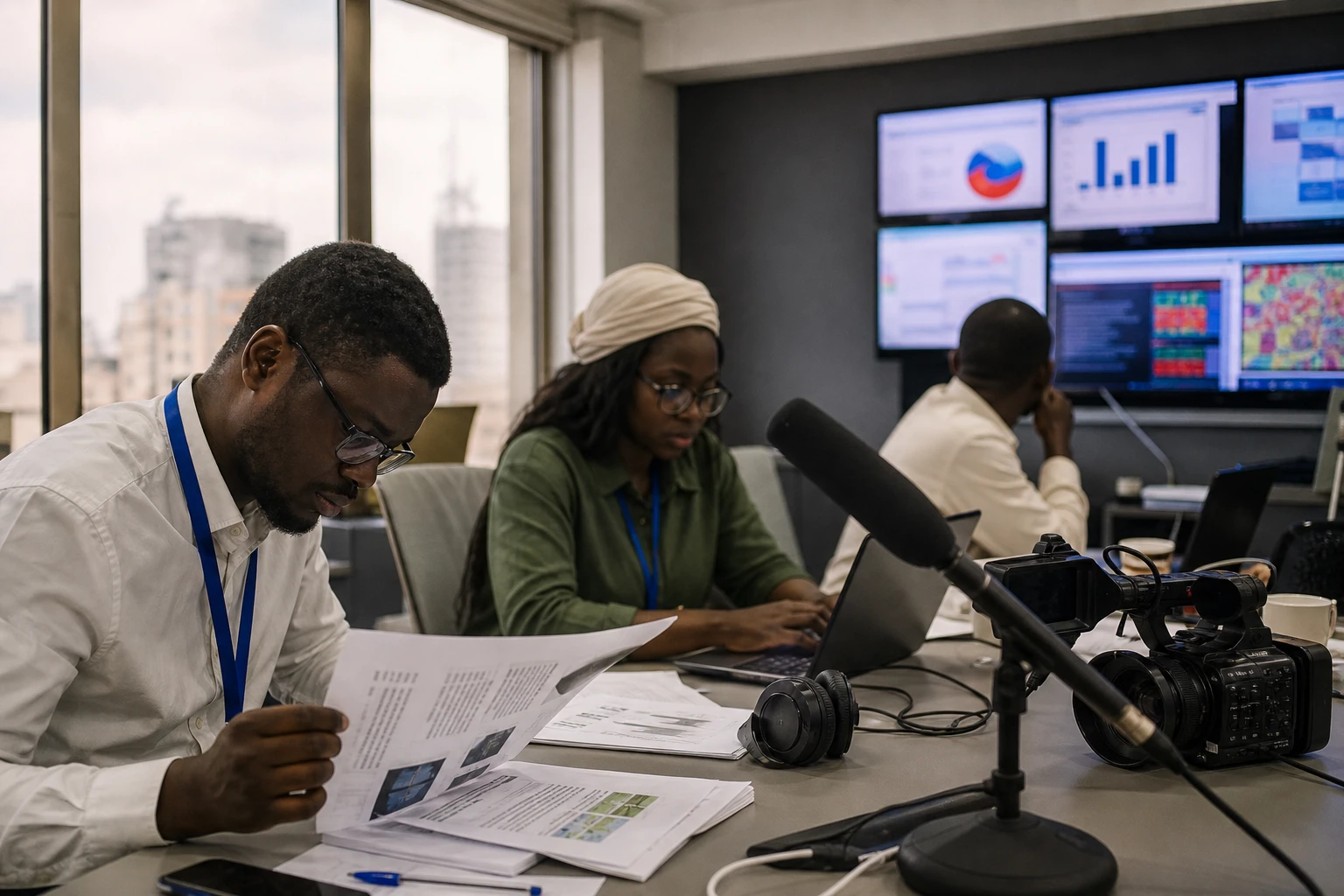
In Dakar, the discussions were not merely technical. They also concern the credibility of the state, the cost of debt and the room for manoeuvre of a country seeking to finance its priorities without stifling its budget. Senegal is now moving into a new phase of dialogue with the International Monetary Fund, against a backdrop of strained public finances and high expectations among households and businesses.
The case arises in a specific regional context. Senegal remains part of the West African Economic and Monetary Union (WAEMU), which offers it a regional financing market but also common rules on fiscal and monetary discipline. In this context, the question is not simply how to find money. Transparency must also be restored, debt secured and market access preserved.
What the preliminary agreement provides for
On 1 September 2026, the IMF announced in Dakar a staff-level agreement with the Senegalese authorities. The proposed programme runs for 36 months and is worth about $2.2 billion, or 1,537.1 million SDRs, the IMF’s unit of account. It falls under the Extended Credit Facility, an instrument designed for countries facing medium-term financing needs.
But this is not final approval. The agreement remains subject to approval by IMF management and then by the executive board. Above all, the institution is calling for “decisive corrective measures” to support the request for a waiver related to the misreporting of fiscal data. Dakar must also secure financing assurances from its partners.
The mission was led by Mercedes Vera Martin and took place in Dakar from 19 August to 1 September 2026. The timetable shows that the discussions were intensive and closely followed by the Senegalese authorities. The president had already received the IMF’s new mission chief in January 2026, a sign that the issue had reached the highest levels of government.
Debt, transparency and the memory of the previous programme
The new framework for cooperation does not start from scratch. The previous programme, agreed in 2023, was interrupted after the public accounts were revised. The 2023 budget deficit, initially reported at 4.9% of GDP, was later revised to 12.3%. The Senegalese authorities have since launched an audit and reforms to address the imbalances uncovered.
Senegal’s finance ministry itself said on 1 September 2026 that the budget deficit had fallen from 13.4% of GDP in 2024 to 6.4% in 2025, as part of a recovery strategy. That trajectory remains fragile, however. Public debt is still high, and pressure on external financing remains strong.
The IMF is therefore seeking more than a simple return to dialogue. It expects reforms to domestic revenue mobilisation, spending rationalisation, debt management, arrears monitoring and oversight of state-owned enterprises. The aim is clear: to prevent deficits from turning into a permanent financing crisis.
An economy driven by oil, but still unbalanced
The macroeconomic picture is mixed. The IMF estimates that growth reached 6.7% in 2025, supported by the first full year of oil production. Excluding hydrocarbons, growth was just 2.2%. In other words, the strength suggested by the headline figures masks an economy that is still growing modestly across most sectors.
In the first quarter of 2026, growth excluding hydrocarbons rebounded to 4.7% year on year and inflation stood at 1.4%. These figures point to a degree of resilience, but they are not enough to dispel fiscal pressures. Senegal still has to contend with a limited revenue base, significant social needs and heavy debt-servicing costs.
The African Development Bank also notes that Senegal’s financing needs in 2026 remain considerable, with public debt at 132% of GDP at the end of 2024 and very high debt-servicing costs. It also notes that the country is relying more heavily on the WAEMU regional market, where it raised large sums in 2025. This signals an ability to mobilise funds, but also a dependence on financing that is often shorter-term and more expensive.
The social stakes are direct. Too abrupt a fiscal consolidation could weigh on subsidies, public investment and some operating expenditure. Conversely, easing fiscal policy too quickly would put debt sustainability at risk. The Senegalese government’s challenge is therefore to protect vulnerable households without losing control of the public accounts.
What this case says about Senegal and West Africa
This new agreement goes beyond Senegal alone. It is a reminder that in West Africa, fiscal sovereignty also depends on the quality of the figures, the reliability of the administration and the ability to convince multiple lenders. Senegal, the WAEMU’s second-largest economy after Côte d’Ivoire, is seeking to combine fiscal discipline, productive transformation and increased domestic revenue.
The implications are also continental. The African Development Bank and the Economic Commission for Africa point out that debt sustainability in Africa depends on stronger rules, more transparent institutions and better governance of borrowing. The Senegalese case illustrates this clearly: financing remains possible, but it is becoming more demanding, more conditional and more closely monitored.
For Dakar, the next step will be decisive. The preliminary agreement still has to pass the IMF’s internal review, while the government continues its debt-management plan and negotiations with partners. In a country where the formal economy coexists with a large informal sector, success will be measured less by the announcement of a sum than by how it translates into state financing, regional monetary stability and the everyday lives of Senegalese people.