Algeria
 Libya
 Morocco
 Sudan
 Tunisia
 Benin
 Burkina Faso
 Cabo Verde
 Côte d'Ivoire
 Ghana
 Guinea
 Guinea-Bissau
 Liberia
 Mali
 Mauritania
 Niger
 Nigeria
 Senegal
 Sierra Leone
 The Gambia
 Togo
 Cameroon
 Central African Republic
 Chad
 DR Congo
 Equatorial Guinea
 Gabon
 Republic of the Congo
 São Tomé and Príncipe
 Burundi
 Comoros
 Djibouti
 Eritrea
 Ethiopia
 Kenya
 Madagascar
 Malawi
 Mauritius
 Mozambique
 Rwanda
 Seychelles
 Somalia
 South Sudan
 Tanzania
 Uganda
 Angola
 Botswana
 Eswatini
 Lesotho
 Namibia
 South Africa
 Zambia
 Zimbabwe
A shift that means far more than a change in rankings
In Cairo, the question is not simply which grain comes first through the ports. Above all, it shows where the centre of gravity of Egyptian food consumption is moving: towards subsidised bread on one side, and livestock farming and aquaculture on the other.
In this North African country, wheat remains the grain of the table and the public purse. Maize, however, is becoming a gauge of another economic reality: an expanding animal-products sector, driving demand for compound feed and imported inputs. The latest available projections point in the same direction: Egypt’s grain import bill remains substantial, and its composition is changing. The FAO forecasts 29 million tonnes of grain imports for the 2026/27 season, with the increase driven mainly by demand for feed maize.
This shift does not erase dependence on wheat. It reshapes it. Egypt’s wheat imports are still expected to exceed 12 million tonnes in 2026/27, according to the USDA, while domestic consumption remains underpinned by population growth and the subsidised bread system.
Cairo adjusts food security priorities between bread, feed and foreign currency
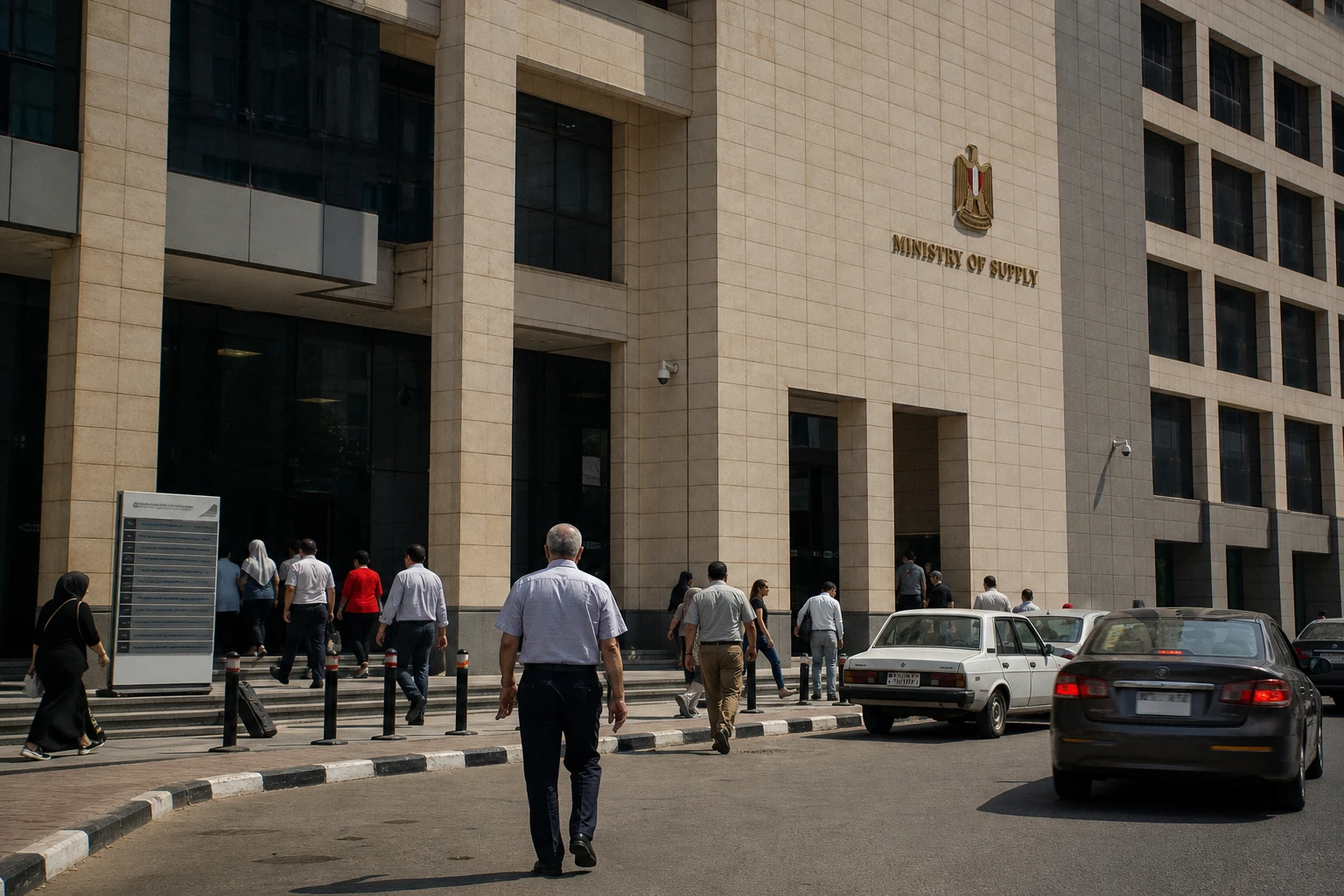
Egypt is following a familiar course: securing bread, stabilising prices and protecting foreign currency reserves. The government continues to buy local wheat at an incentive price. For the 2026 season, the Ministry of Supply set the collection period from 15 April to 15 August, with a target of 5 million tonnes and a price raised to 2,500 Egyptian pounds per ardeb. The Ministry of Agriculture later said, in May, that deliveries had reached 3.2 million tonnes.
These measures show a clear priority: reducing the pressure from external wheat purchases without abandoning a model in which the state still protects millions of consumers through subsidised bread. The USDA notes that Egypt runs one of the world’s largest public wheat procurement programmes, specifically to supply this system.
But another, less prominent issue is advancing quickly. The USDA estimates that Egypt’s maize imports will reach 10.5 million tonnes in 2026/27 in its March 2026 report, and notes that demand continues to be driven by investment in poultry and animal feed. Other market analyses published later point to a level that could exceed, or even surpass, 13 million tonnes in 2025/26 and 2026/27.
Why maize is gaining ground
The driver is straightforward. Yellow maize is used extensively in poultry rations and, to a lesser extent, in aquaculture feed. The USDA says the expansion of the poultry and compound-feed industries is supporting the rise in imports. The FAO’s report on Egypt reaches the same conclusion: demand for maize is increasingly linked to animal feed.
The poultry sector has grown substantially. The USDA says chicken production in 2025 reached 1.92 billion birds, compared with 1.4 billion a year before 2023, while production of eggs for consumption rose to 16 billion units. At the same time, aquaculture now provides most of the local fish supply, according to the same report. These figures reflect a profound shift in grain demand.
In other words, Egypt imports not only to feed households. It also imports to supply a denser, more urban and more profitable agro-industrial value chain. This is where maize is gaining ground on wheat in trade statistics. The former supports thousands of farms, slaughterhouses, hatcheries and feed manufacturers. The latter remains the cornerstone of a broader social compact.
Suppliers reposition themselves, from Brazil to the Black Sea region
This change in demand is also reshuffling trade patterns. The USDA notes that US maize is regaining ground in Egypt thanks to competitive prices and what is considered superior quality. Argus, meanwhile, says Brazil accounted for more than half of Egyptian purchases between October and June of the current season, while Argentina is trying to regain market share.
For Cairo, this diversification is not a luxury. It is a risk-reduction strategy. In a global market still affected by logistical strains and geopolitical shocks, sourcing from more origins helps limit disruptions, delays and additional costs. The FAO also stresses that wheat imports remain heavily linked to the Black Sea, where prices and transport costs remain favourable.
The picture is therefore more nuanced than a simple contest between two grains. Wheat remains the social staple. Maize is becoming the industrial staple. The balance between the two reflects the budgetary priorities of a state seeking to contain pressure on purchasing power while supporting the growth of its animal-products sectors.
What this means for Egypt and Africa
For Egypt, the impact is immediate. Rising demand for maize adds to pressure on imports, and therefore on foreign currency, at a time when the country remains sensitive to fluctuations in the dollar and international prices. Meanwhile, a relative decline in wheat purchases, if confirmed, could ease some pressure on the public budget and strategic stocks. But it would not reduce the country’s structural dependence on global markets. It would shift that dependence to another commodity.
For urban households, the main issue remains the price of bread and flour-based products. In rural areas, the question also concerns agricultural markets and the availability of inputs. For industry, it is about continuity of supply and the competitiveness of poultry, egg and farmed-fish value chains. The same shift therefore has different effects for different stakeholders.
Across Africa, Egypt illustrates a broader phenomenon: rising grain demand comes not only from human consumption, but also from agro-industrial processing. In several countries on the continent, the growth of animal protein, fish farming and milling is driving demand for imported grains. Egypt’s case is particularly visible because it combines a very large population, a policy of subsidising bread and a production base moving up the value chain.
The next phase will be shaped on three fronts. First, the local wheat harvest and the level of public purchases. Second, the cost of maize imports and the country’s ability to secure reliable suppliers. Finally, the development of the poultry and aquaculture industries, which could continue to shift the country’s grain requirements towards maize. The real hierarchy of Egypt’s food needs will become clear there in the coming months.