Algeria
 Egypt
 Libya
 Morocco
 Sudan
 Tunisia
 Benin
 Burkina Faso
 Cabo Verde
 Côte d'Ivoire
 Ghana
 Guinea
 Guinea-Bissau
 Mali
 Mauritania
 Niger
 Nigeria
 Senegal
 Sierra Leone
 The Gambia
 Togo
 Cameroon
 Central African Republic
 Chad
 DR Congo
 Equatorial Guinea
 Gabon
 Republic of the Congo
 São Tomé and Príncipe
 Burundi
 Comoros
 Djibouti
 Eritrea
 Ethiopia
 Kenya
 Madagascar
 Malawi
 Mauritius
 Mozambique
 Rwanda
 Seychelles
 Somalia
 South Sudan
 Tanzania
 Uganda
 Angola
 Botswana
 Eswatini
 Lesotho
 Namibia
 South Africa
 Zambia
 Zimbabwe
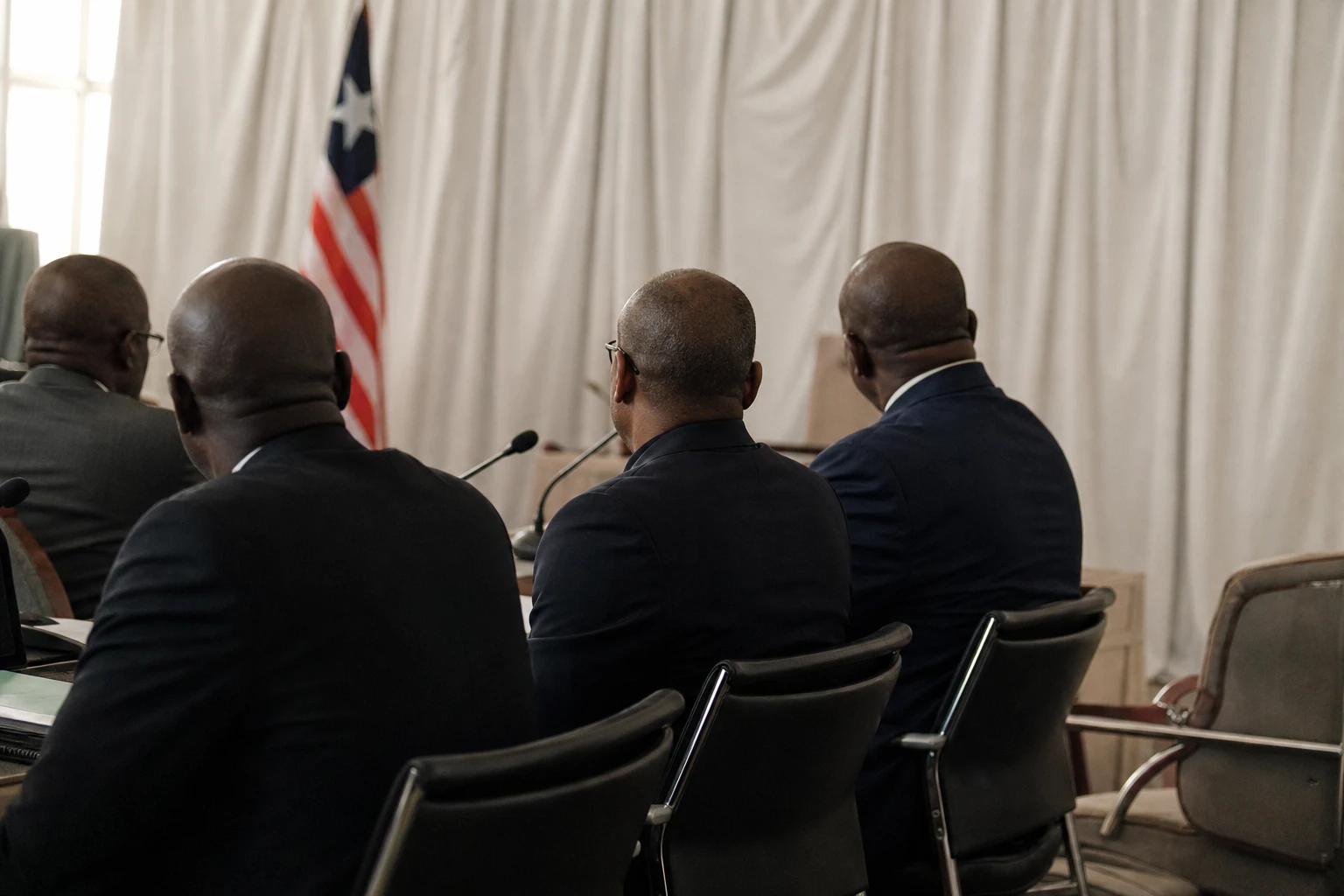
In Monrovia, budget transparency becomes a political test
In Liberia, public procurement is about more than administration. It shows, in very concrete terms, who can work with the state, on what terms and under what level of scrutiny. In a country seeking to restore trust after years of suspicions over public spending, every contract award affects the government’s credibility as much as the national finances. President Joseph Boakai sent a clear political signal in Monrovia, reminding his team that procedures exist first and foremost to protect public money and open access to businesses genuinely capable of supplying goods and services to the state.
This message sits within a precise institutional framework. The Public Procurement and Concessions Commission, or PPCC, is the body responsible for regulating and overseeing public procurement and concessions in Liberia. Its official mandate is to promote transparency, competition, accountability and value for money. In this West African country and member of ECOWAS, the issue also has a regional dimension: a clear public procurement system facilitates the participation of local businesses and lowers barriers to entry for operators that often work across West Africa.
The facts: a call to order within government
On Thursday 27 August 2026, Joseph Boakai spoke at the opening of the twenty-fourth meeting of the Cabinet, devoted to public procurement and concessions. According to the Liberian presidency, he acknowledged that procedures could seem cumbersome, but stressed their usefulness. In his view, they serve to protect the country’s resources, prevent the misuse of state funds and broaden citizens’ participation in public affairs through the supply of goods and services. He also rejected the idea that public contracts were reserved for those close to the government.
The core message is simple: the state should not buy quickly, but buy fairly. The president presented public procurement as a tool for market fairness, budgetary discipline and the protection of public assets. This formulation matters because it puts public spending at the heart of governance, rather than at its margins. It also reminds ministries that political urgency must not circumvent the rules on competition and oversight.
The president’s reminder comes as Liberia has been pursuing the digitisation of public procurement for several months. The e-GP, or Electronic Government Procurement, platform was launched in February 2025 to digitise procedures, reduce human intervention and make transactions more traceable. Official statements say that by November 2025, six institutions were fully connected and their combined contracts exceeded $30 million, while a plan to extend the system to a further 50 public entities was under way. The International Monetary Fund also noted in its November 2025 report that the e-procurement system launched in February 2025 was an important step towards strengthening contract transparency.
What the reform means for the state, businesses and taxpayers
In an environment where budgetary resources remain limited, public procurement becomes a decisive lever. In Liberia, the authorities want to use it to improve spending efficiency and give more space to the domestic private sector. This choice could help small and medium-sized enterprises gain access to contracts that were previously opaque or too tightly controlled. It could also reduce costs linked to intermediaries, delays and discretionary decisions. But it requires an administration capable of staying the course, publishing relevant information and penalising breaches.
The reform also has domestic political significance. Since taking office, Joseph Boakai has made a series of moves to promote administrative discipline and combat abuses. In February 2025, he suspended more than 450 public officials for failing to declare their assets, according to the Associated Press. More recently, the executive has again reminded public servants of their obligations to comply with the law. The thread running through these actions is clear: restore trust through evidence, not just words.
For citizens, the stakes are concrete. Poorly controlled procurement means roads that are less well maintained, slower services, more expensive equipment and, ultimately, additional pressure on the state budget. Conversely, a more rigorous tendering system can improve the quality of schools, health centres, infrastructure and digital services. This is where reform leaves the language of institutions and enters everyday life.
A governance battle watched far beyond Monrovia
Liberia is not acting in isolation. Across West Africa, ECOWAS states are seeking to strengthen economic integration, the mobility of businesses and confidence in market rules. In this context, a predictable digital public procurement system can become a competitive advantage. It limits arbitrary decisions, reassures investors and makes it easier for local businesses to bid for contracts. It also sends a message to technical and financial partners: public money must be traceable, and concessions must be regulated.
The Liberian episode is therefore more than a simple call to order for ministers. It shows how a government is trying to align digital reform, the fight against corruption and administrative modernisation. It also serves as a reminder that in West Africa, a state’s credibility is measured as much by its political statements as by the quality of its procedures. For Monrovia, the real test will come in the months ahead: effective expansion of e-GP, ministerial discipline and the ability to enforce the rules without exception. This is where the reform’s true impact will be determined.