Algeria
 Egypt
 Libya
 Morocco
 Sudan
 Tunisia
 Benin
 Burkina Faso
 Cabo Verde
 Côte d'Ivoire
 Ghana
 Guinea
 Guinea-Bissau
 Liberia
 Mali
 Mauritania
 Niger
 Nigeria
 Senegal
 Sierra Leone
 The Gambia
 Togo
 Cameroon
 Central African Republic
 Chad
 DR Congo
 Equatorial Guinea
 Republic of the Congo
 São Tomé and Príncipe
 Burundi
 Comoros
 Djibouti
 Eritrea
 Ethiopia
 Kenya
 Madagascar
 Malawi
 Mauritius
 Mozambique
 Rwanda
 Seychelles
 Somalia
 South Sudan
 Tanzania
 Uganda
 Angola
 Botswana
 Eswatini
 Lesotho
 Namibia
 South Africa
 Zambia
 Zimbabwe
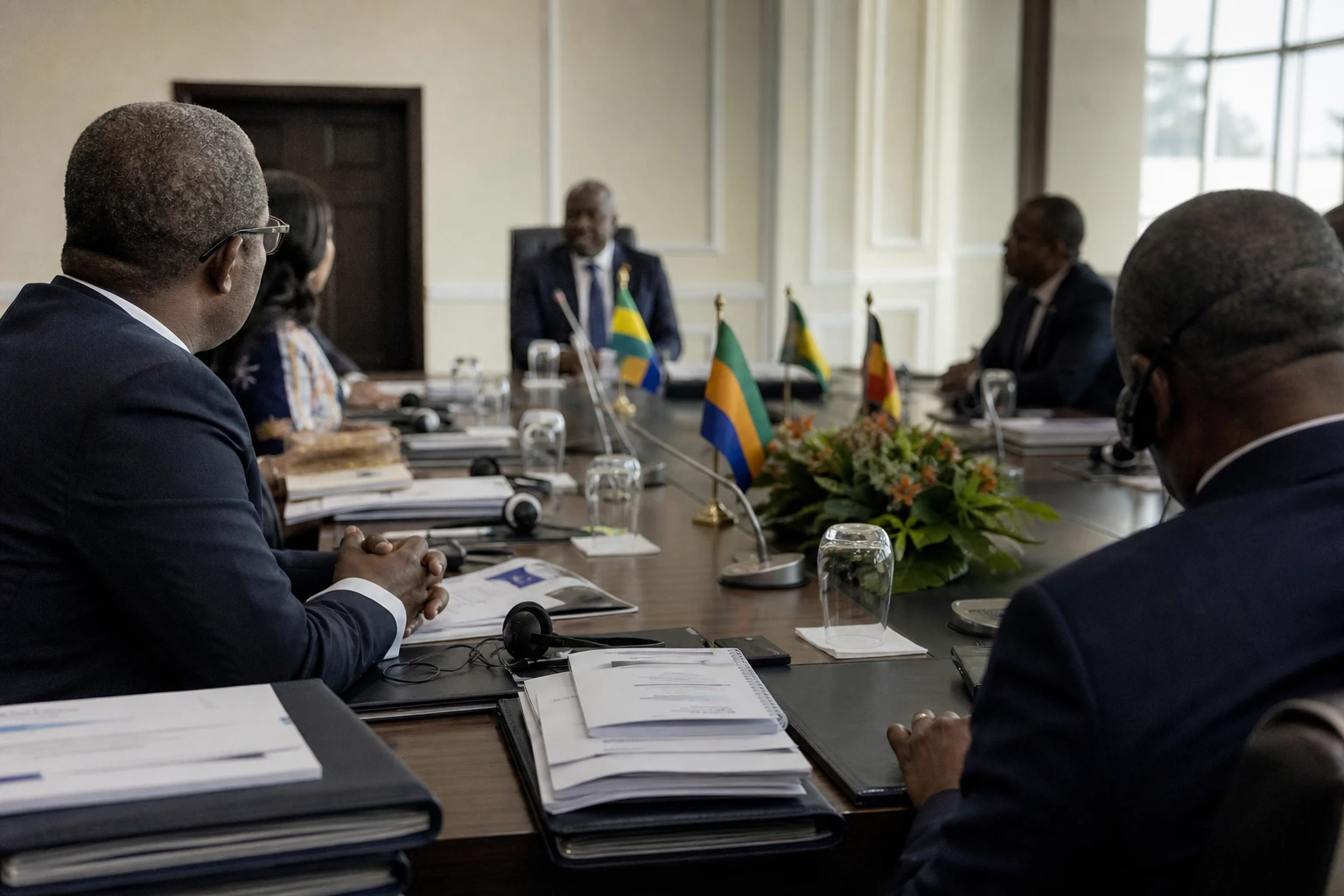
In Makokou, a commemoration that means more than an anniversary
In Makokou, in Ogooué-Ivindo, Liberation Day is about more than a parade and a few inaugurations. It is also a political test. Three years after the coup d’état of 30 August 2023, Gabon’s authorities are seeking to show that the military break produced more than a simple change of personnel at the top of the state. The choice of a provincial celebration, far from Libreville, is no coincidence: it places the regions at the centre of the official narrative and serves as a reminder that the promise of transformation must also be visible beyond the capital.
Gabon has entered a new phase since the transition began after Ali Bongo Ondimba was overthrown on 30 August 2023. Since then, the country has adopted a new Constitution in December 2024 and held a presidential election in April 2025, won by Brice Clotaire Oligui Nguema, who is now the elected head of state after leading the transition. At regional level, Libreville has regained its place within ECCAS, and Gabon has returned to the African Union’s agenda, which lifted sanctions and formalised the country’s reinstatement in spring 2025.
The head of state’s message: bring the transition to a close and usher in an era of delivery
In his address to the nation on the eve of the commemoration, Brice Clotaire Oligui Nguema praised the defence and security forces that supported the 2023 coup, while defending the series of reforms launched since then. He highlighted the Constitution, the electoral law, the electoral code and the law on political parties, which he presents as tools to correct the “excesses” of the past. The message is clear: 30 August should no longer be seen only as a moment of rupture, but as the founding act of a political order to be stabilised.
This framing is not isolated. For the past year, Gabon’s presidency has emphasised the idea of a Liberation Day focused on concrete action. In 2025, the authorities had already made the celebration a decentralised event, in Tchibanga, arguing that development should be more balanced between provinces. In 2026, Ogooué-Ivindo is in turn hosting the ceremonies, accompanied by renovated infrastructure and refurbished public buildings. The signal to Gabonese people is as much political as administrative: the country’s refoundation must take shape in roads, facilities and visible services.
A province chosen for its symbolic weight and tangible needs
Makokou was not chosen by chance. Ogooué-Ivindo is a province long seen as distant from the main centres of decision-making, even though it matters to the national political balance. The head of state held a series of meetings with traditional leaders, parliamentarians and other prominent figures ahead of the commemoration, seeking to show that local concerns were being heard. In the official narrative, the province is to become a laboratory for the “new Gabon”: less centralisation, more investment and a clearer territorial footprint for public action.
The stakes are tangible for residents. Announcements of roadworks, public-building renovations or the opening of facilities do not carry the same weight for someone living in Libreville as for someone in an inland town. In an economy where growth remains modest, unemployment high and a significant share of the population still struggling with prices and low incomes, the political value of a project is measured by its immediate impact: getting around, working, receiving healthcare and studying. International financial institutions have noted a slowdown in inflation and a recovery in growth, but they have also highlighted the persistence of poverty and a lack of jobs.
The contrast between the official narrative and social reality therefore remains stark. On the one hand, the authorities present the transition as a period of restoring the state to working order. On the other, the population is still waiting for tangible results, especially outside the capital, where infrastructure, public services and economic opportunities remain more fragile. It is there that the presidential message will be judged, more than on the symbolic rhetoric of liberation alone.
A moment for Gabon, but also a signal to Central Africa
The 30 August commemoration goes beyond the national arena because it touches on a broader question in Central Africa: how can a transition born of a military overthrow be brought to a close without institutional ambiguity taking hold? In Gabon, the authorities’ answer is elections, constitutional reforms and gradual normalisation with regional partners. CEMAC, which brings together the six countries of the sub-region, is also following the Gabonese case at a time when monetary and budgetary stability remains a sensitive issue.
The phase opened in Libreville is also of interest to the African Union. The lifting of sanctions and Gabon’s reinstatement have confirmed the country’s return to continental affairs, but they do not remove the fundamental question: will Gabon’s transition be judged by its institutions or its inaugurations? The answer will depend on the coming months, particularly on the authorities’ ability to improve basic services, maintain political openness and prevent the image of a top-down refoundation from colliding with Gabonese people’s limited patience.
Finally, the prominence given to Makokou is a reminder that legitimacy in Gabon is now also being won in the provinces. This is an important shift in a country long governed from Libreville, with outlying areas often relegated to the background. If Liberation Day is to remain more than a commemorative ritual, it will have to prove its ability to redistribute the state’s attention in practical terms. That, ultimately, is where the true significance of 30 August 2023 will be measured.