Algeria
 Egypt
 Libya
 Morocco
 Sudan
 Tunisia
 Benin
 Burkina Faso
 Cabo Verde
 Côte d'Ivoire
 Guinea
 Guinea-Bissau
 Liberia
 Mali
 Mauritania
 Niger
 Nigeria
 Senegal
 Sierra Leone
 The Gambia
 Togo
 Cameroon
 Central African Republic
 Chad
 DR Congo
 Equatorial Guinea
 Gabon
 Republic of the Congo
 São Tomé and Príncipe
 Burundi
 Comoros
 Djibouti
 Eritrea
 Ethiopia
 Kenya
 Madagascar
 Malawi
 Mauritius
 Mozambique
 Rwanda
 Seychelles
 Somalia
 South Sudan
 Tanzania
 Uganda
 Angola
 Botswana
 Eswatini
 Lesotho
 Namibia
 South Africa
 Zambia
 Zimbabwe
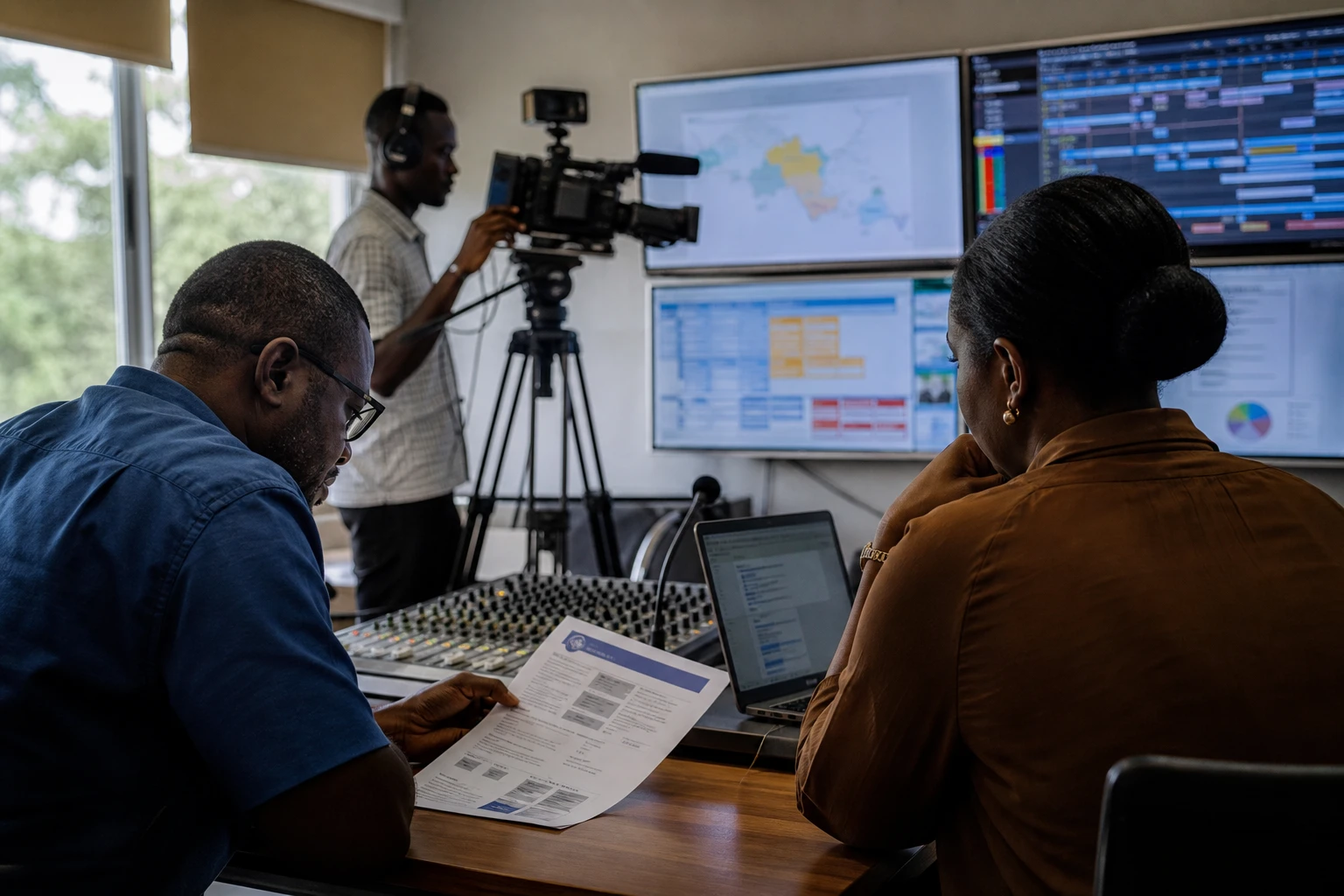
In Bawku, rebuilding means repairing much more than roads
In north-eastern Ghana, restoring a town is not measured only by the asphalt laid or the walls rebuilt. In Bawku, every construction project also carries a broader promise: bringing traders back, reopening schools, making travel safer and restoring the prospects of an area long weakened by conflict. The Ghanaian government is now betting on a development fund of 1 billion Ghanaian cedis, or about $89 million, to set this process in motion.
The move matters because Bawku is more than a dot on the map. The town is in the North East Region, close to the border with Burkina Faso, and has long served as a commercial hub for the eastern part of Ghana’s northern corridor. When insecurity takes hold, it is not only the authorities that are affected. Markets, transport operators, displaced families, schools and farming activities in neighbouring communities are affected too. It is precisely this everyday economy that the authorities want to revive.
A steering committee for a fund spread over three years
On 26 August 2026, in Accra, Ghanaian President John Dramani Mahama inaugurated a five-member committee tasked with overseeing the Bawku Revitalisation Fund. The presidency and the Ghana News Agency confirm the same structure: the committee is chaired by Finance Minister Dr Cassiel Ato Forson and brings together political and institutional officials connected with the Bawku issue. They include Mahama Ayariga, MP for Bawku Central and Minister-designate for Local Government, Chieftaincy and Religious Affairs, as well as North East Regional Minister Akamugri Donatus Atanga.
According to official communications, the fund is to be rolled out over three years, from 2026 to 2028. It will finance priority infrastructure: roads, healthcare, education, water and irrigation works, security facilities, and commercial and economic infrastructure. The stated aim is to put Bawku and its surrounding areas back at the centre of a trading zone that has contracted amid violence and interruptions to business. This list is not symbolic: it reflects very concrete needs in a town where access to public services and markets directly determines the pace of recovery.
The Ghanaian government has also linked the fund to the mediation efforts led in 2025 by the Asantehene, Otumfuo Osei Tutu II. In December 2025, the presidency received and approved the mediation’s conclusions, described as a roadmap to peace and stability. On 24 December 2025, the Ministry of the Interior also said that measures had begun to be implemented. In other words, economic recovery is not conceived as a stand-alone project, but as the continuation of a process of pacification and institutional normalisation.
Why Bawku’s economy depends on peace
Bawku is a reminder of a simple reality: in border areas, local economies depend on trust, movement and predictability. When roads close, markets slow down and households hesitate to return, the effects spread quickly. Businesses cut their stocks. Transport operators avoid the route. Producers get lower prices for their goods. Young people seek more stable sources of income elsewhere. This is the cycle the fund aims to break.
The timing matters too. In August 2026, the presidency sent several signals in support of the Bolgatanga-Bawku-Pulmakom route, with work resuming on a 117.94-kilometre road project described as strategic for the eastern corridor and connections to Accra. This sequence shows that Bawku is part of a broader infrastructure programme in the north of the country. The revitalisation fund therefore complements other public initiatives, including roads, school facilities and healthcare projects.
For residents, the issue is not theoretical. It is about being able to travel without fearing a fresh flare-up in tensions, regaining access to local services and bringing back the activities on which the town depends. For the state, there is also a political imperative: to show that a budgetary response can complement a security response and the role of traditional authorities, without replacing either. This coordination between central government, traditional authorities and regional officials remains crucial in cases of local conflict in Ghana.
What the fund says about Ghana and West Africa
The issue extends beyond Bawku. As Ghana seeks to consolidate its economic recovery, investment in a conflict-affected border area sends a message to the country’s north as a whole: recovery must not remain concentrated in Accra and major urban centres. It must also reach peripheral areas, where territorial fragility comes at a higher cost to growth and national cohesion. This approach also aligns with the authorities’ stated priorities on roads, irrigated agriculture and essential public services.
At the regional level, the signal matters to ECOWAS, the West African regional economic community, because conflicts along borders are never confined to a single municipality. They affect trade, movement, prices and, at times, perceptions of security in neighbouring countries. North-eastern Ghana is part of a wider area through which goods, people and information move. In this context, restoring Bawku also serves as a measure of regional stabilisation, even if it addresses a local problem.
What happens next will depend on two factors. First, the committee’s ability to turn the political announcement into visible, properly monitored spending. Second, the durability of the peace framework that emerged from the December 2025 mediation; without it, no fund can deliver its full impact. In Bawku, material reconstruction and the consolidation of peace are moving forward together. Ghana is testing an approach that could serve as an example in other African areas where security, traditional authority and public investment need to reinforce one another at the same time.