Algeria
 Egypt
 Libya
 Morocco
 Tunisia
 Benin
 Burkina Faso
 Cabo Verde
 Côte d'Ivoire
 Ghana
 Guinea
 Guinea-Bissau
 Liberia
 Mali
 Mauritania
 Niger
 Nigeria
 Senegal
 Sierra Leone
 The Gambia
 Togo
 Cameroon
 Central African Republic
 Chad
 DR Congo
 Equatorial Guinea
 Gabon
 Republic of the Congo
 São Tomé and Príncipe
 Burundi
 Comoros
 Djibouti
 Eritrea
 Ethiopia
 Kenya
 Madagascar
 Malawi
 Mauritius
 Mozambique
 Rwanda
 Seychelles
 Somalia
 South Sudan
 Tanzania
 Uganda
 Angola
 Botswana
 Eswatini
 Lesotho
 Namibia
 South Africa
 Zambia
 Zimbabwe
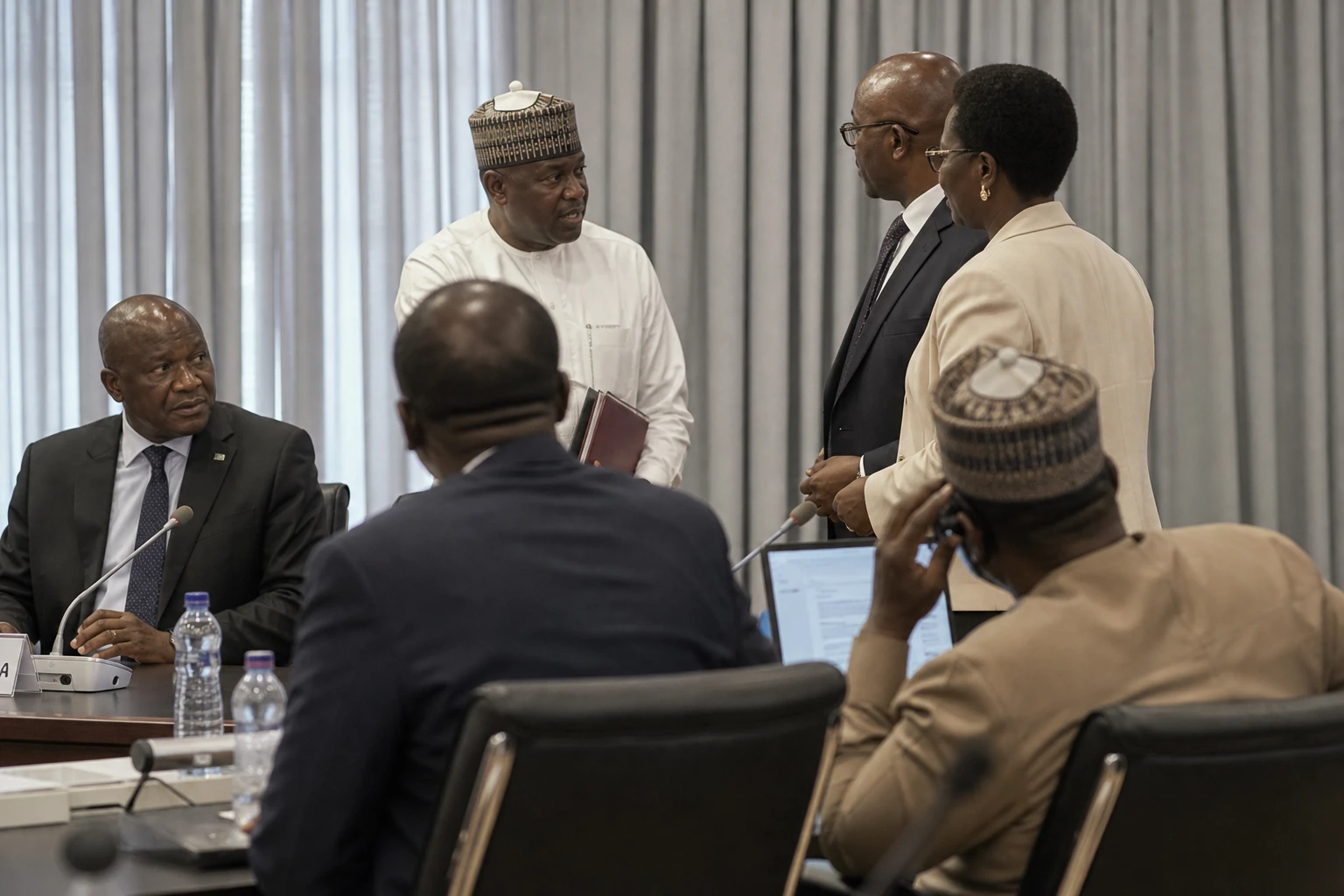
In the Sahel, Niger’s forests and along the banks of the Congo
A mass hostage-taking in north-central Nigeria, a virus following the great Congolese river, diplomats talking again between Algiers and Bamako, and a climate response that shows how much hunger can turn on rainfall. This week’s African news tells the same story from several angles: security, health and sovereignty now depend on regional networks as much as on decisions made in capitals.
In Sahelian states as in the Great Lakes region, crises no longer remain confined within a border. They travel along trade routes, with population movements, rivers and military alliances. This is where the ability of African states to protect without stoking alarm, negotiate without compromising themselves, and co-operate without surrendering control of their agenda is increasingly being tested.
Nigeria: an attack on worshippers exposes domestic security failings
In Niger State, in north-central Nigeria, the abduction of dozens of people from a mosque has brought an old problem back into focus: the vulnerability of rural villages to armed groups and ransom networks. President Bola Tinubu ordered security forces to launch a rescue operation on 25 August. Residents, meanwhile, spoke of about 600 women, children and elderly people being taken during the attack. This estimate should be treated with caution, as local authorities had not yet confirmed a definitive toll when the first reports were filed.
The details matter. The attack targeted a place of worship in an area where the state’s presence is uneven and armed groups exploit the dispersal of security forces. The crisis is therefore not just a policing issue. It affects everyday economic life, travel between villages, children’s schooling and trust in public authority. In a country already experiencing repeated kidnappings in the north and centre, the stakes go beyond the media shock: the aim is to break up a criminal model that has become profitable.
Nigeria is also facing this surge amid political pressure. As national elections approach, every mass abduction becomes a test for Abuja. But beyond the capital, it is the northern states that bear the immediate human cost, through ransoms, forced displacement and disrupted local markets.
DRC: Ebola is spreading not only by road, but also by river
In the Democratic Republic of the Congo, the response to the Ebola outbreak has taken on a very practical dimension: securing the Congo River, a vital artery of the country. The World Health Organization said the Bundibugyo virus disease outbreak had reached 56 to 57 health zones across six provinces, according to the latest WHO Africa updates. The organisation also reported more than 5,000 confirmed cases and more than 2,300 deaths as of mid-August. These figures are changing rapidly, but they already point to the largest outbreak ever documented in the country.
The national “River Without Ebola” initiative, launched on 20 August with WHO support, aims to reduce the risk of transmission along river routes that connect millions of people and underpin much of the country’s trade. This is crucial. In a country the size of a continent, the river is not scenery. It is a route, a floating market, a link between provinces and, potentially, an epidemiological corridor.
The response also reflects a change in approach. WHO and Africa CDC are calling for action led alongside local communities, frontline health workers and Congolese health authorities. The message is clear: without local trust, there can be no effective contact tracing, case isolation or targeted vaccination. The health battle is therefore being fought as much at river ports, such as those on the outskirts of Kinshasa, as in laboratories.
Algiers and Bamako seek to put an end to a crisis that has weighed on the Sahel
The visit of Mali’s Prime Minister, Abdoulaye Maïga, to Algiers on 24 August marked a resumption of dialogue between Mali and Algeria after a prolonged period of diplomatic tensions. The Malian prime minister’s office presented the visit as a shared commitment to relaunch co-operation. The Algerian government also confirmed that the two prime ministers had held a preparatory telephone conversation on 9 August.
This relative normalisation does not resolve the underlying issues. The differences concern security in northern Mali, the handling of armed groups and Algiers’ role in regional mediation. In the background lies a broader balance of power: a Sahel where borders remain porous, armies are advancing, separatism and jihadist violence are intertwined, and every neighbour is seeking influence over the region’s stability framework.
For Bamako, the challenge is twofold: to avoid diplomatic isolation while retaining control of the sovereignty narrative. For Algiers, it is a question of remaining a security player south of its border without being drawn into a lasting confrontation with Mali’s junta. The thaw seen in August does not close this chapter. Rather, it opens a phase of negotiations under close scrutiny.
Sudan and Senegal: how climate and health are reshaping priorities
In Sudan, UN agencies describe one of the world’s most severe food crises. The FAO, WFP and UNICEF estimate that about 19.5 million people are facing critical levels of food insecurity, while the risk of famine persists in several areas. El Niño is one of several aggravating factors. Across Sudan’s pastoral and agricultural belt, it brings less rainfall, weakens harvests and further complicates supply chains already shattered by war.
The country is therefore facing more than a climate shock. It is contending with conflict, population displacement, food price inflation and severely limited access to humanitarian aid. In rural areas, that means fewer seeds, less water and less income. In cities, it means more expensive markets and greater dependence on imports. Climate does not explain everything, but it is accelerating an already extreme vulnerability.
In Senegal, another form of dependence is being challenged: reliance on imported medicines. DREPAF, a generic hydroxyurea treatment produced locally by Teranga Pharma, has been presented as a major advance in the treatment of sickle-cell disease. APS confirmed the launch of the paediatric formulation in March 2026, and several Senegalese and institutional sources report that the product is now available in Senegal.
The significance goes beyond symbolism. Sickle-cell disease remains widespread across the continent, and local production can reduce costs, shorten waiting times for access and strengthen pharmaceutical autonomy. The stakes here are continental: whether African medical innovation will remain sporadic or become a sustainable industry capable of supplying West Africa too, and eventually other regional markets.
Across the continent, this week offers a reminder: the strongest responses do not come from fear spread on social media or from the scattergun distribution of foreign aid. They emerge when states, communities and regional institutions act together, with tools suited to local realities. From the Congo River to the tracks of Niger, and from Sahelian corridors to Dakar’s laboratories, the next stage will be shaped there.