Algeria
 Egypt
 Libya
 Morocco
 Sudan
 Tunisia
 Benin
 Burkina Faso
 Cabo Verde
 Côte d'Ivoire
 Ghana
 Guinea
 Guinea-Bissau
 Liberia
 Mali
 Mauritania
 Niger
 Nigeria
 Senegal
 Sierra Leone
 The Gambia
 Togo
 Cameroon
 Central African Republic
 Chad
 DR Congo
 Equatorial Guinea
 Gabon
 Republic of the Congo
 São Tomé and Príncipe
 Burundi
 Comoros
 Djibouti
 Eritrea
 Ethiopia
 Madagascar
 Malawi
 Mauritius
 Mozambique
 Rwanda
 Seychelles
 Somalia
 South Sudan
 Tanzania
 Uganda
 Angola
 Botswana
 Eswatini
 Lesotho
 Namibia
 South Africa
 Zambia
 Zimbabwe
From laboratory to factory: Kenya’s bet
In Kenya, the question is no longer simply how to produce. It is how to retain more value locally, on farms, in laboratories, factories and county towns. That is where the bioeconomy comes in: turning biological resources, whether plant, animal or microbial, into higher-value products, processes and services. In Nairobi, the government now wants to make it a fully fledged industrial pillar, as the country seeks to better absorb climate shocks, create skilled jobs and reduce its dependence on raw-material exports.
This shift comes within a framework already mapped out by Vision 2030 and the Bottom-Up Economic Transformation Agenda, the current Kenyan government’s economic roadmap. The country has also begun building industrial and aggregation parks in all 47 counties, to bring processing closer to agricultural areas and local markets. The government is still targeting manufacturing industry at 15% of GDP by 2027, rising to 20% in 2030.
What the 2026-2036 strategy sets out
The National Bioeconomy Strategy 2026-2036 was launched in Nairobi on 25 August 2026. It aims to make Kenya an African hub for innovation in this field. Musalia Mudavadi presented the framework as an economic response to external shocks, volatility, high unemployment and the growing effects of climate change. He also stressed the need to turn the country’s biological resources into products, businesses and jobs through science, research and innovation.
The message is clear: the country no longer wants to settle for exporting raw materials. It wants to develop sectors capable of producing goods locally for agriculture, health, energy, industry and biotechnology. This direction extends a trend already visible in other Kenyan public policies, particularly those focused on local processing, moving industry up the value chain and developing county-level value chains.
The government also links the strategy to research. Mudavadi reiterated the goal of gradually raising national research and development spending to 2% of GDP, a threshold enshrined in Kenya’s legal framework and regularly presented as essential to supporting innovation. The National Research Fund and science authorities are already working on funding instruments, while Bio-KE, an education and public policy framework co-funded by the European Union, aims to strengthen skills, entrepreneurship and links between universities, government and the private sector.
A response to very tangible weaknesses
This strategy does not start from scratch. It responds to three well-known constraints in the Kenyan economy: climate vulnerability, a shortage of processing facilities and a lack of highly specialised scientific skills. The country has a broad agricultural base, active university research and a young entrepreneurial ecosystem. But without industrial capacity or patient capital, some of this wealth still ends up in value chains that are too short. The launch of the strategy therefore signals a change of approach: bringing research, production and financing closer together.
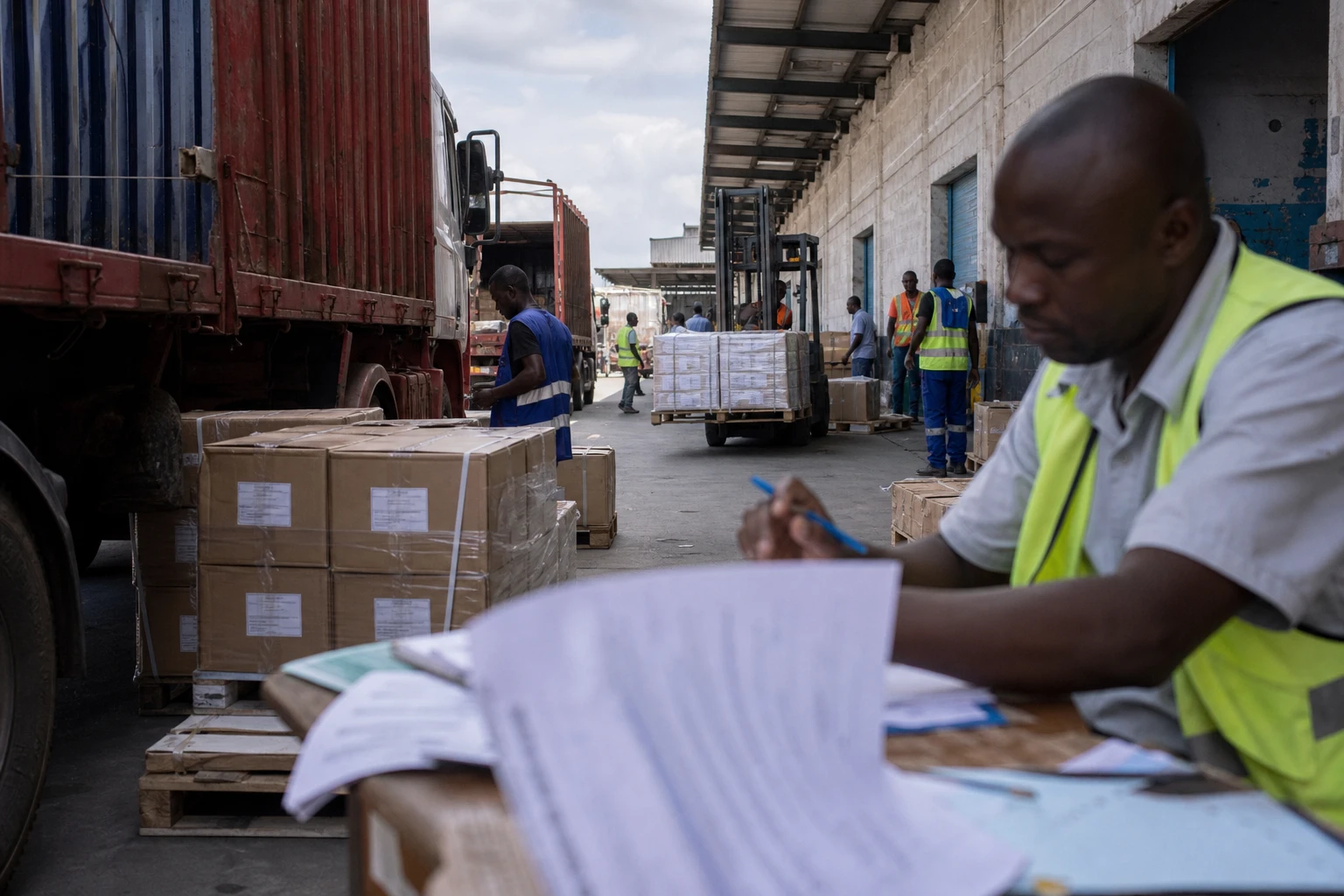
County industrial and aggregation parks are central to this approach. The idea is simple: bring producers together, facilitate storage, assembly, processing and marketing, then draw counties into a service-based economy and light industry. According to the ministry responsible for industrialisation, the project is also intended to support farmers, improve their incomes and create decent jobs. The programme is being rolled out in three phases, with funding shared between the national government and counties.
For young people, the stakes are high. The Kenyan government presents the bioeconomy as a field where an idea born at a university, in a laboratory, on a farm or in an incubator can become a viable business. For rural areas, this could mean more local market opportunities and less dependence on supply chains that capture value far from production areas. For cities, particularly Nairobi, it could also accelerate the emergence of a network of start-ups, processing SMEs and scientific services.
Significance beyond Kenya
Kenya is not alone in this field. In East Africa, the bioeconomy is becoming a marker of competitiveness, food sovereignty and green industrialisation. An academic and scientific forum organised around Kenya’s strategy placed the issue in a regional context, linking it to debates on innovation, biotechnology and sustainable development models in the region. Kenyan researchers also note that Ethiopia has already made progress on a national bioeconomy strategy, showing that a continent-wide race is taking shape.
This shift also matters for relations between Kenya, the East African Community and its external partners. A country that processes more goods locally strengthens its position in regional trade, as well as its ability to negotiate over more sophisticated products than raw materials. In this context, the 2026-2036 strategy is part of a broader moment: Nairobi’s effort to combine regional integration, local innovation and industrial upgrading. The test will now lie in implementation, funding and coordination between the national government, counties, universities and businesses.