
 Algeria
 Egypt
 Libya
 Morocco
 Sudan
 Tunisia
 Benin
 Burkina Faso
 Cabo Verde
 Côte d'Ivoire
 Ghana
 Guinea
 Guinea-Bissau
 Liberia
 Mali
 Mauritania
 Niger
 Senegal
 Sierra Leone
 The Gambia
 Togo
 Cameroon
 Central African Republic
 Chad
 DR Congo
 Equatorial Guinea
 Gabon
 Republic of the Congo
 São Tomé and Príncipe
 Burundi
 Comoros
 Djibouti
 Eritrea
 Ethiopia
 Kenya
 Madagascar
 Malawi
 Mauritius
 Mozambique
 Rwanda
 Seychelles
 Somalia
 South Sudan
 Tanzania
 Uganda
 Angola
 Botswana
 Eswatini
 Lesotho
 Namibia
 South Africa
 Zambia
 Zimbabwe
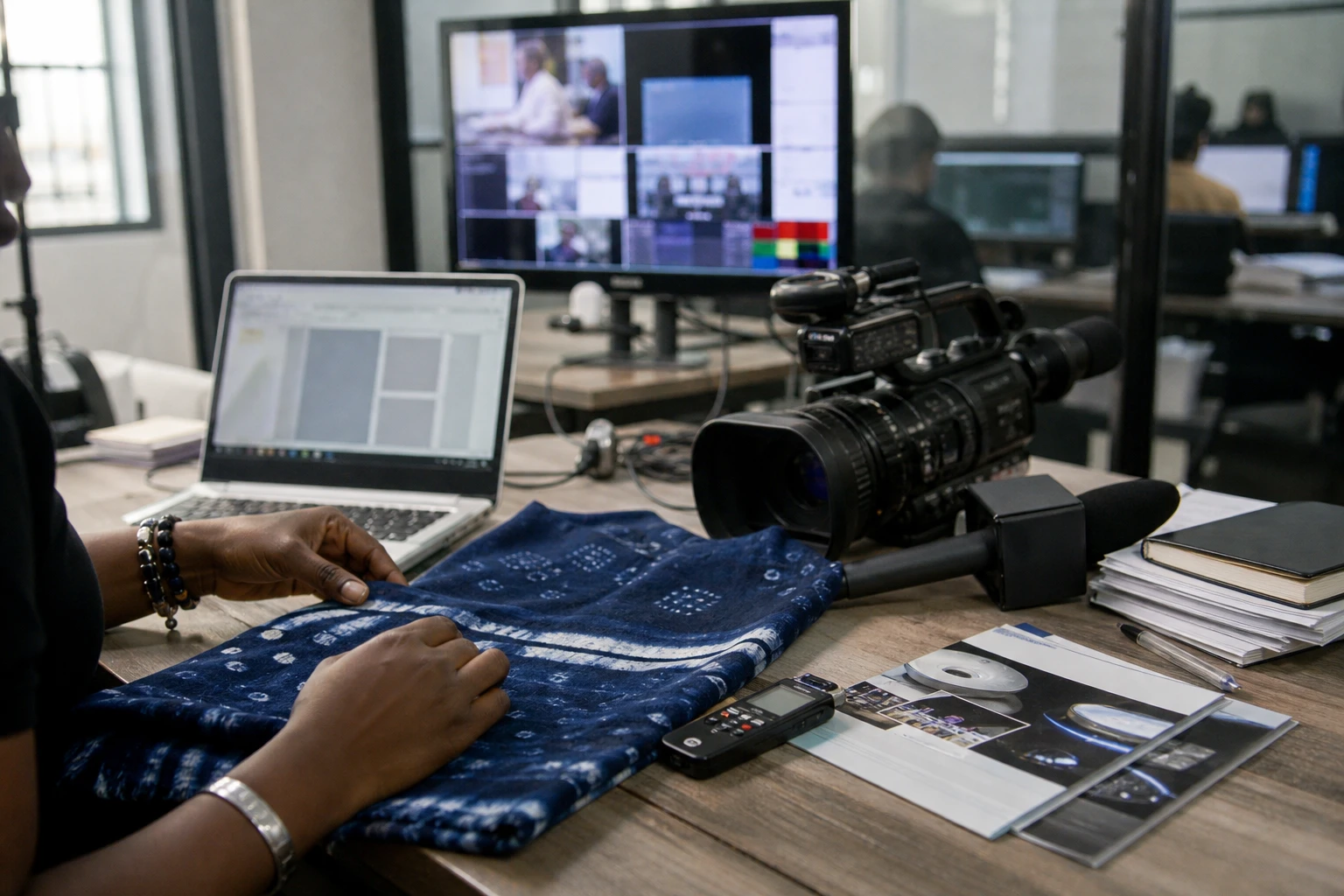
When indigo becomes a lifeline
In Nigeria, art does not live only in museums. Sometimes it serves as a wage, a refuge and a passport to social mobility. That is what the journey of Nike Davies-Okundaye, known as Mama Nike, a leading figure in adire textiles, tells us. Adire is a Yoruba cloth dyed with indigo and passed down through generations in the country’s south-west. Today, adire remains a strong cultural marker, but it is also a skill that speaks of jobs, independence and transmission.
This story takes on particular significance in Abuja, where the federal government is now more clearly making its ambitions for culture and the creative industries known. In October 2024, Nigeria established a ministry dedicated to art, culture, tourism and the creative economy. The government presents the sector as a means of diversifying beyond oil, with expected effects on employment and revenue.
An artist born into hardship
Born in 1951 in Ogidi-Ijumu, in what is now Kogi State, in north-central Nigeria, Nike Okundaye grew up in an environment where weaving, dyeing and adire were part of family life. Sources agree on this point: she learned textile-making techniques from the women in her family at an early age, before turning that knowledge into a profession.
Her rise, however, was anything but straightforward. Poverty, family breakdown and the constraints of marriage marked her early years. In available biographical accounts, she says she found in adire a vital resource, not merely an art form. This matters. In an economy where the informal sector absorbs a large share of the workforce, especially women, a craft can become a means of economic survival.
The centre she founded in Osogbo in 1983 reflects this approach. According to the Nike Art Gallery’s official website, it provided the basis for free training for thousands of young Nigerians, particularly disadvantaged women. The same site says she later opened a weaving centre in Ogidi-Ijumu in 1996, employing more than 200 women, followed by an art research centre in Abuja in 2002.
From home workshop to cultural infrastructure
The Nike Art Gallery in Lagos has grown beyond the scope of a simple private workshop. Its official website describes it as a five-storey space with more than 25,000 works, and branches in Lagos, Abuja, Osogbo, the United States and at Olumo Rock in Ogun State. Other independent sources describe it as one of the largest galleries in West Africa.
This growth says something about contemporary Nigeria’s cultural landscape. The country has a dense creative ecosystem, driven by Nollywood, Afrobeats, fashion and visual arts. Federal authorities now want to give this economy greater structure. The Nigerian Investment Promotion Commission notes that the creative economy includes art, fashion, cultural tourism and intellectual property rights. It describes it as a sector that is already visible worldwide, but still underfunded locally.
In this landscape, Mama Nike plays a pivotal role. She does more than exhibit works. She also creates opportunities. That distinction is crucial. In Nigeria, culture is often celebrated for its symbolic power, but creators still face challenges in accessing finance and distribution, and in protecting traditional skills. The public initiative announced around a creative economy fund is specifically intended to provide more structured support for crafts, textiles and fashion.
An influence extending beyond Lagos and Abuja
Nike Davies-Okundaye’s story resonates far beyond Nigeria. It speaks to a question running through West Africa: how can a living textile heritage be turned into sustainable income without losing its character? UNESCO notes that Nigeria is among the African countries known for their indigo traditions, alongside Benin, Cameroon and Guinea. The cloth is therefore not simply an object of heritage. It is an economic, social and aesthetic language shared across the region.
Its continental reach is also political. As African states highlight the creative industries, they are seeking sectors capable of creating jobs, expanding cultural exports and strengthening symbolic sovereignty. Nigeria, Africa’s most populous country and a central player in ECOWAS, is moving in this direction through a mix of cultural diplomacy and economic strategy. In this context, craft is no longer peripheral. It is becoming part of development.
For Mama Nike, this approach takes concrete form. A childhood marked by deprivation led to cultural infrastructure, and then to thousands of women trained in textiles, embroidery and adire. Her story does not sum up Nigeria. It does, however, show how local knowledge can be transformed into economic power without losing its dignity or memory.



