Algeria
 Egypt
 Libya
 Morocco
 Sudan
 Tunisia
 Benin
 Burkina Faso
 Cabo Verde
 Côte d'Ivoire
 Ghana
 Guinea
 Guinea-Bissau
 Liberia
 Mali
 Mauritania
 Niger
 Nigeria
 Senegal
 Sierra Leone
 The Gambia
 Togo
 Cameroon
 Central African Republic
 Chad
 DR Congo
 Equatorial Guinea
 Gabon
 Republic of the Congo
 São Tomé and Príncipe
 Burundi
 Comoros
 Djibouti
 Eritrea
 Ethiopia
 Kenya
 Madagascar
 Malawi
 Mauritius
 Mozambique
 Rwanda
 Seychelles
 Somalia
 South Sudan
 Tanzania
 Uganda
 Angola
 Botswana
 Eswatini
 Lesotho
 Namibia
 Zambia
 Zimbabwe
In a Klein Karoo village, creativity has become a way of inhabiting the place
In Barrydale, in the Klein Karoo, art is not a backdrop added to a postcard. It has found its way into everyday life, among galleries, studios, small guesthouses and tables where people linger. In this Western Cape town, the space, the light and the village’s unhurried pace have drawn creators seeking more than just an address. They find a place to work, but also a different way to breathe.
This momentum is part of a wider context. Barrydale lies on Route 62, a major tourism and wine route linking several Western Cape towns and crossing Klein Karoo landscapes towards Oudtshoorn and beyond. The area belongs to Swellendam Local Municipality, where Barrydale is one of the small towns that make up the social fabric of the region. Statistics South Africa’s census data also underscores the municipality’s very real challenges around jobs, services and population density, far removed from the image of a mere retreat for visitors seeking tranquillity.
A creative economy, with shared spaces and uses
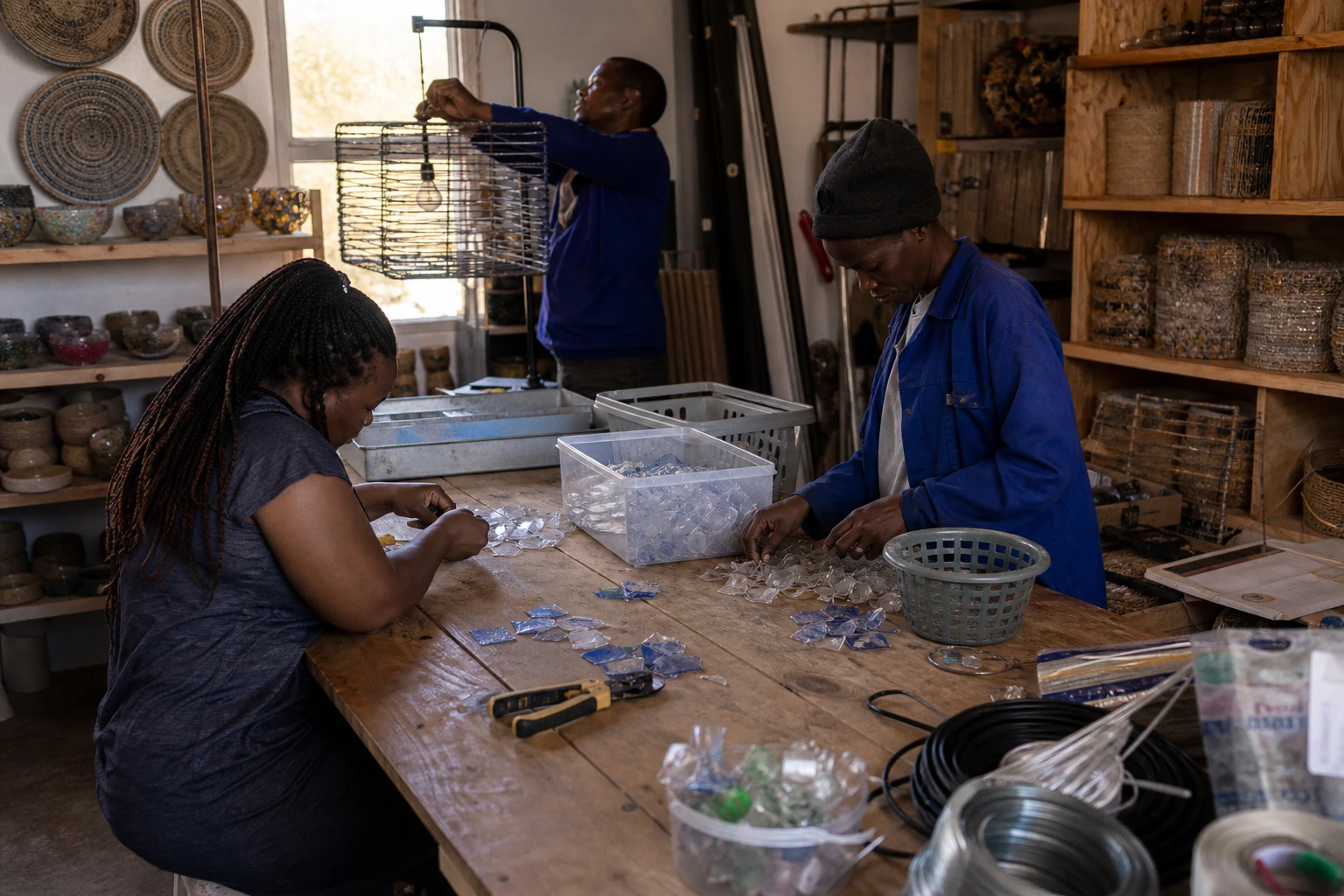
The village owes some of its profile to a handful of landmark venues. One of the best known is the Karoo Art Hotel, on Van Riebeeck Street in Barrydale. Around it are studios, collectives and meeting spaces that draw visitors through the town centre. The presence of the Magpie Art Collective, which specialises in lighting and objects made from reclaimed materials, shows that the local offer is not limited to exhibitions. It encompasses making, assembling and upcycling — transforming used objects into new, desirable pieces.
This model is no minor matter. It links tourism, crafts, accommodation and food in a single value chain. Barrydale also benefits from its position on Route 62, often described as a roughly 850-kilometre route between Cape Town and Port Elizabeth, with agricultural and wine-producing stops that attract more travellers. In a small town like this, a gallery or studio does more than display art. It extends visitors’ stays and brings customers to cafés, wine cellars, shops and guesthouses. For a modest local economy, this ripple effect matters greatly.
Barrydale also benefits from its surroundings. Tradouw Pass, the Langeberg mountains, the Warmwaterberg hot springs and the Klein Karoo landscapes offer a mix of nature, scenic drives and cultural stops. This combination helps explain why visitors stay longer than they had planned. It also explains why artists settle or return. In a place where the flow of people directly supports economic activity, creativity becomes a local resource in its own right.
Young people gain access to practices they rarely encounter
Barrydale’s art scene is not limited to established adults or passing visitors. Some initiatives also work with children and teenagers. A local youth organisation offers workshops in art, crafts and puppetry. In a small community with limited regular cultural provision, these activities offer an introduction to practical skills, as well as to imagination and self-expression. They help forge links between learning, confidence and social interaction.
This is worth emphasising because it changes how the village is seen. The issue is not just the presence of well-known artists or curious tourists. It is also social. When a workshop welcomes young people, it creates something more than a travel memento. It opens up a space to learn how to work with one’s hands, develop a group project and present the result to the public. In a country where territorial inequalities remain stark, this kind of cultural initiative can strengthen local roots without claiming to solve, on its own, problems of employment or access to services.
The collectives based in Barrydale also connect creativity with practical uses. The example of a workshop that reclaims and makes products from PET plastic shows how art can address very tangible concerns, such as recycling and bespoke commissions. Artistic practice then intersects with the circular economy, in a region where making the most of materials, skills and short supply chains remains crucial. This is not a decorative gloss on reality. It is a different way of producing, selling and inhabiting a place.
Barrydale looks beyond its streets without wanting to lose its character
The village’s success, however, brings its own tensions. When a place attracts more visitors, second-home owners and high-end businesses, questions about changing its character quickly arise. Barrydale is no exception. Cultural growth can support local businesses and jobs, but it can also push up prices, change how space is used and shift the balance between long-standing residents, newcomers and tourism operators. In small Western Cape towns, the debate often resurfaces as soon as a destination gains visibility.
For South Africa, Barrydale’s story speaks to a wider trend. The country has a strong tradition of decentralised arts initiatives, from the Cape to Limpopo, while regional tourist routes connect heritage, local economies and domestic travel. In a South African context still marked by the territorial disparities inherited from apartheid, small towns that turn their cultural identity into an economic resource are attracting attention. They show that creative hubs are not confined to major cities such as Pretoria, Johannesburg, Cape Town or Durban.
The wider African relevance is clear. In many African countries, intermediate towns are now seeking to retain young people, diversify their income and capture a share of tourism value. Barrydale offers one possible path: start with a landscape, a craft or a studio, then build a local ecosystem in which creativity, hospitality and the passing on of skills reinforce one another. What the village must now watch is not just its image. It is whether it can remain accessible, vibrant and pluralistic as its reputation grows.