Algeria
 Egypt
 Libya
 Morocco
 Sudan
 Tunisia
 Benin
 Burkina Faso
 Cabo Verde
 Côte d'Ivoire
 Ghana
 Guinea
 Guinea-Bissau
 Liberia
 Mali
 Mauritania
 Niger
 Nigeria
 Senegal
 Sierra Leone
 The Gambia
 Togo
 Cameroon
 Central African Republic
 Chad
 DR Congo
 Equatorial Guinea
 Gabon
 Republic of the Congo
 São Tomé and Príncipe
 Burundi
 Comoros
 Djibouti
 Eritrea
 Ethiopia
 Kenya
 Madagascar
 Malawi
 Mauritius
 Mozambique
 Rwanda
 Seychelles
 Somalia
 South Sudan
 Uganda
 Angola
 Botswana
 Eswatini
 Lesotho
 Namibia
 South Africa
 Zambia
 Zimbabwe

A Tanzanian project at the heart of a more volatile market
When maritime traffic is disrupted in the Middle East, the value of major distant gas projects can suddenly change. For Tanzania, this realignment is not merely turning an industrial proposal into a geopolitical bet. It is bringing back to the fore a project that has long been on hold, caught between immense potential and slow-moving negotiations.
In Dodoma, Tanzania’s government has been pursuing a clear goal for several years: to make offshore gas a driver of growth, jobs and public revenue. The country is part of the East African Community, where energy projects advance only as quickly as legal and fiscal frameworks allow. In the region, the challenge is no longer simply to extract or produce. It is also to secure financing, contracts and markets in a more competitive global marketplace.
The international context is now working in Dar es Salaam’s favour. Disruptions in the Strait of Hormuz, a key route for liquefied natural gas exports from the Gulf, have reminded Asian buyers that a supply chain can be jeopardised by a single chokepoint. At the same time, global supply is expected to increase, with new volumes coming from the United States, Qatar and other basins. This double pressure favours projects able to offer both large volumes and a geography considered safer.
What the project promises, and why it has yet to launch
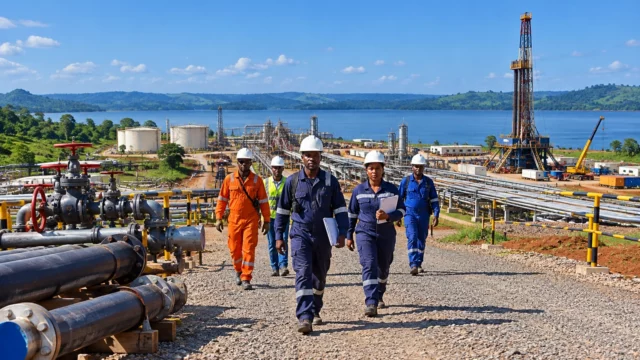
The Tanzania LNG project aims to develop more than 47 Tcf of natural gas discovered off the country’s southern coast. The planned liquefaction plant near Lindi could produce between 10 and 15 million tonnes of LNG a year through two liquefaction trains. The total cost put forward for the project is about $42 billion, which would make it by far the largest industrial investment ever contemplated in Tanzania.
The project brings together state-owned Tanzanian company TPDC, which represents the national interest, and several international groups already involved in the country’s gas industry. On paper, the idea is simple: turn an offshore resource into export cargoes bound for Asia without relying on the obligatory route through Hormuz. This prospect is of particular interest to markets seeking to diversify their sources of supply at a time when energy security is once again a central concern for major importers.
Yet a final investment decision has still not been made. The project is progressing, but in fits and starts. Talks have been slowed by requests to revise some financial and fiscal terms, after years of negotiations. This point is decisive. Without a stable framework, private partners will not commit to a plant, port terminals, transport facilities and very long-term financing.
The government of Samia Suluhu Hassan wants to send a different signal from the one that prevailed under the presidency of John Magufuli, which was marked by a more rigid economic nationalism. In Dodoma, the current approach places greater emphasis on predictability than confrontation. This is an important shift, because major energy projects are determined not only by geology. They also depend on regulatory confidence, contractual stability and the state’s ability to honour its commitments over time.
Jobs expected, but benefits will depend on the local framework
Tanzanian authorities present Tanzania LNG as a catalyst for transformation. They cite more than 100,000 direct and indirect jobs, as well as an annual boost of nearly 7% to GDP in the most favourable modelling. These figures remain projections, not guaranteed outcomes. But they convey the scale of expectations placed on the project, particularly in southern regions where infrastructure, training and public services remain unevenly distributed.
For Lindi, the issue goes beyond the gas construction site itself. A plant of this scale attracts roads, housing, suppliers, technical schools, logistics services and subcontractors. It can also shift the local balance between the formal and informal economies. Traders, transport operators, small businesses and young people looking for work will not all be affected in the same way. If local procurement is well organised, the benefits will spread. If not, most of the value will be captured elsewhere.
Environmental and land issues also remain central. A coastal project of this scale requires decisions on how the shoreline is used, compensation, fishing and the protection of sensitive areas. In southern Tanzania, where communities depend on the maritime economy and small-scale commercial activity, social acceptance matters as much as financial returns. A project can be strategic for the state and the investor without automatically benefiting local residents if it is not properly regulated.
Tanzania is not alone in betting on this resource. In neighbouring Mozambique, other major LNG projects are also progressing, each with its own security, industrial and financial constraints. East Africa is thus beginning to take shape as a gas-producing region in its own right, even as each country follows its own path. For the region, the challenge is to move from the promise of resources to a genuine industrial framework capable of serving external markets as well as domestic energy needs.
An opportunity for Dodoma, and a test for East Africa
The current moment offers a favourable window, but it will not last for ever. As global LNG supply grows, buyers become more demanding. They compare prices, timelines, contractual stability and the security of maritime routes. Tanzania must therefore turn its renewed strategic appeal into an investment decision, and then into actual construction. The project’s credibility is at stake.
At the continental level, the stakes extend beyond Tanzania. In the EAC, several states are seeking to monetise hydrocarbons or strengthen their energy security while retaining political room for manoeuvre. If Tanzania LNG finally clears the decisive hurdle, the project could become a reference point for other African economies seeking to attract large-scale capital without giving up a greater share of value added. Conversely, another setback would show that resources are not enough: clear institutions, negotiated taxation and a coherent industrial strategy are also needed.
For Tanzania, the question is no longer simply whether the gas exists. It is now whether Dodoma can convert this potential into infrastructure, and then into lasting revenue. This transition from resource to project, and from project to the real economy, will show whether the country is finally entering a new phase in its energy development.