Algeria
 Egypt
 Libya
 Morocco
 Tunisia
 Benin
 Burkina Faso
 Cabo Verde
 Côte d'Ivoire
 Ghana
 Guinea
 Guinea-Bissau
 Liberia
 Mali
 Mauritania
 Niger
 Nigeria
 Senegal
 Sierra Leone
 The Gambia
 Togo
 Cameroon
 Central African Republic
 Chad
 DR Congo
 Equatorial Guinea
 Gabon
 Republic of the Congo
 São Tomé and Príncipe
 Burundi
 Comoros
 Djibouti
 Eritrea
 Ethiopia
 Kenya
 Madagascar
 Malawi
 Mauritius
 Mozambique
 Rwanda
 Seychelles
 Somalia
 South Sudan
 Tanzania
 Uganda
 Angola
 Botswana
 Eswatini
 Lesotho
 Namibia
 South Africa
 Zambia
 Zimbabwe
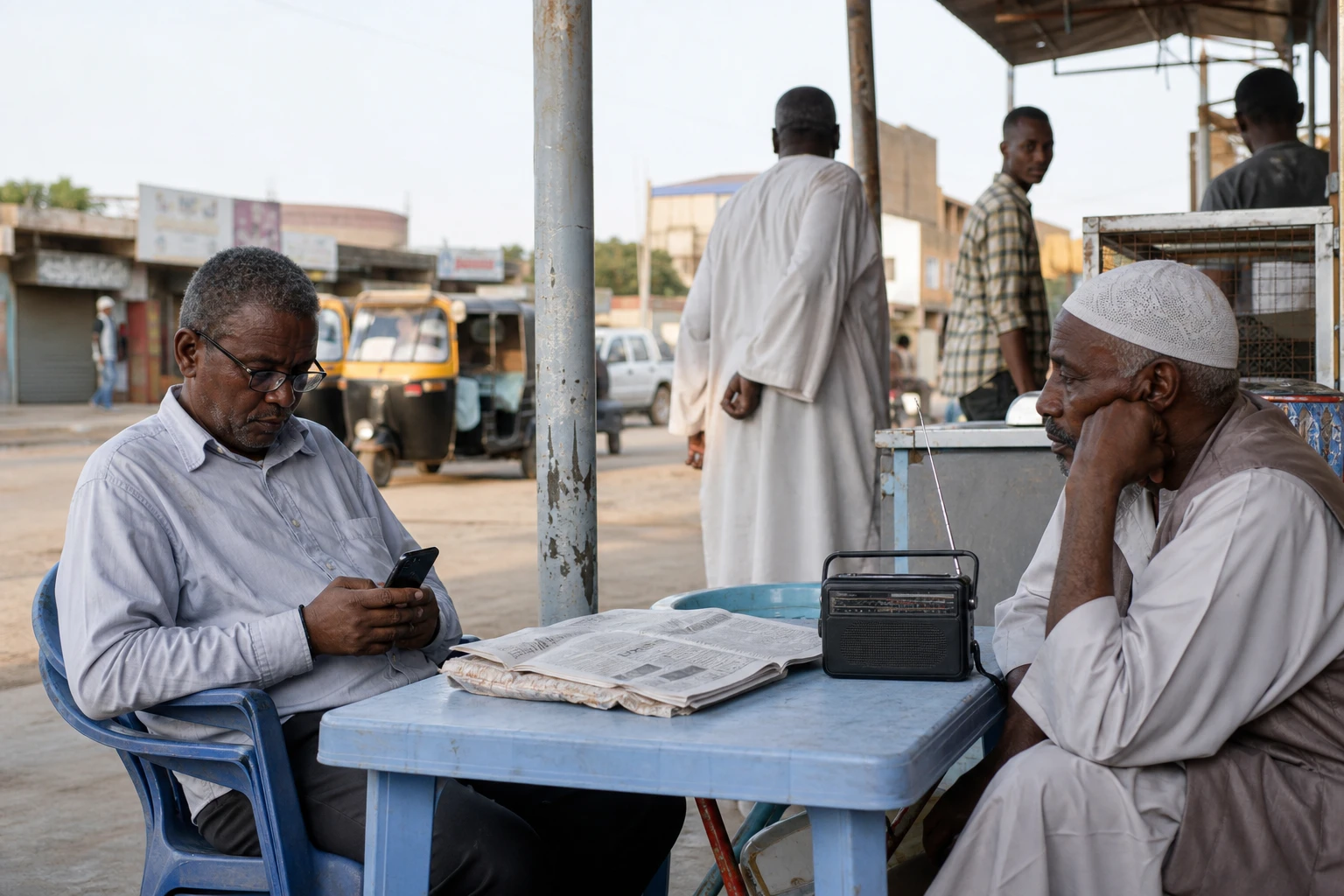
In Khartoum, the diplomatic front matters as much as the military one
In a war where every arms shipment can prolong the fighting, the battle is no longer being waged only on the ground. It is also being fought in New York, at the Security Council, where a proposal is now under discussion to extend an arms embargo to all of Sudan, rather than just Darfur.
For the Sudanese authorities, the issue goes beyond the technicalities of sanctions. It touches on the army’s ability to rearm, how the great powers view the conflict and Khartoum’s image as it faces increasingly direct international pressure. In a country ravaged since April 2023 by fighting between the regular army and the Rapid Support Forces (RSF), every UN decision becomes a political signal.
An old embargo, born out of Darfur, returns to centre stage
The arms embargo imposed on Darfur dates back to the mid-2000s. The Security Council initially banned arms transfers to non-governmental actors involved in violence in the western Sudanese region, before imposing broader restrictions on military supplies to Darfur. Washington now wants to extend this regime to the whole of Sudan, also including drones and related technologies.
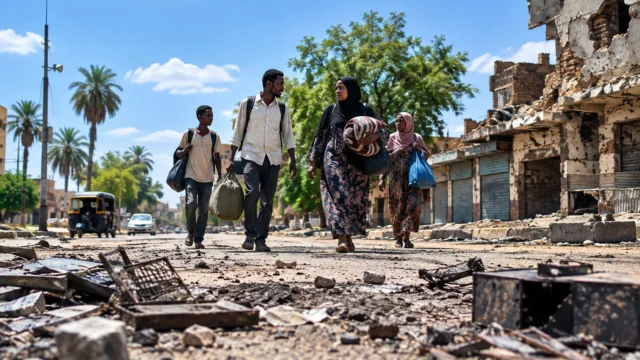
The move comes as the war has become nationwide. Fighting is no longer confined to El-Fasher, Nyala or Geneina. It has spread to the centre, the Nile region and the capital, amid shifting front lines and increasingly fragmented supply routes. The debate over the embargo is therefore no longer about a province in crisis, but a country at war.
According to information presented to the Security Council, the US proposal has met strong reservations from Russia and China. Sudan also opposes it. In this diplomatic contest, each capital is defending its own view of the conflict and its strategic interests, while the warring parties’ regional and international allies face increasing scrutiny.
Al-Burhan responds in the language of war
General Abdel Fattah al-Burhan, head of the Sudanese army and president of the Transitional Sovereignty Council, played down the impact of new sanctions. Speaking before military personnel, in remarks reported in Khartoum, he said external pressure would change neither the army’s position nor its determination to continue what he calls the “battle for dignity”.
He also sought to quash rumours of a no-fly zone over the country, urging the public not to be distracted by what he described as propaganda. The message is clear: the military leadership wants to show that it remains in control of the political tempo, despite growing diplomatic isolation.
The tone was also directed abroad. Al-Burhan implicitly targeted those he accuses of supporting sanctions. Without naming his opponents, he is seeking to maintain a hard line in the face of international rhetoric increasingly linking an end to the crisis with strict controls on arms flows.
What an expanded embargo would mean for Sudanese people
On paper, an expanded embargo could curb supplies to both sides. In practice, its effectiveness would depend first on control of borders, transit networks and external support. Sudan remains a porous territory, crossed by regional routes, informal trafficking networks and support flows from several directions.
For civilians, the stakes are tangible. Fewer weapons should, in theory, reduce the intensity of the fighting. But if the embargo is poorly enforced, it risks becoming merely a symbolic measure, with no immediate effect on bombarded neighbourhoods, blocked markets and forced displacement. People are already paying the price of a fragmented economy, a deteriorating health system and disrupted travel between towns and rural areas.
For the army, the threat is different. A tightening of international restrictions could complicate military logistics, limit some technical capabilities and increase dependence on less visible external partners. For the RSF, the pressure would focus above all on their suspected supply routes, often denounced by officials close to the army. But as long as monitoring mechanisms remain incomplete, each side will continue accusing the other of circumventing the rules.
The debate also reveals a deep political divide. On one side are those who want to use the Security Council as a lever to reduce arms flows. On the other are those who see it as a tool of selective pressure, liable to strengthen one side at the expense of the other. This ambiguity explains the strength of the reactions in Khartoum and in allied capitals.
A development to watch closely across Africa and the region
The Sudan file extends far beyond closed-door discussions in New York. It concerns security in the Horn of Africa, the balance of power in the Nile basin and the stability of an already tense neighbourhood. In this part of the continent, the conflict in Sudan is driving displacement, adding pressure on neighbouring countries and fuelling concerns about arms flows to other theatres.
It also concerns the African Union and IGAD, the Intergovernmental Authority on Development, an East African organisation often involved in Sudanese crises. But their room for manoeuvre remains limited as long as the warring parties’ external backers retain decisive influence. Suspended between internal war and international competition, Sudan thus remains at the crossroads of African, Arab and Western agendas.
The next step will come at the Security Council, where a vote or negotiations on the wording will show whether the idea of a nationwide embargo is gaining ground or stalling. For Khartoum, the stakes are not merely diplomatic. They concern how the war might one day be contained before it becomes even harder to stop.