Algeria
 Egypt
 Libya
 Morocco
 Sudan
 Tunisia
 Benin
 Burkina Faso
 Cabo Verde
 Côte d'Ivoire
 Ghana
 Guinea
 Liberia
 Mali
 Mauritania
 Niger
 Nigeria
 Senegal
 Sierra Leone
 The Gambia
 Togo
 Cameroon
 Central African Republic
 Chad
 DR Congo
 Equatorial Guinea
 Gabon
 Republic of the Congo
 São Tomé and Príncipe
 Burundi
 Comoros
 Djibouti
 Eritrea
 Ethiopia
 Kenya
 Madagascar
 Malawi
 Mauritius
 Mozambique
 Rwanda
 Seychelles
 Somalia
 South Sudan
 Tanzania
 Uganda
 Angola
 Botswana
 Eswatini
 Lesotho
 Namibia
 South Africa
 Zambia
 Zimbabwe
A vote that goes beyond the Constitution
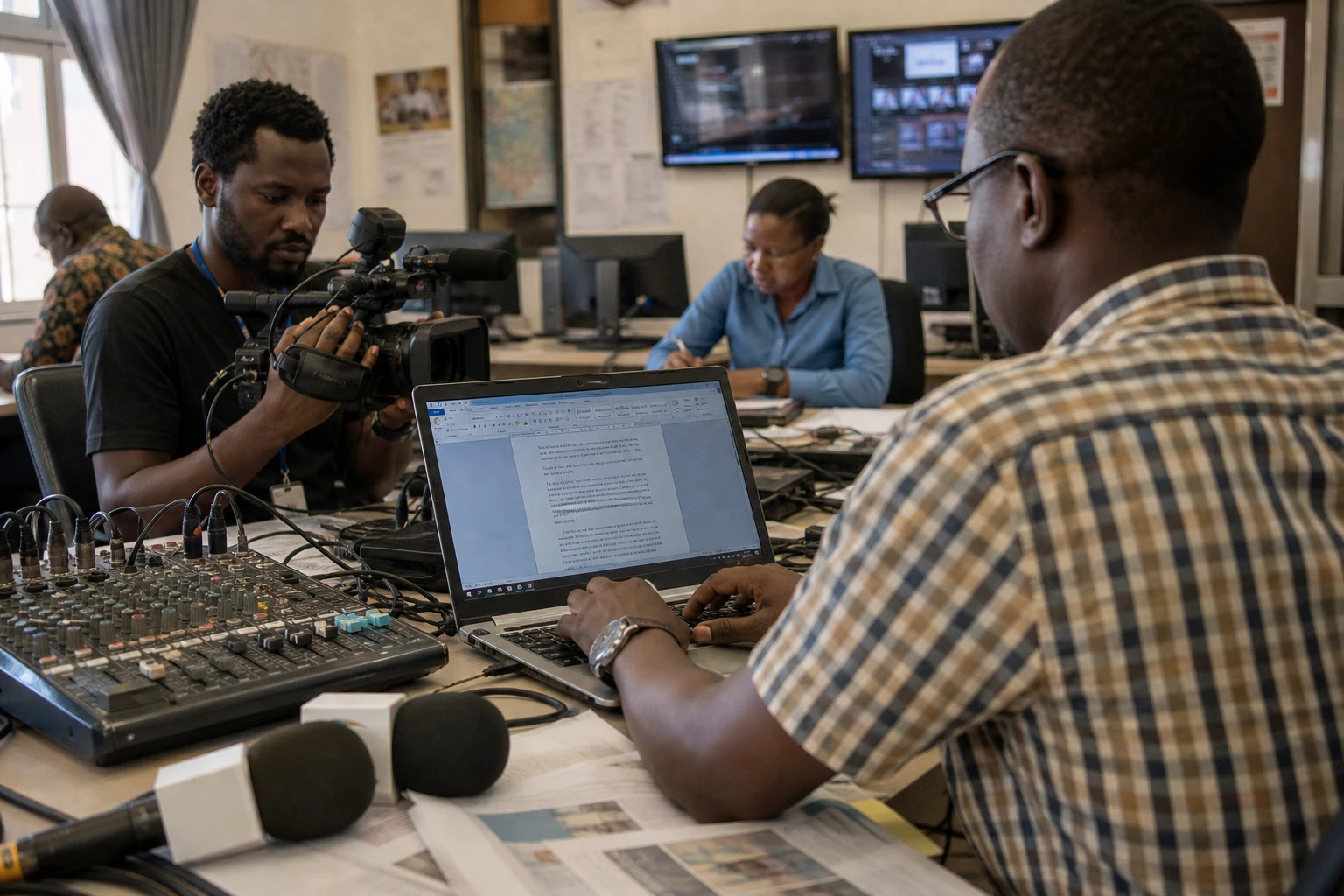
In Bissau, the debate is not only about a legal text. It concerns the precise balance of power, the duration of the transition and how a country of 2.2 million people is trying, once again, to emerge from an institutional crisis.
On 30 August 2026, people in Guinea-Bissau are due to vote on a new Constitution. General elections are scheduled for 6 December. In a country marked by political upheaval, this double date is far more than a formality. It will show whether the military transition is opening the way to an orderly exit or establishing a new balance of power at the top of the state.
Bissau’s transition under regional scrutiny
Guinea-Bissau has been under a transitional regime since the coup of 26 November 2025. Since then, the military authorities have put in place an interim administration led by General Horta Inta-a, with a transitional prime minister, Ilídio Vieira Té. ECOWAS, the Economic Community of West African States, has also returned to the forefront to support a return to constitutional rule.
The region is not watching from a distance. In Freetown, on 19 July 2026, ECOWAS heads of state took note of the announced referendum and the general elections scheduled for December. They also appointed Senegal as mediator, a sign that the crisis in Guinea-Bissau is now being treated as an issue of West African stability, rather than a strictly domestic matter.
This involvement is significant. Guinea-Bissau remains one of the most fragile states in the ECOWAS bloc. For years, its political crises have been intertwined with security, governance and institutional control challenges. The current transition is therefore part of a long sequence of ruptures, failed compromises and military takeovers.
What the transition’s timetable tells us
The 30 August referendum concerns a new Basic Law adopted by the National Transitional Council. According to information published since July, the text puts to a popular vote a sweeping overhaul that would significantly strengthen presidential powers. This is the issue at the heart of most concerns in Guinea-Bissau’s public debate.
The draft under discussion envisages a more concentrated executive, with a head of state better placed to appoint the prime minister, direct government policy and exert greater influence over institutions. This would mark a significant shift in a country whose current Constitution already rests on a delicate balance between the presidency, government and parliament.
The transitional authorities present the referendum as a step towards normalisation. They see it as a necessary stage before a return to the polls in December. But the stakes go beyond procedural legitimacy. They also concern the quality of the political process to come. A text that strengthens the executive centre can stabilise decision-making. It can also weaken checks and balances if institutional safeguards remain weak.
A state weary of cycles of upheaval
Guinea-Bissau is not approaching this vote in a vacuum. The country has experienced repeated constitutional crises, the dissolution of institutions, disputed elections and recurrent military interventions. This instability has weakened the administration, hampered public policy and sustained a long-term dependence on external mediation.
For residents, the stakes are tangible. In the capital, Bissau, priorities remain the continuity of services, the movement of goods, payment of salaries and clarity over the next key dates. In the regions, the issues also include access to the state, justice and political representation. When institutions break down, local decision-making systems are among the first to seize up.
Political actors, meanwhile, have different interests. The transitional executive is seeking a swift, controlled exit. Suspended or marginalised parties want guarantees that the process will be inclusive. Civil society is calling for a credible consultation. And regional partners, beginning with ECOWAS and the African Union, want to prevent a new period of crisis from taking hold in the heart of the Gulf of Guinea.
The balance at stake for Guinea-Bissau and the region
The sensitive issue is not only the text’s content. It is how the text will be accepted, explained and implemented. A Constitution can provide a pathway out of the crisis towards civilian rule. It can also become an instrument for consolidating the transitional authorities’ power if political dialogue is incomplete and the vote lacks sufficient safeguards.
The regional context heightens this scrutiny. ECOWAS, already dealing with other governance crises in West Africa, is seeking to prevent yet another precedent. The African Union, for its part, reiterates its red line against unconstitutional changes of power. In both cases, Guinea-Bissau is a test of African organisations’ ability to oversee a military transition without allowing the process to drift.
At continental level, what is unfolding in Bissau therefore goes beyond Guinea-Bissau alone. The referendum will show whether a transition imposed by force can be turned into a credible political timetable. It will also show whether a concentration of executive power is seen as an answer to disorder or as a new source of fragility. 30 August, followed by 6 December, will be the two milestones to watch in assessing how solid the return to constitutional rule really is.