Algeria
 Egypt
 Libya
 Morocco
 Sudan
 Tunisia
 Benin
 Burkina Faso
 Cabo Verde
 Côte d'Ivoire
 Ghana
 Guinea
 Guinea-Bissau
 Liberia
 Mali
 Mauritania
 Niger
 Nigeria
 Senegal
 Sierra Leone
 The Gambia
 Togo
 Cameroon
 Central African Republic
 Chad
 DR Congo
 Equatorial Guinea
 Gabon
 Republic of the Congo
 São Tomé and Príncipe
 Burundi
 Comoros
 Djibouti
 Eritrea
 Ethiopia
 Kenya
 Madagascar
 Malawi
 Mauritius
 Mozambique
 Rwanda
 Seychelles
 Somalia
 South Sudan
 Tanzania
 Uganda
 Angola
 Botswana
 Eswatini
 Lesotho
 Namibia
 South Africa
 Zimbabwe
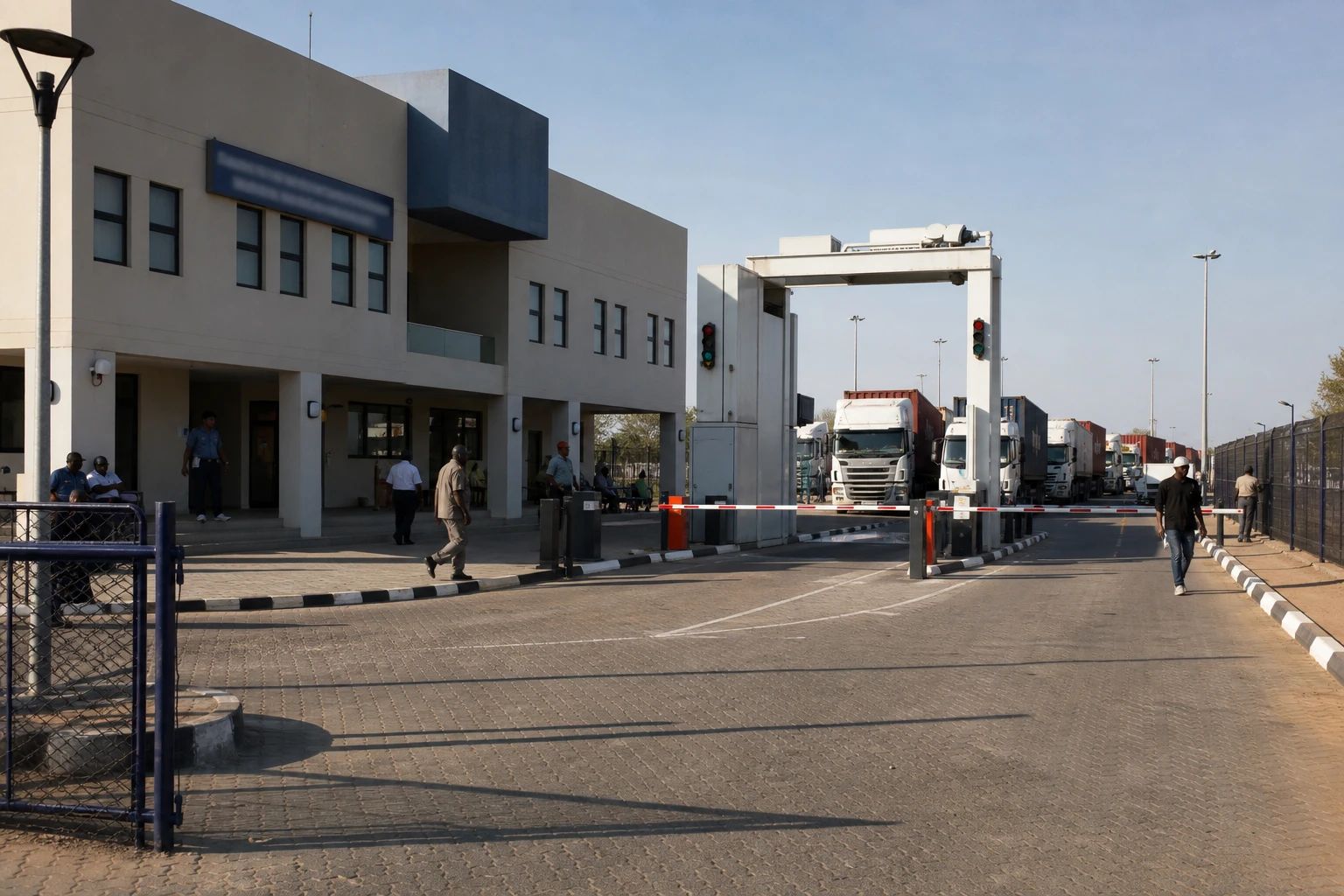
At Livingstone, the border is no longer just a crossing point. It is becoming a test of method for Zambia.
In a landlocked country such as Zambia, every minute gained or lost at the border affects the cost of trade, public revenue and operators’ confidence. At Livingstone, in the south of the country, modernising cargo checks is therefore part of a broader challenge: moving legitimate goods faster without allowing smuggling to take advantage of administrative delays.
The choice of Livingstone is no coincidence. The Zambian city, close to the border with Zimbabwe and at the heart of flows towards southern Africa, handles commercial traffic but also faces security constraints. Zambia has also embarked on a broader reform of border management through the Border Management and Trade Facilitation Act, 2025, which governs one-stop border posts, coordination between agencies and non-intrusive inspections.
A technology agreement as part of an ongoing customs reform
On 24 August 2026, the Zambia Revenue Authority (ZRA) and US company Astrophysics Inc. signed an agreement to equip the Livingstone border post with an X-ray cargo inspection system. The agreement was signed in Lusaka in the presence of representatives of the US embassy. Several Zambian media outlets confirmed that the contract is for the installation of a scanner capable of inspecting cargo more quickly and accurately.
According to published information, the aim is twofold: to reduce truck queues and waiting times, and to improve the detection of smuggled goods, illicit products and hazardous materials. This approach to non-intrusive inspection reflects the current direction of Zambia’s border policy, which aims to move from slow, fragmented borders to a system that is more predictable for economic operators.
The partnership also extends cooperation already under way elsewhere. The scanner installed at Nakonde, in the north of the country, was presented as a first step in this strategy to digitise customs controls. This is significant. In Zambia, border projects often advance in stages: a pilot post is followed by expansion to other regional corridors when results are deemed satisfactory.
What this equipment means for operators and the state
For hauliers, freight forwarders and exporters, the promise is simple: less uncertainty at the border, fewer trucks kept waiting and therefore lower logistics costs. For the tax administration, the challenge is different. A cargo scanner does not replace staff, but gives them a more precise targeting tool. The aim is to increase detection rates without opening more containers or slowing the entire flow of trade.
This development responds to a reality familiar to African customs services: the busiest borders are also the most exposed to fraud. At the Livingstone post, the ZRA is therefore seeking to protect its revenue more effectively without disrupting regional trade. This balance is central in southern Africa, where SADC, the Southern African Development Community, and COMESA, the Common Market for Eastern and Southern Africa, structure a large share of trade flows.
The reform does not concern only senior officials. It also affects truck drivers, small-scale intermediaries and cross-border traders whose livelihoods depend on the daily movement of people and goods across borders. When checks become faster and more predictable, there is less scope for improvisation. When they remain slow, informal costs rise, as does the temptation to circumvent procedures. This is where technology can change practices, provided the system is properly integrated with other border services.
One piece of a wider regional puzzle
Zambia is not starting from scratch. Through the Presidential Delivery Unit, the authorities have already set a target of reducing the time and cost of trade by at least 50% by 2026. This goal offers a clear political reading: scanners, one-stop systems and trade facilitation committees are not gimmicks. They have become tools of national competitiveness.
The legal framework adopted in 2025 reinforces this direction. The Border Management and Trade Facilitation Act explicitly provides for coordinated border control posts, control zones, one-stop border posts and non-intrusive inspections. In short, Lusaka is trying to align the law, the administration and the equipment. Without that alignment, a scanner on its own changes very little.
At continental level, the stakes go beyond Livingstone. Zambia has ratified the African Continental Free Trade Area, and progress at border crossings matters to the implementation of this more integrated African market. If the southern corridors function better, Zambia will consolidate its position as a land-based hub linking the SADC and COMESA markets and the wider supply chains connecting southern Africa with the rest of the continent.
The next thing to watch, then, is not so much the announcement itself as its implementation. The real test will begin when the equipment is integrated into day-to-day procedures, when staff are trained and when actual border delays can be compared with official promises. That is when Zambia’s customs modernisation will show whether it is a publicity exercise or a lasting change.