Algeria
 Egypt
 Libya
 Morocco
 Sudan
 Tunisia
 Benin
 Burkina Faso
 Cabo Verde
 Côte d'Ivoire
 Ghana
 Guinea
 Guinea-Bissau
 Liberia
 Mali
 Mauritania
 Niger
 Nigeria
 Senegal
 Sierra Leone
 The Gambia
 Togo
 Cameroon
 Central African Republic
 Chad
 DR Congo
 Equatorial Guinea
 Gabon
 Republic of the Congo
 São Tomé and Príncipe
 Comoros
 Djibouti
 Eritrea
 Ethiopia
 Kenya
 Madagascar
 Malawi
 Mauritius
 Mozambique
 Rwanda
 Seychelles
 Somalia
 South Sudan
 Tanzania
 Uganda
 Angola
 Botswana
 Eswatini
 Lesotho
 Namibia
 South Africa
 Zambia
 Zimbabwe
Targeted credit for an economy still shaped by the fields
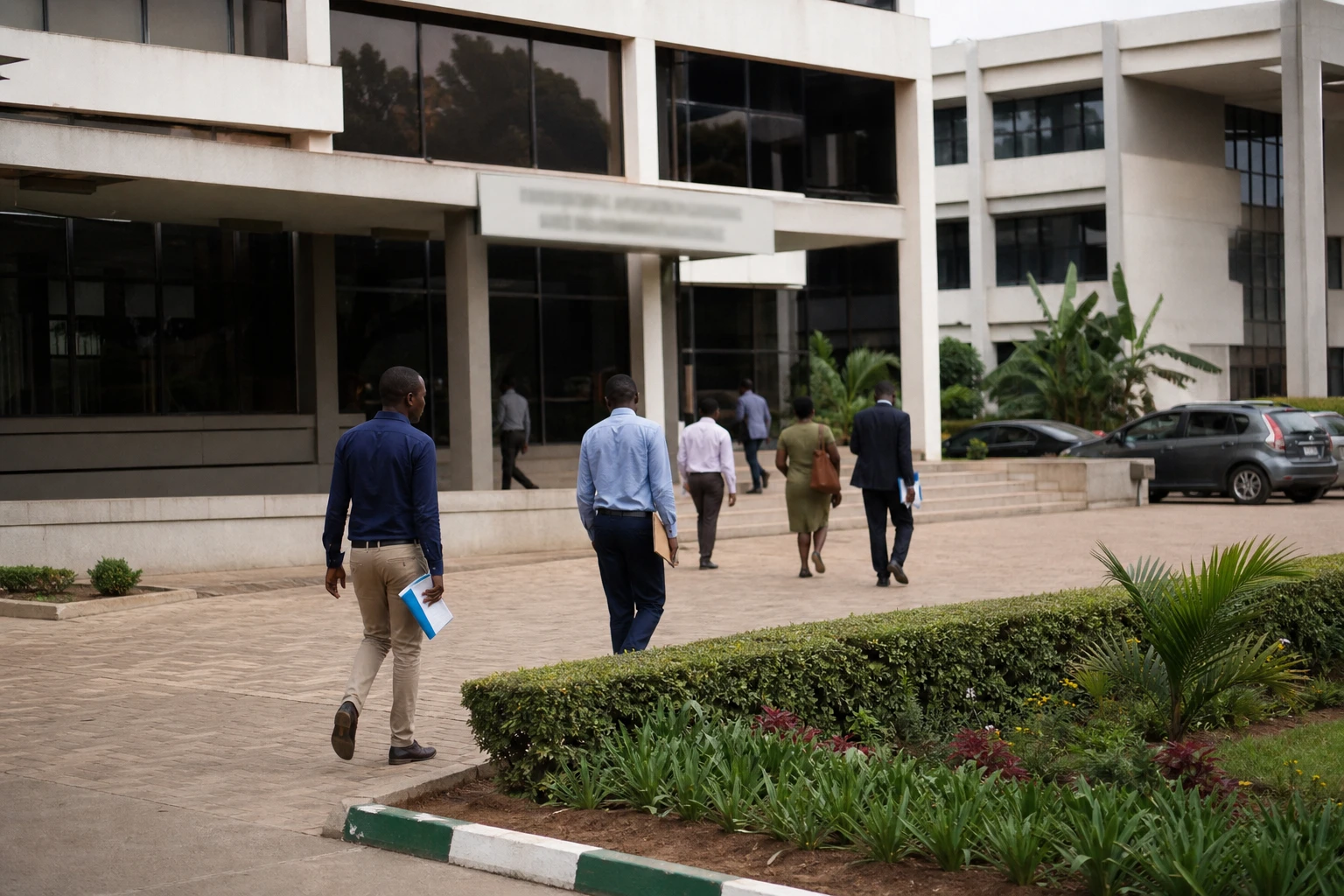
In Burundi, agriculture does more than feed families. It also underpins the economy, the trade balance and a large share of employment. When a country depends so heavily on the land, the real challenge is not simply to produce more. Above all, it needs to find new ways to finance the sector, moving from small-scale farming to profitable, processed and marketable activity. FAO data show that the sector provides 84% of jobs, around 95% of the food supply and 39.6% of Burundi’s GDP.
Against this backdrop, Gitega, the country’s political capital, is backing a new BIF 300 billion credit facility, equivalent to about $100.5 million, offered by CRDB Bank Burundi at an annual interest rate of 5%. The scheme targets agriculture, livestock farming, the processing of agricultural and livestock products, as well as other activities deemed to have a significant economic impact.
What the scheme announced by the authorities entails
The mechanism, announced by the Burundian government, is intended to finance equipment, agricultural machinery and investments needed for productive projects. It is also part of a broader approach: facilitating access to state-owned land for agricultural projects, while keeping two separate procedures. Land allocation is the responsibility of the ministry in charge of the Environment, Agriculture and Livestock, while financing applications will be handled by the commercial bank CRDB Bank Burundi.
The choice of a commercial bank matters. It shows that the government is seeking to mobilise the financial sector to make up for limited public funding. The premise is simple: if project developers can access credit more easily, they can buy equipment, irrigate, process and store produce, and sell it more effectively. But success will depend on the quality of applications, farmers’ ability to repay and how quickly funds are disbursed. CRDB Bank Burundi presents itself as a community-focused player promoting financial inclusion, while the authorities have highlighted its recent establishment in Kibimba as a sign of a stronger banking system.
The government has also linked the facility to measures introduced in recent years, including the distribution of improved seeds and fertiliser subsidies. The stated aim is to increase production, process more locally, create jobs, reduce food imports and boost exports. This approach is in line with Vision Burundi 2040-2060, which identifies agriculture as a driver of wealth creation and sets a target of allocating 10% of the state budget to the sector, up from 9.4% in 2022.
Why financing remains the key challenge
Burundi’s problem is not a lack of agricultural activity. It is low productivity. In a country with strong demographic pressure, where farms are often small, fragmented and poorly mechanised, each season depends on access to inputs, credit and markets. The World Bank describes an economy dominated by low-productivity activities, with about 85% of employment in subsistence agriculture. The IMF, for its part, estimates that credit to the private sector fell to around 35% of GDP in 2025, from about 41% in 2023-2024.
In other words, the promise of BIF 300 billion should not be seen as a mere banking announcement. It mainly highlights the difficulty farmers, livestock keepers and processors face in obtaining suitable finance. Banks are rarely quick to lend to activities exposed to weather risks, low margins and late payments. Yet this is where a decisive share of rural income is at stake. In the provinces, the benefits of such a programme could be tangible: more tractors, more processing units, fewer post-harvest losses and more seasonal jobs. In cities, the expected impact lies in market supplies and price stability.
The Burundian government also speaks of an economy that needs to produce on a larger scale. This ambition aligns with the African Development Bank’s priorities; the bank recently highlighted the challenges of financing development in Burundi and the need to mobilise more resources for productive sectors. The country continues to face liquidity pressures, foreign currency shortages and high inflation, although growth has held up.
What this decision says about Burundi and its regional environment
Burundi is not acting alone. It belongs to the East African Community, or EAC, a regional organisation of eight partner states whose headquarters are in Arusha, Tanzania. The EAC identifies economic integration, value-added production and investment as drivers of regional convergence. In this context, strengthening Burundi’s agro-industry is not an isolated move: it is also a way of preparing local businesses for a larger regional market.
The implications extend beyond the EAC. The African Continental Free Trade Area, led by the African Union, is intended to facilitate intra-African trade and regional value chains. Burundi hopes to secure a stronger position if its agriculture can finally move beyond subsistence. That is precisely the goal set out in Vision Burundi 2040-2060: linking agriculture, local processing, employment and food security.
One very practical question remains: will this facility reach farms that are genuinely able to invest, or only operators that are already well established? The real impact will depend on the answer. If the credit reaches producers, cooperatives and agro-processing SMEs, the scheme could support the entire chain, from field to factory. If it remains concentrated on a few strong applications, it will probably improve access to finance without fundamentally transforming the rural economy. In Burundi, the development challenge often lies at this boundary: getting credit to where wealth is created, then supporting it all the way to market.