Algeria
 Egypt
 Libya
 Morocco
 Sudan
 Tunisia
 Benin
 Burkina Faso
 Cabo Verde
 Côte d'Ivoire
 Ghana
 Guinea
 Guinea-Bissau
 Liberia
 Mali
 Mauritania
 Niger
 Nigeria
 Senegal
 Sierra Leone
 The Gambia
 Togo
 Cameroon
 Central African Republic
 Chad
 DR Congo
 Equatorial Guinea
 Republic of the Congo
 São Tomé and Príncipe
 Burundi
 Comoros
 Djibouti
 Eritrea
 Ethiopia
 Kenya
 Madagascar
 Malawi
 Mauritius
 Mozambique
 Rwanda
 Seychelles
 Somalia
 South Sudan
 Tanzania
 Uganda
 Angola
 Botswana
 Eswatini
 Lesotho
 Namibia
 South Africa
 Zambia
 Zimbabwe
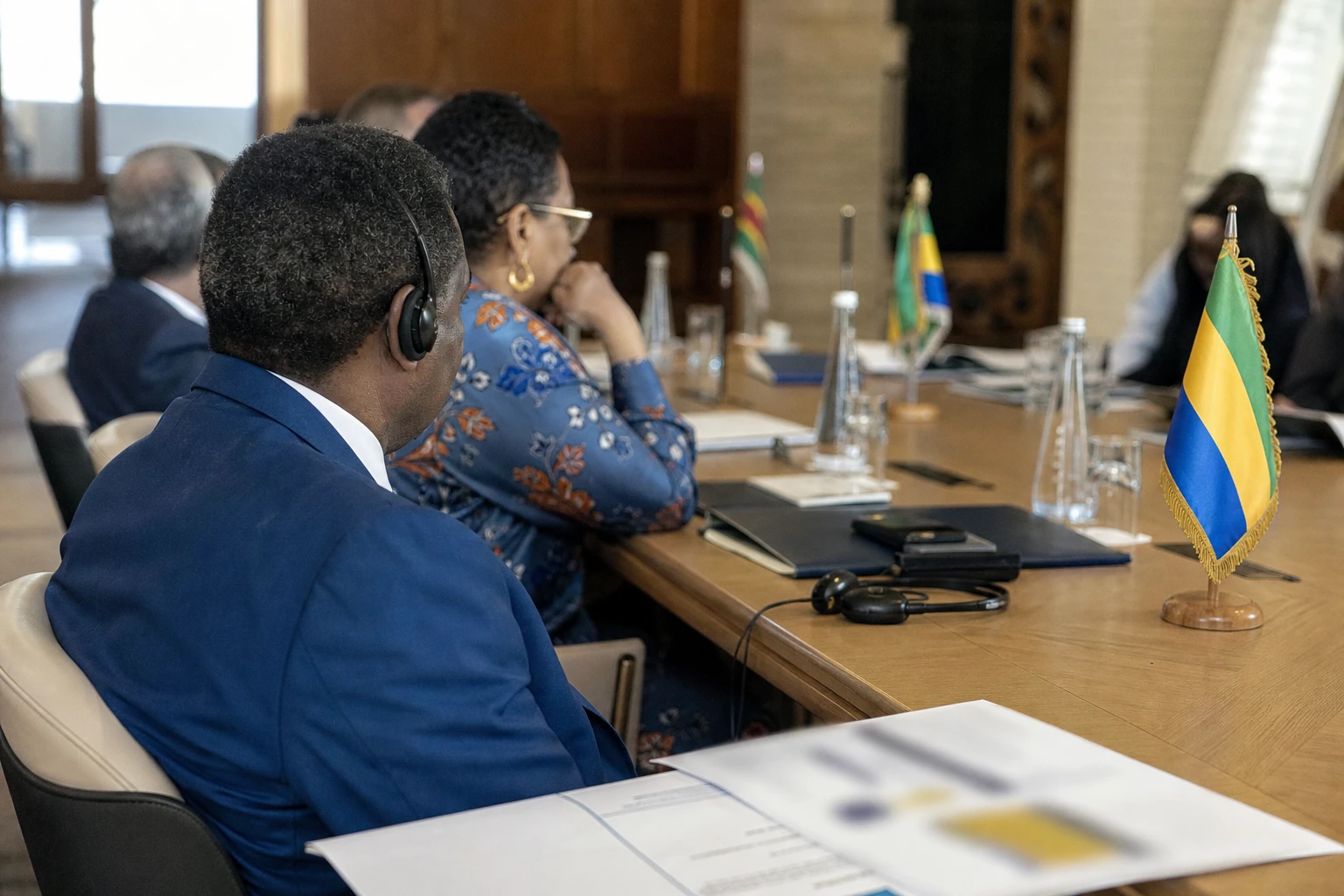
In Libreville, culture returns to the public debate
In a capital where major political and economic events often command all the attention, the cultural scene offers a useful reminder: a country also tells its story through its languages, rites and inherited practices. In Libreville, the Cultures Festival puts this debate back at the centre, as Gabon seeks to strengthen a new national cohesion and give greater visibility to its living heritage.
The 15th edition takes place from 21 to 23 August 2026, after an eight-year hiatus. The signal is significant. Since the transition that began in August 2023, Gabon’s authorities have revived several symbolic initiatives, including the promotion of African dress every Friday and the return of this celebration, presented at the presidential palace as a means of passing on traditions and fostering unity.
An established event, born in Libreville and designed for the nine provinces
The Cultures Festival is not merely a seasonal event. It has a longer history, originating in Libreville in the late 1990s before being institutionalised nationally. UNESCO archives note that it later underwent changes of location and adjustments to its cultural governance. Its return in 2026 restores it to a prominent place in Gabon’s public calendar.
This year’s edition brings together Gabon’s nine provinces through stands, dances, storytelling, ritual objects, local-language workshops and activities for children. The Gabonese ministry responsible for cultural promotion oversaw the development of the sites, while the Gabonese Press Agency confirmed that Vice-President Alexandre Barro Chambrier officially opened the event in Libreville.
The choice of the capital is no accident. Libreville is home to the institutions and media, and to a large share of the urban public. It is also where the balance is struck between national memory and cultural consumption. By bringing the traditions of the provinces together in one place, the event connects the political centre with regions that are often less visible in major national narratives.
What the event says about cultural transmission in Gabon
The core message is clear: some practices are disappearing because they are no longer passed on sufficiently between generations. This is not simply a question of folklore. It is also about language, memory and know-how. Artisans in Libreville display objects and techniques that often survive thanks to family or community networks, far more than through the formal market.
In cities, many young people know little about rites, local languages or practices associated with their communities of origin. In rural areas, by contrast, these traditions remain more prevalent, but can struggle to find economic outlets. The festival therefore acts as an interface. It gives tradition-bearers a platform and can help create a small economy around crafts, food and cultural performances.
The chosen theme, “Reclaiming our cultural values”, reflects the desire to make culture a source of continuity rather than mere decoration. In his State of the Nation address, Brice Clotaire Oligui Nguema also described culture as a lever of symbolic sovereignty, on a par with the economy and security. This interpretation reflects a broader trend in Gabon: putting national references back at the heart of the public narrative.
Senegal as guest of honour, a sign of cultural exchange across Africa
This edition also opens a window on West Africa. Senegal is the guest of honour, with a delegation presenting some of its traditions in Libreville. Organisers have highlighted exchanges around music, dance, gastronomy and living heritage. The principle is simple: to show that African cultures respond to one another, meet and grow stronger.
For Gabon, the choice carries diplomatic and symbolic weight. It is a reminder that relations between African countries are not confined to summits of heads of state or economic issues. They also take place through stages, languages, artists and families. Across Central Africa, this openness resonates with CEMAC dynamics, as states often seek to better reconcile regional integration, national identity and the movement of cultural goods.
The return of the Cultures Festival also comes at a time when Gabon is reshaping several markers of sovereignty after the political transition. By celebrating the nine provinces in Libreville, the country is seeking to show that it is defined by more than its hydrocarbons or institutions. It is also asserting that a national project is built on shared symbols, recognised memories and visible spaces for passing on traditions.