Algeria
 Egypt
 Libya
 Morocco
 Sudan
 Tunisia
 Benin
 Burkina Faso
 Cabo Verde
 Côte d'Ivoire
 Ghana
 Guinea
 Guinea-Bissau
 Liberia
 Mali
 Mauritania
 Niger
 Nigeria
 Senegal
 Sierra Leone
 The Gambia
 Cameroon
 Central African Republic
 Chad
 DR Congo
 Equatorial Guinea
 Gabon
 Republic of the Congo
 São Tomé and Príncipe
 Burundi
 Comoros
 Djibouti
 Eritrea
 Ethiopia
 Kenya
 Madagascar
 Malawi
 Mauritius
 Mozambique
 Rwanda
 Seychelles
 Somalia
 South Sudan
 Tanzania
 Uganda
 Angola
 Botswana
 Eswatini
 Lesotho
 Namibia
 South Africa
 Zambia
 Zimbabwe
A judicial case that goes beyond filming
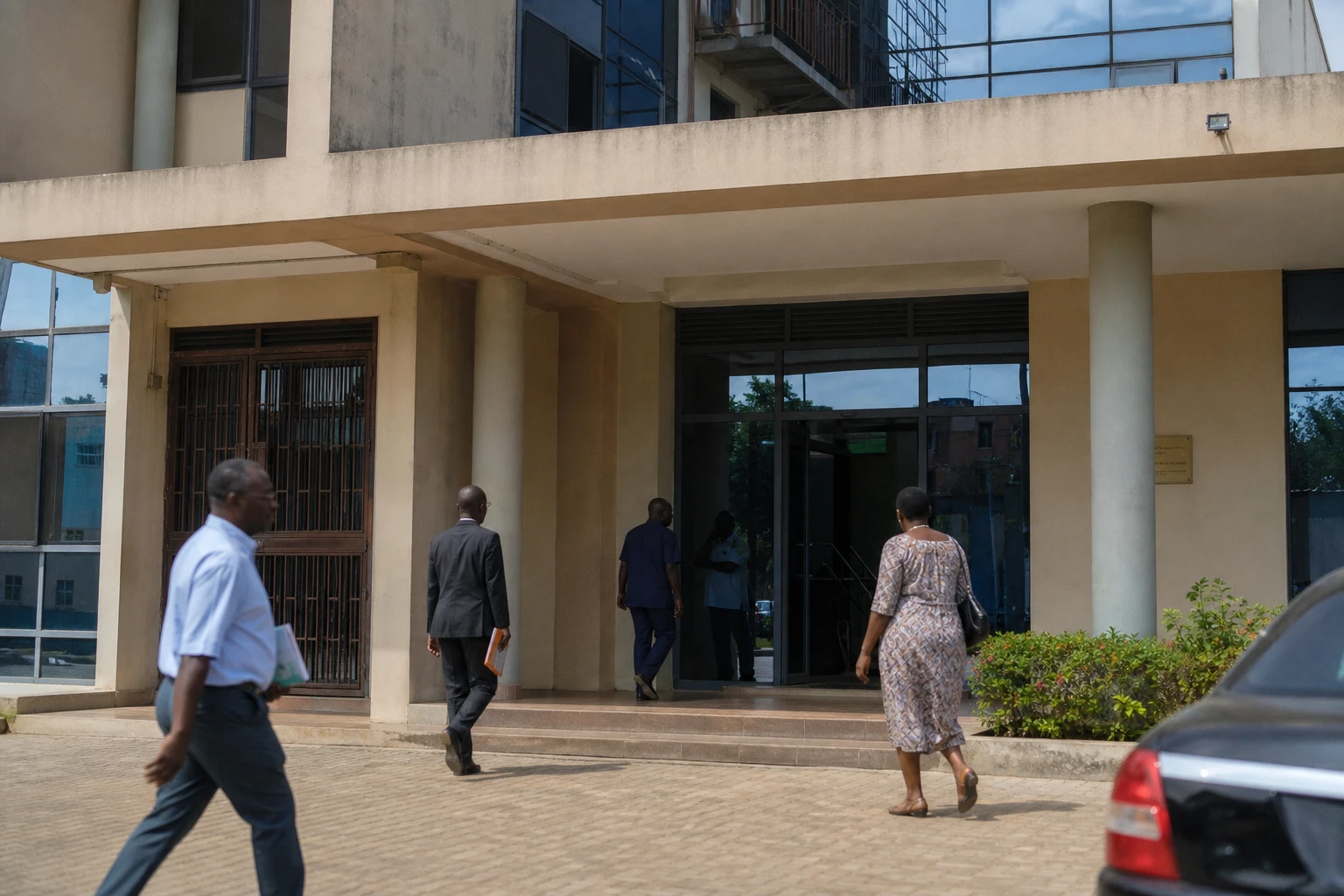
In Lomé, an arrest on a road in the north has become a test of confidence between the Togolese state, foreign press and the Togolese professionals who work with it. In a country where security remains a central issue, especially in the far north, every administrative check quickly takes on political and diplomatic significance.
Togo lies at the heart of a West African zone where borders now matter as much as capitals. The Savanes region, which borders Burkina Faso, has been under a state of security emergency since 13 June 2022, following attacks attributed to armed groups from Burkina Faso’s Sahel region. At the same time, Lomé is seeking to maintain its image as a stable hub within ECOWAS, the Economic Community of West African States, as security cooperation intensifies and monitoring of movements tightens.
What Lomé says, and what the detainees’ defenders dispute
On Saturday 22 August 2026, Togo’s security and justice ministries spoke publicly for the first time about the case of Gaël Mocaër, Sebastian Perez Pezzani and Fred Vedomey. The authorities say the courts have “serious and concordant evidence” and that opening proceedings for “false declarations” is justified. They also maintain that the filming authorisation issued on 19 June 2026 in the name of the Togolese collaborator did not cover the Savanes region.
According to information corroborated by RSF and the Associated Press, the three men were arrested on 27 July in Kara, in the north of the country, while filming an episode of the documentary series “Les routes de l’impossible” for France Télévisions. They were subsequently remanded in custody in Lomé on 17 August, after appearing before the public prosecutor. The same sequence of events was confirmed by several media outlets, including AP, Euronews and Ouestaf, which also reported the Togolese authorities’ account.
The detainees’ lawyers, for their part, dispute the allegations. Their defence is straightforward: the team says it was working within a declared framework, with procedures it says were compliant, and maintains that it entered an area beyond its authorised zone without intending to circumvent the regulations. RSF, meanwhile, is calling for their immediate release and says one of the two French filmmakers has serious health problems, which the organisation describes as a medical emergency.
Northern Togo under heightened surveillance
The heart of the case is not limited to a filming permit. It lies in a region where the Togolese state has strengthened its security measures since 2022 in the name of fighting armed incursions from Burkina Faso. The state of security emergency in the Savanes has been extended several times, and the government continues to describe the area as subject to a particular security regime.
In this context, the use of a drone or the mere presence of a film crew in certain localities may be viewed by the authorities as a breach of security rules. This is where the case takes on broader significance: in Togo, the question is not simply whether a team followed a procedure. It is also about how the state regulates access to areas it considers exposed, and how it balances territorial control, the flow of information and the work of the media.
The Togolese authorities have already shown they can take a tougher line with French media. In June 2025, they suspended RFI and France 24 for three months, accusing them of biased coverage of protests against the government. The decision, widely discussed, created lasting mistrust between Lomé and some foreign French-language media. The filmmakers’ case therefore forms part of a longer period of tensions over public discourse, security and control of the media space.
A signal for the region and for relations between Lomé and Paris
Beyond the individual case, the affair says something about the current regional climate. Several Sahelian countries have redefined their military partnerships, reduced France’s role and strengthened other forms of cooperation. Togo, meanwhile, is pursuing a more pragmatic course: it maintains security ties with Paris while asserting its sovereignty over its internal procedures. The official Togolese website recently highlighted the deepening of counter-terrorism cooperation with France, evidence that the two capitals want to keep channels open despite tensions.
For people in the Savanes, the priorities remain practical security, mobility and the continuity of economic activity. For Togolese journalists, fixers and technicians, the case is a reminder that working on the ground in a sensitive area now demands the utmost administrative vigilance. For the state, the challenge is to prevent a legal dispute from being interpreted as a broader closure to outside scrutiny.
The next steps will unfold in Lomé, before the Togolese courts, but also through diplomatic engagement between France and Togo. The government says the detainees have access to legal counsel and consular assistance, and are being held in conditions that meet international standards. The filmmakers’ defenders, for their part, continue to call for their release. Between these two accounts, the Togolese justice system will have to rule, leaving little room for ambiguity.