Algeria
 Egypt
 Libya
 Morocco
 Tunisia
 Benin
 Burkina Faso
 Cabo Verde
 Côte d'Ivoire
 Ghana
 Guinea
 Guinea-Bissau
 Liberia
 Mali
 Mauritania
 Niger
 Nigeria
 Senegal
 Sierra Leone
 The Gambia
 Togo
 Cameroon
 Central African Republic
 Chad
 DR Congo
 Equatorial Guinea
 Gabon
 Republic of the Congo
 São Tomé and Príncipe
 Burundi
 Comoros
 Djibouti
 Eritrea
 Ethiopia
 Kenya
 Madagascar
 Malawi
 Mauritius
 Mozambique
 Rwanda
 Seychelles
 Somalia
 South Sudan
 Tanzania
 Uganda
 Angola
 Botswana
 Eswatini
 Lesotho
 Namibia
 South Africa
 Zambia
 Zimbabwe
When the rainy season is late, the entire agricultural calendar is thrown off
In eastern Sudan, the farming season is not decided only in the fields. It also depends on the arrival of the first rains, the price of fuel and farmers’ ability to buy inputs before the planting window closes. In Gedaref, one of the country’s main agricultural regions, this delay directly affects sesame and sorghum, two crops central to food supplies and rural incomes. The region remains one of the pillars of Sudanese rain-fed agriculture, and variations in rainfall have an immediate effect on harvests.
Sudan is also experiencing a food crisis of exceptional scale. The IPC estimated that 24.6 million people faced acute food insecurity in October 2024, followed by 21.2 million between September 2025 and May 2026. The country also remains one of the continent’s most severe humanitarian crises, with a war that has disrupted markets, displaced families and fragmented production networks.
Gedaref, the country’s breadbasket, under climate and economic pressure
Gedaref is not just any agricultural area. It is a large rain-fed farming region, known for its cereals and oilseeds. Research and field reports describe it as a strategic area for sorghum and sesame, with agriculture supporting a large share of local households. When the rains arrive late, planting is delayed, yields fall and farmers’ cash flow quickly comes under pressure.
This year, climatic conditions have not helped. Regional seasonal forecasts showed that Sudan would have to contend with sharply contrasting conditions across different areas, while analyses of El Niño’s influence noted that it can delay the onset of the rains and cause dry spells during the wet season. In a country where agriculture depends heavily on rainfall, this simple delay is enough to threaten the season.
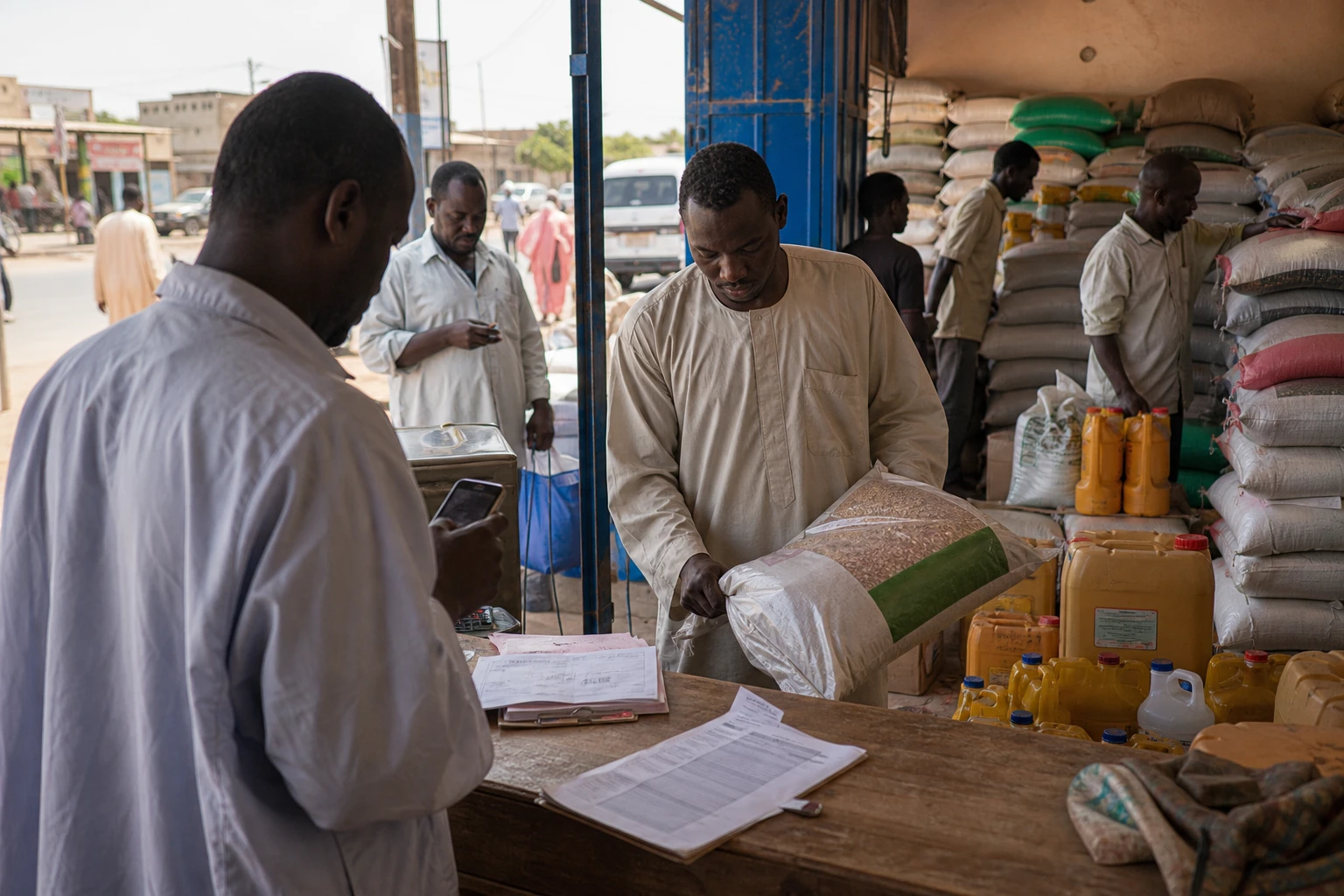
The problem does not come only from the skies. The war has made inputs more expensive and disrupted supplies. A report on Sudanese agricultural inputs highlights a sharp rise in the prices of seeds, fertilisers and fuel, compounded by the depreciation of the Sudanese pound. Producers have also told the international press that fertiliser and diesel have become much more expensive, forcing some to reduce the area they cultivate.
More expensive planting, more fragile harvests
On the ground, farmers describe a simple equation: less rain, higher costs and less room for error. Sorghum seed, the cost of which has risen sharply, illustrates this pressure. In the accounts gathered, the price of a sack rose from 160,000 to 270,000 Sudanese pounds, an increase of nearly 69%. This inflation is not a mere accounting detail. It determines the area actually planted, the quality of the inputs used and, ultimately, the amount of food available after the harvest.
Fuel is also a major burden. Sudan imports most of its fertilisers and all of its fuel, leaving the sector vulnerable to external shocks, logistical disruptions and exchange-rate movements. At the same time, disruption to trade routes and supply chains has driven up costs for agricultural machinery, irrigation and transporting crops. Rural producers, often far from major centres, are the first to bear the shock.
Technical services recommend adapting farming practices to these new risks. Official agricultural advice emphasises choosing suitable varieties, planting at the right time and, if necessary, delaying sowing to avoid unnecessary losses. In theory, these adjustments limit the damage. In practice, they require information, transport, seeds available at the right time and a minimum of stability in markets.
An agricultural crisis that extends beyond the fields
The situation in Gedaref says much more than that this is a poor season. It shows how armed conflict, the macroeconomic crisis and climate variability reinforce one another. When harvests fall, rural households sell assets, reduce the number of meals they eat or take on more debt. When local supply declines, prices rise in cities too. The agricultural shock ultimately affects urban consumers, transporters, traders and processing chains.
For the authorities and humanitarian partners, the challenge is no longer limited to saving one season. It is about maintaining minimum production in a country where a large part of the population already depends on aid and markets for food. The IPC, FAO and WFP have all warned that hunger is spreading where conflict blocks access, destroys incomes and prevents agricultural systems from restarting. In this environment, a failed season in Gedaref never remains local for long.
Across Africa, the situation in Sudan also points to a broader reality: food security now depends as much on the climate as on peace, trade routes and the quality of inputs. In the Horn of Africa, regional climate and early-warning institutions are closely monitoring these cycles, because a season that gets off to a poor start can quickly affect grain markets, population movements and humanitarian needs beyond national borders. Sudan, already devastated by war, therefore remains at the heart of a major test of agricultural resilience in north-eastern Africa.