Algeria
 Egypt
 Libya
 Morocco
 Sudan
 Tunisia
 Benin
 Burkina Faso
 Côte d'Ivoire
 Ghana
 Guinea
 Guinea-Bissau
 Liberia
 Mali
 Mauritania
 Niger
 Nigeria
 Senegal
 Sierra Leone
 The Gambia
 Togo
 Cameroon
 Central African Republic
 Chad
 DR Congo
 Equatorial Guinea
 Gabon
 Republic of the Congo
 São Tomé and Príncipe
 Burundi
 Comoros
 Djibouti
 Eritrea
 Ethiopia
 Kenya
 Madagascar
 Malawi
 Mauritius
 Mozambique
 Rwanda
 Seychelles
 Somalia
 South Sudan
 Tanzania
 Uganda
 Angola
 Botswana
 Eswatini
 Lesotho
 Namibia
 South Africa
 Zambia
 Zimbabwe
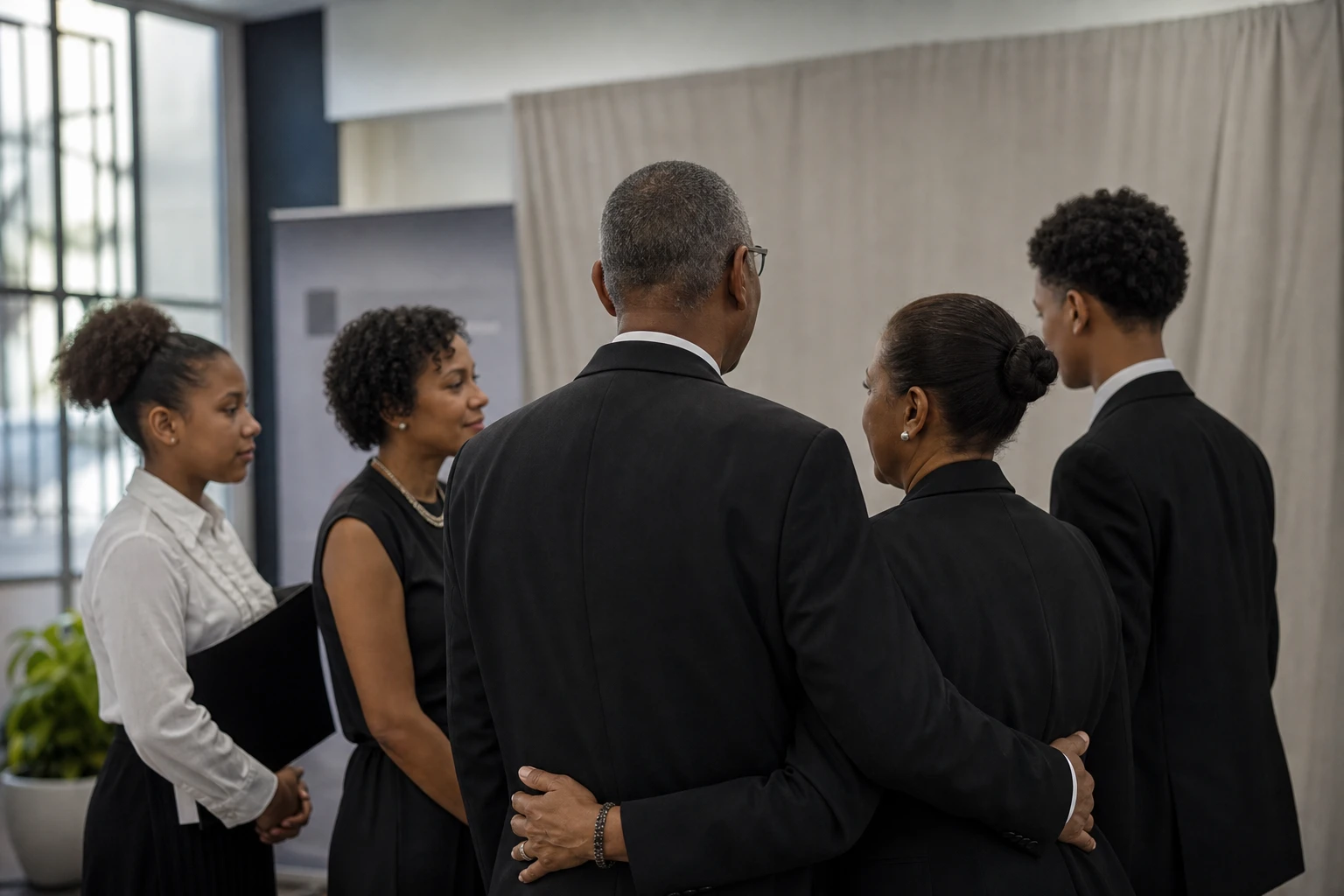
A young voice arriving at the right moment
In Praia, music is not mere background. It accompanies celebrations, open-mic sessions, families and generations passing on refrains as others pass on stories. In a country where morna is inscribed on UNESCO’s Representative List of the Intangible Cultural Heritage of Humanity and coladeira remains one of the most vibrant languages of popular creation, the emergence of a teenage pianist says something specific: Cape Verdean heritage continues to renew itself.
It is in this landscape that Alicia Freitas, a young Cape Verdean from Praia, is making her way. At 16, she does more than perform an inherited repertoire. She composes, arranges and seeks her own musical colour. Her journey is unfolding in an island capital where cultural venues, festivals and professional encounters play a tangible role in bringing new talent to the fore.
Praia, a cultural crossroads and regional showcase
Praia is the capital of Cabo Verde, on the island of Santiago. The city concentrates much of the country’s institutional and cultural life. It also hosts events that raise the profile of Cape Verdean music beyond the archipelago. The Atlantic Music Expo, held in Praia, presents itself as a platform for transatlantic exchanges between artists, industry professionals and audiences from Cabo Verde, Africa and beyond.
This context matters. Cabo Verde is a member of ECOWAS, the Economic Community of West African States, and the African Union. For an Atlantic island nation, the movement of artists, ideas and markets depends as much on local roots as on regional networks. Music thus becomes a discreet but powerful space for diplomacy.
In this sense, Praia is not merely an administrative capital. It is also a stage looking out on the Atlantic, where local creativity, the diaspora and the cultural industries meet. AME 2026 was set to feature a programme bringing together Cape Verdean artists and musicians from other African countries and the Atlantic region. Alicia Freitas was among the artists scheduled to perform in Praia in April 2026.
What Alicia Freitas does, in practice
The young musician’s journey began very early. She discovered the piano at around the age of four, first as a self-taught player and then through structured lessons. She later expanded her practice to guitar and flute. This detail is significant. It points to an open musical education, less focused on mastering a single instrument than on building a personal language.
Her family environment has also shaped this path. Her father, César Freitas, is a musician. In a country where cultural transmission often takes place through family, music schools, neighbourhood stages and major artistic events, this continuity between home, learning and performance carries considerable weight. Alicia grew up attending cultural events in Praia before taking to the stage there herself with her own compositions.
Her approach is rooted in Cape Verdean tradition without being confined by it. She cites the influence of morna, the archipelago’s emblematic genre, and coladeira, a livelier, more danceable rhythm, widely present in urban social life and popular with young people. By choosing to compose, she does not limit herself to covers. She seeks to transform the heritage—a classic but demanding way of keeping a culture alive.
This approach took on a public dimension when she performed at the 2026 Atlantic Music Expo. Held in Praia from 6 to 9 April 2026, the event is designed as a trade market and a showcase stage. It brings together conferences, meetings, stands and concerts. For a 16-year-old artist, presenting original work to industry professionals means entering a circuit of recognition that extends beyond the school or family setting.
Transmission, creativity and the place of young women
The stakes go beyond one individual. In Cabo Verde, music often serves as collective memory, but also as a laboratory for the future. Morna was recognised by UNESCO in 2019. This heritage status enhances the repertoire while raising a simple question: how can it be passed on without being frozen in time? Artists such as Alicia Freitas offer a practical answer, working on composition rather than merely reproducing older forms.
Her journey also says something about the place of young women in creative work. Across African music scenes, access to instruments, recording, performance slots and recognition remains unequal. When a teenager claims a role in songwriting, performing and composing film music, she broadens the possibilities. She shows that a young woman can be the author of her repertoire, not just its performer.
The fact that she is preparing a first recording project of nine original compositions points in the same direction. The number matters: nine tracks are more than a technical demonstration. They already form an artistic structure, designed to establish an identity rather than create a passing curiosity. Her wish to pursue studies at a conservatoire confirms this long-term ambition.
In a cultural economy where local scenes must contend with international influences, digital platforms and market expectations, a project’s strength is measured by its ability to remain clear. Alicia Freitas seems to have chosen this balance: keeping a Cape Verdean thread while opening herself to other forms, including film music. It is a clear-eyed way of inhabiting modernity without giving up memory.
A signal for the archipelago and West Africa
Alicia Freitas’s story resonates beyond Praia. It is a reminder that small Atlantic capitals can foster vibrant artistic scenes, provided they have training venues, platforms for performance and professional connections. The Atlantic Music Expo plays precisely this bridging role, connecting Cabo Verde with other African and Atlantic music markets.
For West Africa, the Cape Verdean example is interesting because it shows another way of linking culture, youth and international visibility. The country is neither a large market nor a demographic power. Yet it has built a distinct cultural identity, grounded in the Creole language, morna, coladeira and regular professional events in Praia. This coherence gives its artists weight within ECOWAS and, more broadly, in the continent’s cultural diplomacy.
One question remains central to what comes next: how can these individual journeys develop into lasting careers? The answer will depend on training, access to studios, distribution networks and institutional support. But one thing is already clear. In Praia, a generation is learning to bring piano, memory and creativity into dialogue. And in Cabo Verde, that dialogue is already a programme.