Algeria
 Egypt
 Libya
 Morocco
 Sudan
 Tunisia
 Benin
 Burkina Faso
 Cabo Verde
 Côte d'Ivoire
 Ghana
 Guinea
 Guinea-Bissau
 Liberia
 Mali
 Mauritania
 Niger
 Nigeria
 Senegal
 Sierra Leone
 The Gambia
 Togo
 Cameroon
 Central African Republic
 Chad
 DR Congo
 Equatorial Guinea
 Republic of the Congo
 São Tomé and Príncipe
 Burundi
 Comoros
 Djibouti
 Eritrea
 Ethiopia
 Kenya
 Madagascar
 Malawi
 Mauritius
 Mozambique
 Rwanda
 Seychelles
 Somalia
 South Sudan
 Tanzania
 Uganda
 Angola
 Botswana
 Eswatini
 Lesotho
 Namibia
 South Africa
 Zambia
 Zimbabwe
When a church is divided, the Gabonese state finds itself in the middle
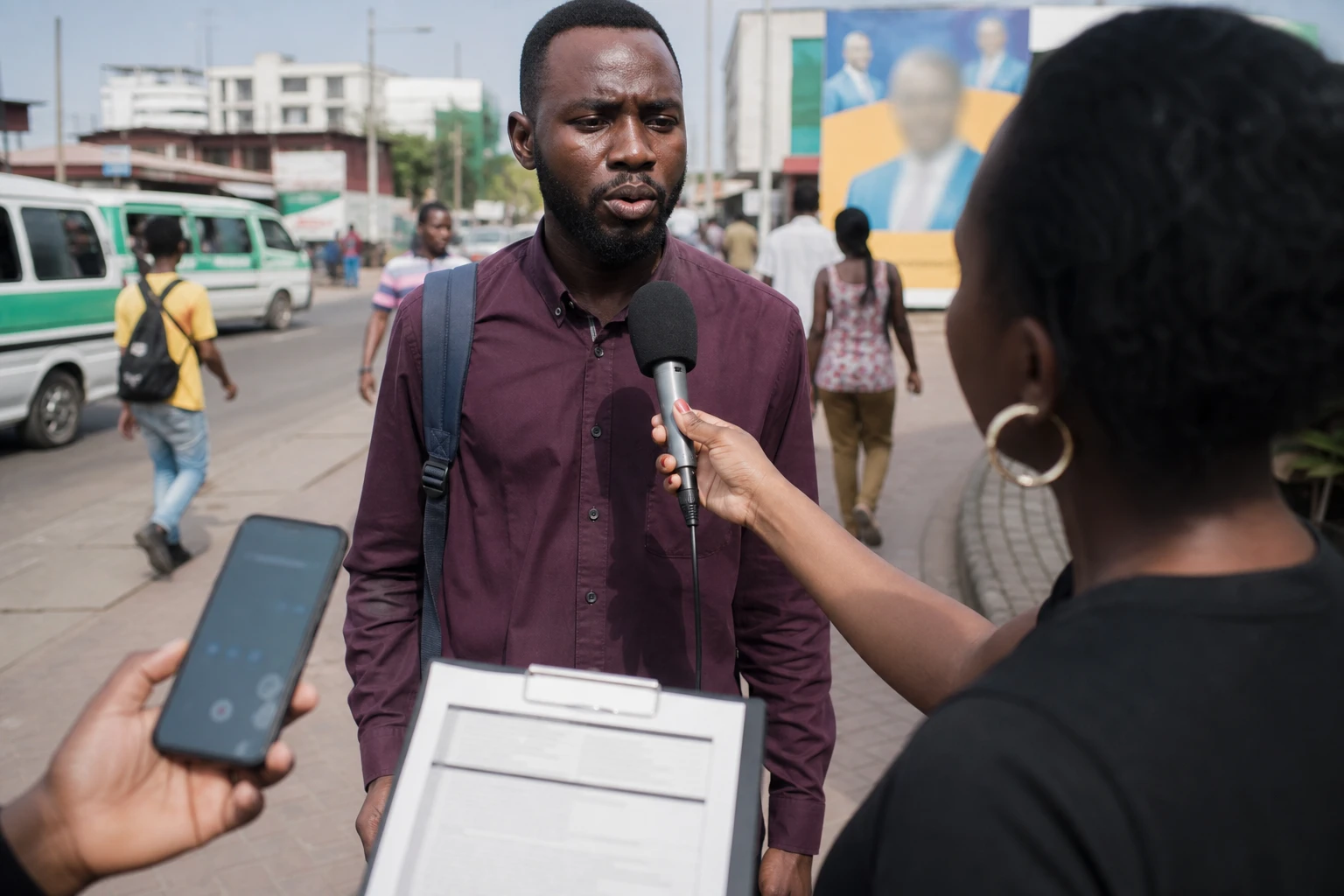
In Libreville, an internal crisis can quickly spill beyond the walls of a church. When a religious community has influence over neighbourhoods, families, rituals and sometimes even public debate, the battle for its leadership becomes a sensitive matter. That is what is now unfolding within the Evangelical Church of Gabon, where the renewal of its governing bodies has led to a contest over legitimacy and then intervention by the Interior Ministry.
The case is playing out in a Gabon still marked by the transition that began after the coup of 30 August 2023, followed by the election of Brice Clotaire Oligui Nguema in spring 2025. In this context, the authorities are seeking to demonstrate a restoration of institutional order, while social and religious organisations remain closely watched spaces for mediation in the country.
A synod, two contenders, then deadlock
According to information gathered by several Gabonese media outlets, the national synod of the Evangelical Church of Gabon was held in Libreville, at the Baraka mission station in the Glass district, with the aim of renewing the leadership of this Protestant institution. Its internal rules first require efforts to reach a consensus. If no agreement is reached, a vote takes over. That is precisely where the deadlock set in.
Two candidates were in the running. One accepted the outcome of the vote. The other refused to abide by it. That refusal gave rise to competing claims of legitimacy, with two people laying claim to the same presidency. In this situation, the institution found itself with two leaders, prompting the Interior Ministry to suspend the governing board as a precautionary measure and then demand the election of a single president within three months, according to the account of events reported in Libreville.
The source of the tension is administrative rather than spiritual. The point of contention concerns the interpretation of the statutes, the conduct of the vote and the ability of synodal bodies to enforce their own procedures. The text published by a Gabonese media outlet also notes that the Church’s constitution sets out specific criteria for becoming president, including Gabonese nationality, a minimum length of service in the pastoral ministry and a minimum level of theological training.
Why the state is intervening — and why this is divisive
In Gabon, the Interior Ministry retains a central role in overseeing religious worship. This is not a local anomaly. For years, the Gabonese administration has intervened in religious affairs when it considers that a threat to public order, an internal division or a departure from an organisation’s statutes endangers the stability of a community. This practice has already fuelled debate in other episodes involving revival churches or broader Christian organisations.
For the pastors challenging the suspension, the issue is clear: the state should not arbitrate an ecclesiastical succession. Their argument concerns the autonomy of a religious institution, its freedom to organise itself and the separation between public authority and internal discipline. The authorities, by contrast, say they want to prevent the conflict from worsening and avoid the leadership battle escalating into wider tensions in parishes.
For worshippers, the dispute has an immediate cost. A divided church loses time, dissipates its energies and undermines its social work. In cities such as Libreville, where religious communities play a role in providing moral guidance, mutual assistance and sometimes social support, uncertainty at the head of a major denomination quickly affects the daily life of local congregations. The atmosphere around the synod also shows that many believers have a strong desire for a single authority.
A religious dispute, but a wider political signal
This crisis goes beyond the religious sphere alone. It is a reminder that, in Gabon, religious institutions are not separate from the national debate. They take part in public consultations, step in during moments of tension and often seek to act as stabilising forces. In 2024, the National Council of Pentecostal, Evangelical and Revival Churches was presented to the Interior Ministry as a unifying interlocutor, evidence that the Gabonese government continues to treat the religious sphere as a structured actor in public life.
The current episode also says something about the political period that began after the transition. The authorities want to show that they are restoring the rules, but they must avoid giving the impression of an excessively heavy hand over autonomous spaces. In Central Africa, where churches, mosques and customary organisations often serve as channels for easing tensions, the handling of a contested succession matters as much as the outcome itself. The expected decision in Libreville will therefore be watched well beyond the circle of worshippers, as it will show whether the transitional state accepts a plurality of social counterweights while imposing its safeguards.