Algeria
 Egypt
 Libya
 Morocco
 Sudan
 Tunisia
 Benin
 Burkina Faso
 Cabo Verde
 Côte d'Ivoire
 Ghana
 Guinea
 Guinea-Bissau
 Liberia
 Mali
 Mauritania
 Niger
 Nigeria
 Senegal
 Sierra Leone
 The Gambia
 Togo
 Cameroon
 Central African Republic
 Chad
 DR Congo
 Equatorial Guinea
 Republic of the Congo
 São Tomé and Príncipe
 Burundi
 Comoros
 Djibouti
 Eritrea
 Ethiopia
 Kenya
 Madagascar
 Malawi
 Mauritius
 Mozambique
 Rwanda
 Seychelles
 Somalia
 South Sudan
 Tanzania
 Uganda
 Angola
 Botswana
 Eswatini
 Lesotho
 Namibia
 South Africa
 Zambia
 Zimbabwe
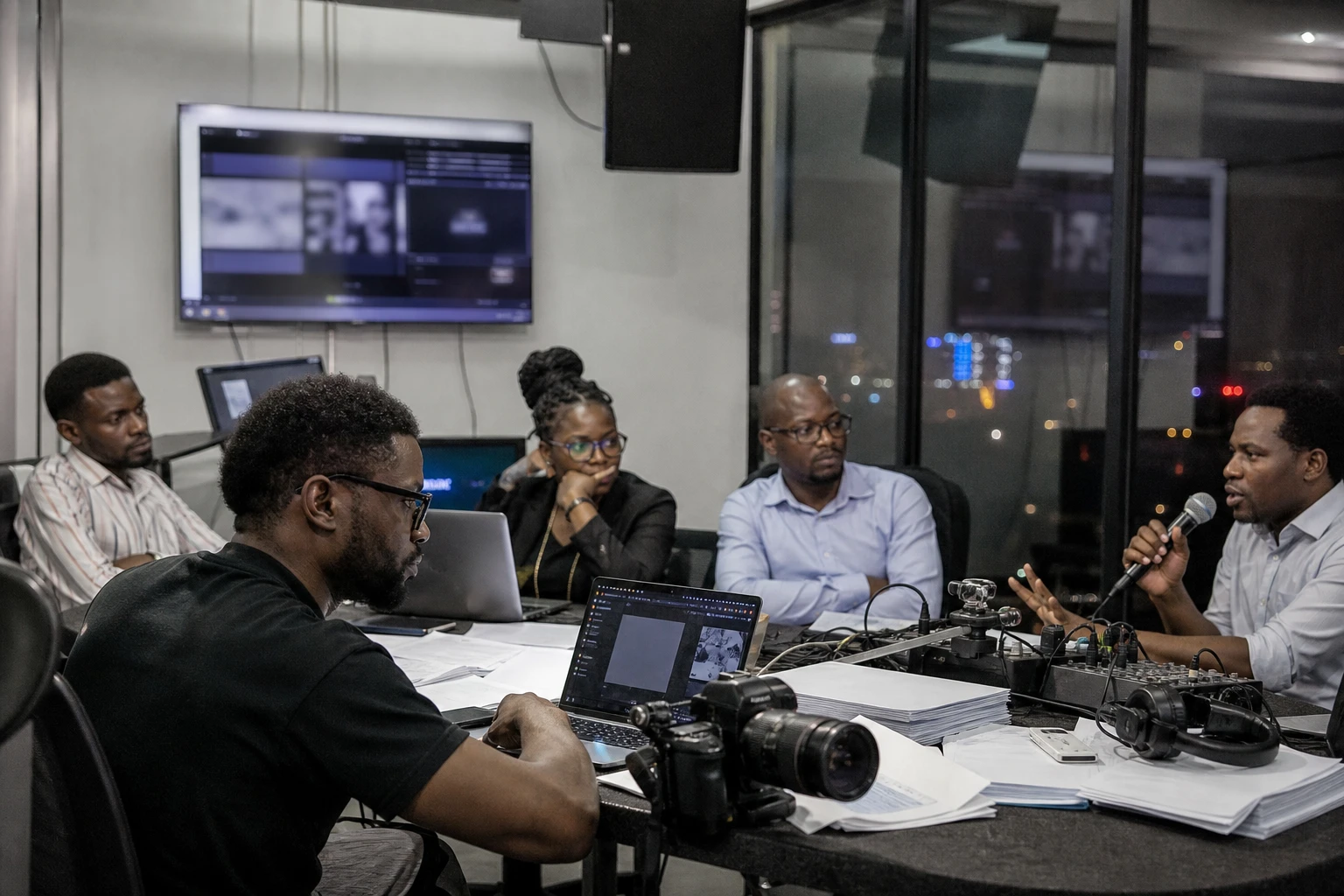
National dialogue returns to the centre of political debate in Kinshasa
In the Democratic Republic of the Congo, the question is no longer simply whether to talk. It is who will sit around the table, with what legitimacy, and to achieve what concrete outcome for the crisis in the east, trust between political camps and national cohesion. Since late June 2026, President Félix Tshisekedi has put national dialogue back at the heart of public debate, with a message focused on unity and the rejection of all violence as a means of political expression.
This return to the forefront comes amid an already charged climate. CENCO, the National Episcopal Conference of Congo, and the ECC, the Church of Christ in Congo, have resumed their consultations. At the same time, the opposition organised around the C64 coalition suspended a march planned in Kinshasa, then issued the government with an ultimatum to formally convene the dialogue.
A framework still unclear, but a deliberate political signal
On 30 June 2026, on the occasion of the 66th anniversary of Congolese independence, the presidency published an address in which Félix Tshisekedi stressed national cohesion, respect for institutions and rejection of any attempt to bypass popular sovereignty. In this context, the head of state presented dialogue as a tool for internal consolidation, not as a means of putting pressure on institutions.
A few weeks later, from Libreville, where he was attending celebrations for the 66th anniversary of Gabon’s independence, he reiterated to the Congolese diaspora his determination to launch a major national dialogue. According to the information available, he also promised to set out its details in the coming days, confirming that no definitive framework has yet been made public.
This is the first sticking point: the political idea has now been put forward, but the formal framework is slow to emerge. Exchanges between Congolese actors point to a process under construction, with consultations involving religious and political groups, but no presidential decree published so far. The process therefore remains open, and the absence of an official text is fuelling questions about the timetable, scope and organising authority.
Who should take part, and what are the red lines?
Inclusiveness has become the real dividing line. The government says it wants a united domestic front against Rwandan aggression, a formulation that refers to the war destabilising eastern DR Congo and the presence of the AFC/M23 armed movement in the political debate. But Félix Tshisekedi has also set a limit: he refuses to engage in dialogue with those he believes are aligned with Kigali. This position automatically narrows the pool of possible interlocutors and opens a battle over the very definition of national loyalty.
The opposition, for its part, is challenging not only the principle of dialogue but also the conditions. The C64 is demanding a credible framework, political guarantees and an official convocation before 15 August 2026. Martin Fayulu, meanwhile, advocates an even broader approach, arguing that actors such as Corneille Nangaa, the AFC/M23 coordinator, should be brought into the debate to explain their shift to rebellion. Other opposition figures, such as Delly Sesanga, are also demanding that the AFC/M23 and Joseph Kabila be present at the table.
This divergence is not merely tactical. It reveals two different visions for resolving the crisis. The first, put forward by the executive, seeks to bring together forces considered compatible with the constitutional order. The second, advocated by part of the opposition, wants a broader forum capable of including the actors who have a real bearing on the conflict, even when they remain outside the conventional institutional arena. Between the two, CENCO and the ECC are seeking to impose a more neutral mediation process based on consultation and de-escalation.
What this dialogue could change in Congolese politics
For the government, the stakes are twofold. First, it must show that a political response is possible to a security crisis that extends beyond the military sphere. Second, it must regain the initiative from an opposition that has made the word “dialogue” a lever for pressure, at a time when institutional tensions remain high. A successful dialogue could ease the political pressure on the presidency. A poorly defined one, by contrast, could give the impression of a delaying tactic.
For the Congolese population, the question is more immediate. In Kinshasa, the debate is reflected in the political climate and civil liberties. In the eastern provinces, it is measured in the safety of roads, the movement of people, schools operating intermittently and displaced people joining those already displaced. Dialogue will have value only if it addresses these realities without being limited to a distribution of posts or a temporary truce.
For the churches, finally, the stakes go beyond ad hoc mediation. CENCO and the ECC want to prevent a dialogue from being commandeered by political machinery or reduced to a mere communications exercise. Their roadmap seeks to create a space for listening that can build a minimum level of trust between rival camps. This position carries weight in a country where religious voices remain one of the few channels able to bridge partisan divides.
A Congolese process with regional implications
The implications of this issue extend beyond the country’s borders. DR Congo is involved in several regional security and co-operation frameworks, including the Southern African Development Community, SADC, and the East African Community, EAC. Any political clarification in Kinshasa therefore matters to its neighbours, mediation mechanisms and the stability of the Great Lakes region as a whole.
The next milestone is not just a presidential speech. It is the expected publication of the dialogue’s official framework, followed by the government’s ability to state who is included, who is not, and according to what process. At that point, it will become clear whether the major national dialogue announced from Libreville becomes a tool for defusing political tensions or a new source of competition between Kinshasa, the opposition, the churches and the armed actors who continue to shape events in the east of the country.