Algeria
 Egypt
 Libya
 Morocco
 Sudan
 Tunisia
 Benin
 Burkina Faso
 Cabo Verde
 Côte d'Ivoire
 Ghana
 Guinea
 Guinea-Bissau
 Liberia
 Mali
 Mauritania
 Niger
 Senegal
 Sierra Leone
 The Gambia
 Togo
 Cameroon
 Central African Republic
 Chad
 DR Congo
 Equatorial Guinea
 Gabon
 Republic of the Congo
 São Tomé and Príncipe
 Burundi
 Comoros
 Djibouti
 Eritrea
 Ethiopia
 Kenya
 Madagascar
 Malawi
 Mauritius
 Mozambique
 Rwanda
 Seychelles
 Somalia
 South Sudan
 Tanzania
 Uganda
 Angola
 Botswana
 Eswatini
 Lesotho
 Namibia
 South Africa
 Zambia
 Zimbabwe
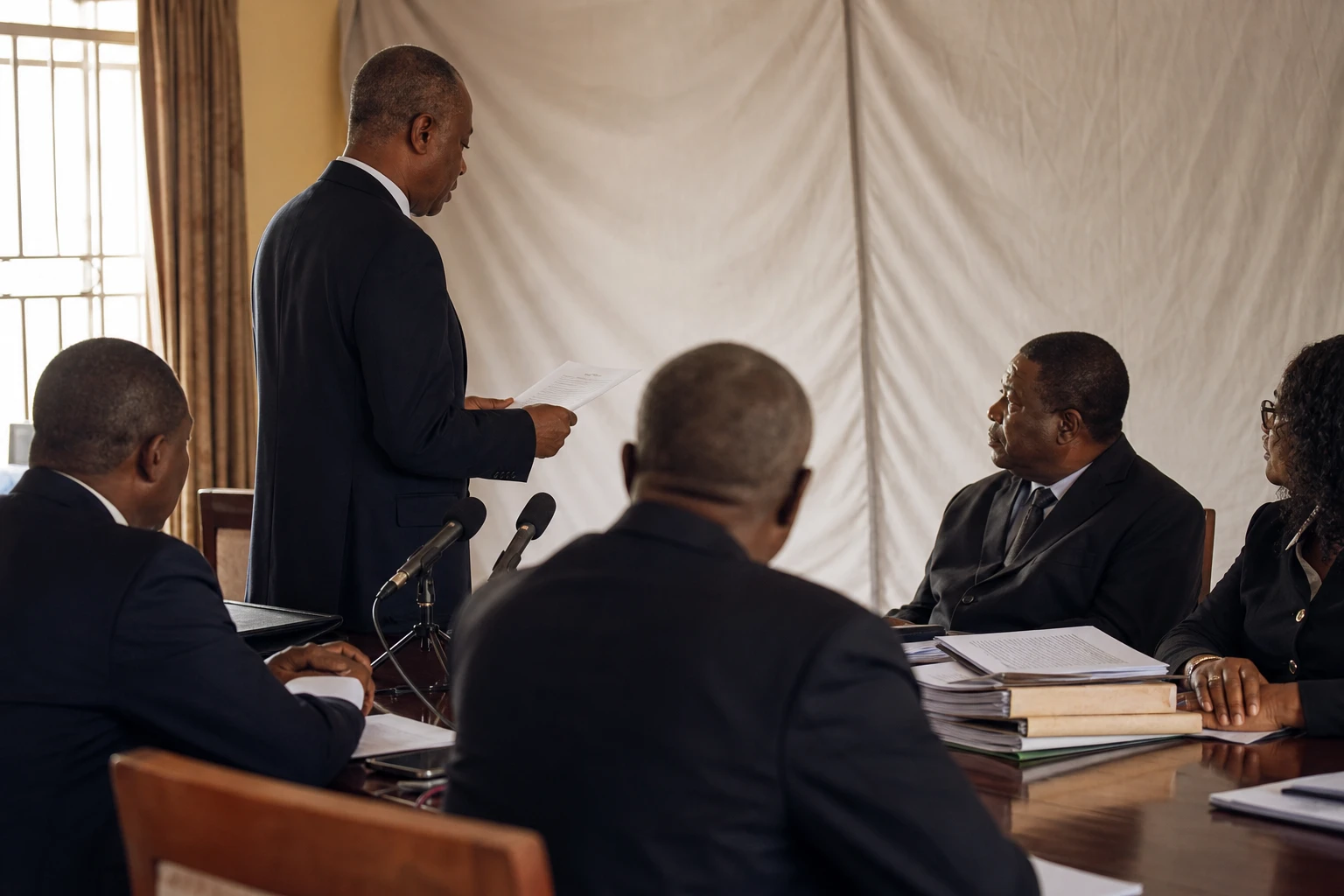
In Osogbo, a local victory with significance across Nigeria
In Osun State, the vote is never just a party contest. It also says something about the role of political networks, trust in institutions and an incumbent governor’s ability to defend his record before demanding voters. In a country where state elections often serve as a test ahead of major national contests, the Osun vote reaches well beyond Abuja.
Osun is in south-west Nigeria, a politically strategic, densely populated region closely watched by the major national parties. The incumbent governor, Ademola Adeleke, took office in 2022 after a lengthy legal dispute. Since then, his camp has made administrative continuity and infrastructure its main arguments, while the opposition has focused on public services and local security.
What the figures published by INEC show
The Independent National Electoral Commission, INEC, held the Osun governorship election scheduled for 15 August 2026 and published the institutional framework for the poll, including media accreditation and logistical preparations. The available documents also confirm the main candidates: Ademola Adeleke, running under the Accord Party banner, and Bola Oyebamiji for the All Progressives Congress, or APC.
According to the results announced for Osun State, Ademola Adeleke leads with 511,067 votes. His main rival, Bola Oyebamiji, received 444,815 votes. The ADC secured 17,180 votes and the AAC 1,458. The same tally records 2,339,544 registered voters and 1,010,684 accredited voters. These figures should, however, be treated with caution until the consolidated results sheet and the details for each LGA have been independently cross-checked.
What is clear, however, is that the close contest between the Accord Party and the APC has been confirmed in a state where recent changes of power have often been fiercely contested. The message is clear: in Osun, the balance of power is not fixed. It is tested anew in every cycle, through grassroots campaigning, local coalitions and party mobilisation.
Davido, a popular face in a highly politicised campaign
Davido’s celebration of the victory is not incidental. During the campaign, the Nigerian star helped boost his uncle’s audience and symbolic appeal. In a state where name recognition counts almost as much as party structures, his presence raised Adeleke’s profile, without replacing grassroots work, internal alliances or the party vote.
The campaign also highlighted how political communication is changing in Nigeria. Campaigns now make use of social media, popular culture and music figures, particularly in the urban states of the south. This does not make the underlying issues disappear. It simply changes how candidates reach young voters, the undecided and the diaspora.
A test for the parties, a signal for ECOWAS
The Osun case is also of interest to West Africa. Nigeria remains the demographic and economic heavyweight of ECOWAS, the Economic Community of West African States. When a state such as Osun changes hands, holds its ground or re-elects its governor, it prompts reflection on the strength of Nigeria’s electoral institutions, at a time when West Africa continues to face tensions over governance, security and trust in the ballot.
For Governor Adeleke, re-election opens a new four-year window to pursue his agenda on roads, education, pensions, youth and social protection, themes he has placed at the heart of his official communications. For the APC, by contrast, defeat in Osun means it must reassess its strategy in the south-west, a decisive region ahead of the next major national electoral contests.
The 2022 precedent remains fresh in people’s minds. Adeleke had already overturned the balance of power against the APC, before the dispute reached the higher courts. That electoral history explains the scrutiny of the figures, publication deadlines and the security of the process. In Osun, more than in other states, the result does not end the debate: it often opens a new chapter on the political and legal fronts.
Across the continent, the episode is a reminder of a simple point: the credibility of a vote is measured not only on polling day, but also by institutions’ ability to publish clear results, manage competition and limit post-election tensions. In Nigeria, as elsewhere in Africa, that is where the line lies between genuine change of power and damaged trust.