Algeria
 Egypt
 Libya
 Morocco
 Sudan
 Tunisia
 Benin
 Burkina Faso
 Cabo Verde
 Côte d'Ivoire
 Ghana
 Guinea
 Guinea-Bissau
 Liberia
 Mali
 Mauritania
 Niger
 Nigeria
 Senegal
 Sierra Leone
 The Gambia
 Togo
 Cameroon
 Central African Republic
 Chad
 DR Congo
 Equatorial Guinea
 Gabon
 Republic of the Congo
 São Tomé and Príncipe
 Burundi
 Comoros
 Djibouti
 Eritrea
 Ethiopia
 Kenya
 Madagascar
 Malawi
 Mauritius
 Mozambique
 Rwanda
 Seychelles
 Somalia
 South Sudan
 Tanzania
 Uganda
 Angola
 Botswana
 Eswatini
 Lesotho
 Namibia
 South Africa
 Zambia
On Lake Kariba, an ordinary journey turned to disaster
Around Lake Kariba, travelling by boat is part of everyday life. For fishing villages, markets and families living on the shores, a boat is not a luxury: it is often the only quick link to the town of Kariba. When that link is broken, it is not only passengers who disappear. An entire local economy is shaken.
The sinking on Tuesday 12 August 2026 was a reminder of this dependence. On Sunday 16 August, Zimbabwean police raised the death toll to 80 after eight more bodies were found. At this stage, the disaster has become one of the deadliest boating accidents in Zimbabwe’s history.
An accident in an area shared by Zimbabwe and Zambia
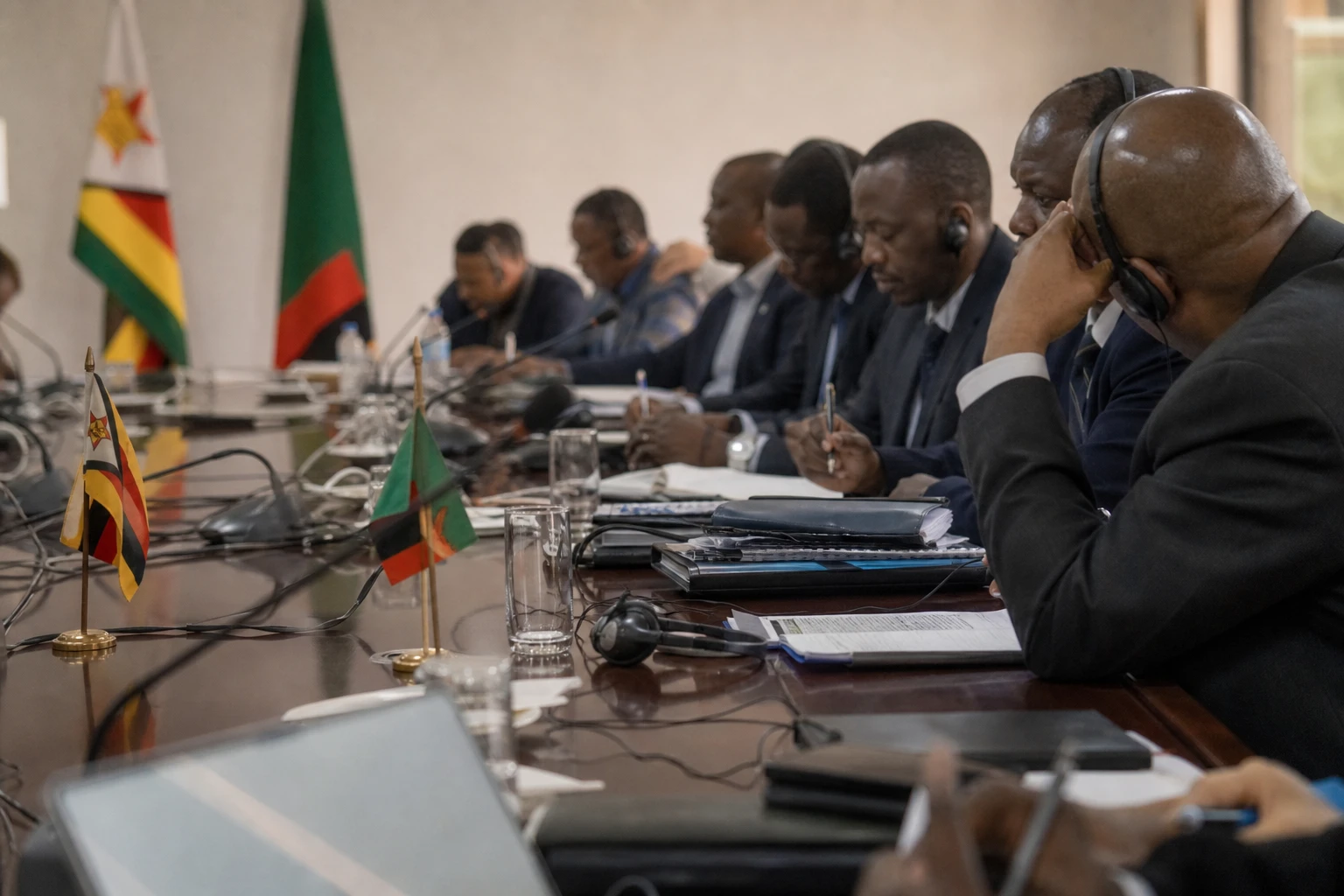
Lake Kariba lies on the border between Zimbabwe and Zambia. It is the world’s largest artificial lake by volume, created by the Kariba Dam on the Zambezi. This geography matters because it requires the shared management of navigation, fishing and rescue operations. The African Union recently welcomed progress in demarcating the border on the lake, noting that clear boundaries help prevent incidents and improve the management of shared resources.
Zimbabwe is also a member of SADC, the Southern African Development Community, which brings together 16 member states and promotes cooperation, security and regional integration. In this context, a disaster such as the one at Kariba goes beyond a local tragedy: it raises questions about regional safety standards for lake transport, particularly in rural areas where checks are more difficult than in urban settings.
Kariba, about 280 kilometres north-west of Harare, is more than a tourist resort. The town and its shores underpin fishing, trade and domestic transport. In this area, a boat carries more than people. It carries fish, food, income and time.
What is known about the sinking
According to initial information cross-checked by several sources, the ferry was operated by the Rural Infrastructure Development Agency, known as RIDA, a public agency responsible for rural infrastructure. The boat was authorised to carry 90 people, but had 114 adults, five crew members and an undetermined number of children on board when it capsized. Investigators therefore suspect serious overloading.
On 12 August, at least 77 people had been rescued by the time of the disaster, according to civil protection authorities. On that basis, the actual number of people on board may have exceeded 150, although the exact figure remains uncertain because children were not always counted in ticketing. The authorities have not yet confirmed how many children were among the victims.
Most of the victims came from communities around the lake, including fishing villages and small traders. Initial reports also identify passengers from the Chalala fishing camp. This is significant because it shows that the sinking struck a place of work, not simply a leisure trip.
Search operations made progress in stages. On Saturday 15 August, police had already reported 72 deaths after recovering 25 bodies. The following day, eight more bodies were found. The toll continued to rise over the days, a sign of a capsizing that took place in conditions that hampered rescue efforts.
A tragedy that reveals the vulnerabilities of rural transport
The sinking first highlights a simple reality: in many rural parts of Zimbabwe, transport remains vulnerable when it depends on ageing boats, irregular checks and changeable weather. Lake Kariba may appear calm, but it is still exposed to winds and waves capable of destabilising an already overloaded vessel. Survivors reportedly told international media that passengers had asked the captain to turn back before the boat capsized.
The case also raises questions about public oversight of lake crossings. If the ferry did belong to a rural infrastructure agency, the Zimbabwean state was both operator and regulator, and could potentially also face accusations. This overlap of roles complicates accountability. It also means looking beyond the emotional shock to examine rules on passenger capacity, navigation, maintenance and rescue.
For families, the immediate priority is to identify the bodies, arrange funerals and regain some certainty. Hundreds of people gathered at Kariba District Hospital to identify their loved ones. In an economy where fishing and small-scale trade provide a safety net, the loss of dozens of working adults immediately puts pressure on households.
For the authorities, the challenge is broader. The task is not only to explain an accident, but to restore confidence in lake transport on a vital route. In Zimbabwe, as elsewhere in Southern Africa, rural transport is often less visible than major road corridors, even though it determines access to markets, healthcare and public services. A largely unseen part of everyday safety is at stake.
A warning for Southern Africa
The Kariba disaster resonates beyond Zimbabwe. Across the SADC region, lakes, rivers and dams are places of work, trade and cross-border travel. When safety rules are weak, the risk does not stop at a border. It affects communities that may be only a few kilometres apart but are connected by the same waterways.
It also serves as a reminder that a major hydraulic structure can become a source of vulnerability, depending on how it is used and operated. Kariba is an energy infrastructure, a fishing ground and a transport route. This versatility is a source of wealth. It also demands high safety standards and coordination between Harare, Lusaka and local services.
Finally, the accident raises a very practical question for the continent: how can ordinary journeys be made safer in rural and cross-border areas, where too much reliance is often placed on habit and too little on prevention? At Kariba, the death toll continues to embody an unfinished answer.