Algeria
 Egypt
 Libya
 Morocco
 Sudan
 Tunisia
 Benin
 Cabo Verde
 Côte d'Ivoire
 Ghana
 Guinea
 Guinea-Bissau
 Liberia
 Mali
 Mauritania
 Niger
 Nigeria
 Senegal
 Sierra Leone
 The Gambia
 Togo
 Cameroon
 Central African Republic
 Chad
 DR Congo
 Equatorial Guinea
 Gabon
 Republic of the Congo
 São Tomé and Príncipe
 Burundi
 Comoros
 Djibouti
 Eritrea
 Ethiopia
 Kenya
 Madagascar
 Malawi
 Mauritius
 Mozambique
 Rwanda
 Seychelles
 Somalia
 South Sudan
 Tanzania
 Uganda
 Angola
 Botswana
 Eswatini
 Lesotho
 Namibia
 South Africa
 Zambia
 Zimbabwe
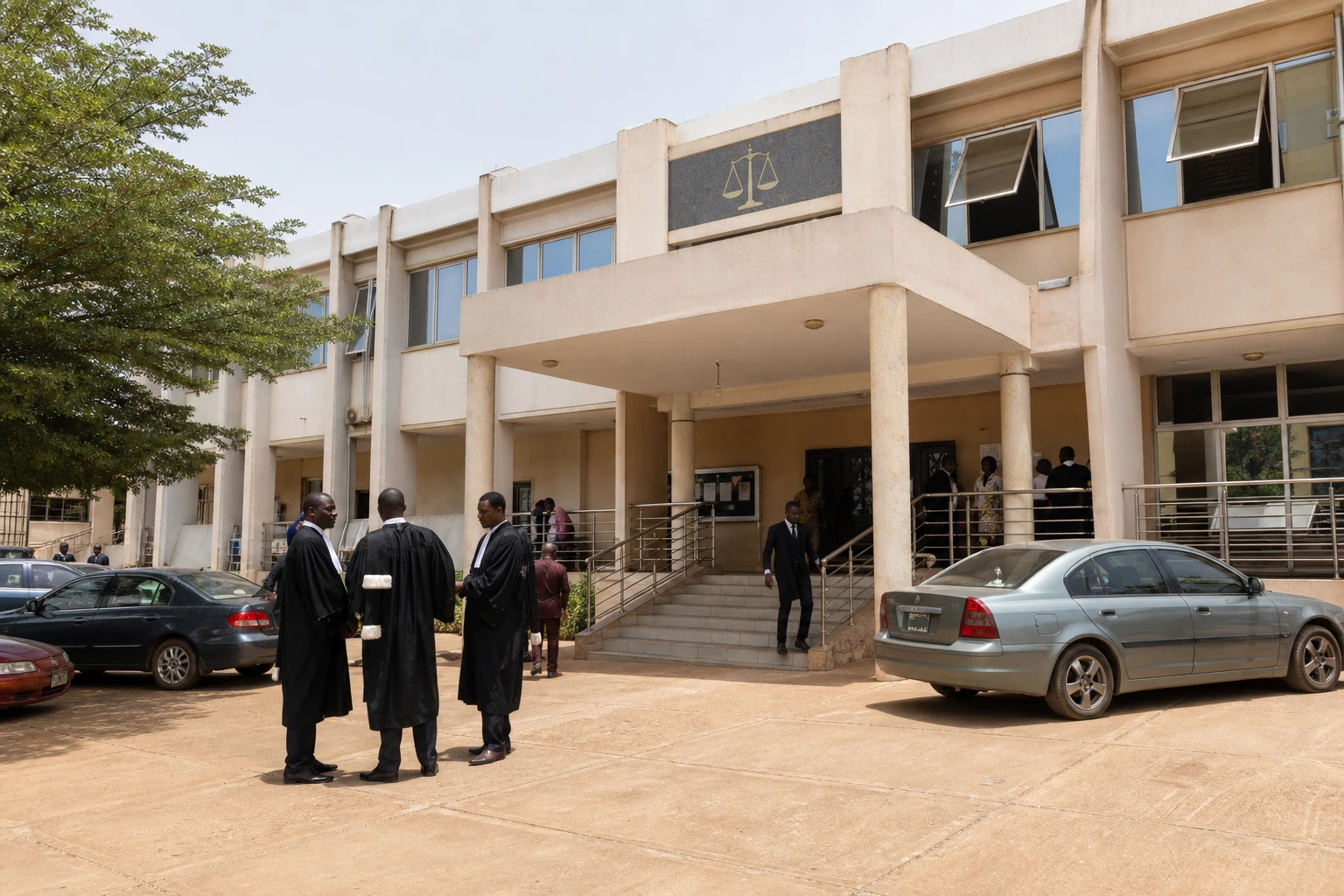
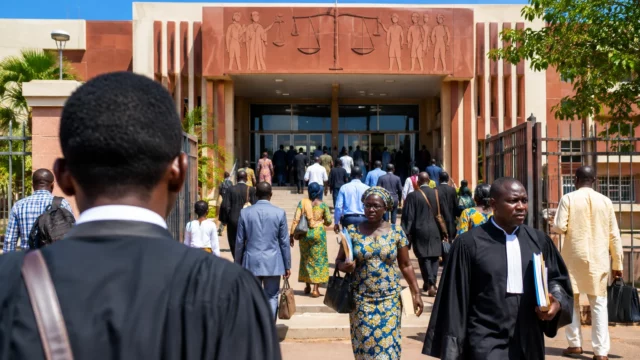
In Ouagadougou, a case emblematic of judicial delays
Twenty-seven years after the death of Norbert Zongo and his three companions, the case continues to say something broader than itself: in Burkina Faso, justice is moving forward, but under scrutiny, subject to appeals and amid strong public expectations. In cases of this kind, each procedural step matters as much as the substance, because it measures the state’s ability to see a case through when a crime touches the press and those in power.
The Burkinabè context helps explain these expectations. In Ouagadougou, the capital, the Norbert Zongo case has become a national touchstone for freedom to inform. It also remains a regional case, as Burkina Faso belongs to ECOWAS, a West African bloc where political impunity and crimes against journalists regularly return to public debate.
What the proceedings say, and what is still holding them up
According to a statement issued by the public prosecutor’s office at the Ouagadougou Court of Appeal and made public in December 2024, the case was ready to be sent for trial. The public prosecutor’s office recalled the main stages of the investigation: the tragedy of 13 December 1998 near Sapouy, the independent commission of inquiry’s findings as early as May 1999, and the reopening of the case in 2015 following new charges.
The same statement said that three people were then under investigation: Paul François Compaoré, Banagoulo Yaro and Wango Christophe Kombassere. The prosecutor’s office said that Paul François Compaoré was suspected of being the mastermind, while Yaro and Kombassere were referred for complicity in murder and the wilful destruction of property, and Kombassere also for murder and the wilful damage of movable property. The case also noted the death of Wampasba Nacoulma, against whom public prosecution was to be discontinued.
But the judicial process did not stop there. The prosecutor’s office said that Banagoulo Yaro’s defence had lodged an appeal with the Court of Cassation to challenge the decision of the investigating chamber. At the procedural level, this type of appeal suspends progress towards a hearing and mechanically postpones the point at which a court can rule on the merits. That is precisely what the sequence that began in 2024 and continued in 2026 shows.
In June 2026, the APA news agency reported that a new hearing was due to take place on 18 June before the investigating chamber of the Ouagadougou Court of Appeal, following appeals against the committal order. This information confirms that the case remains at the preliminary judicial review stage, before any criminal trial proper.
Why the case remains central to Burkina Faso
The Norbert Zongo case is about more than a murder that went untried for a long time. It concerns the credibility of Burkina Faso’s judicial system, the protection of journalists and public trust in the rule of law. The African Court on Human and Peoples’ Rights ruled in 2014, and then on reparations in 2015, that Burkina Faso had failed in its obligation to conduct an effective investigation and establish the truth about the assassinations of Norbert Zongo and his companions.
This regional ruling had major implications. It recognised a denial of justice and recalled that excessive delays in an investigation can in themselves constitute a serious violation of fundamental rights. It also reopened a political and judicial space that many had considered closed. It was in this context that the investigation was relaunched in Burkina Faso, with an international arrest warrant issued for Paul François Compaoré in May 2017, followed by judicial developments in France and Burkina Faso.
The case of Paul François Compaoré illustrates the transnational dimension of the proceedings. In December 2024, the Burkinabè prosecutor’s office said that the French proceedings had not halted the progress of the case in Burkina Faso. Meanwhile, the Ivorian and Burkinabè press reported in late 2024 that he was in Abidjan, where administrative issues related to his visa were complicating his movements. These developments show that between Ouagadougou, Paris and Abidjan, Burkina Faso’s justice system must contend with legal and diplomatic obstacles that extend well beyond the national framework.
For Burkinabè society, the stakes are concrete. For the families, it is about obtaining a ruling that finally determines responsibility. For journalists, it is a question of whether investigating can still cost lives without a swift judicial response. For the state, it is a test of institutional continuity in a country marked in recent years by political transitions, changes in the balance of power and the authorities’ strong emphasis on sovereignty.
A Burkinabè case, but a pan-African lesson
Across the continent, the Norbert Zongo case is a reminder that regional justice can influence cases that national courts struggle to bring to a close. The African Court played this role of calling the authorities to account, linking freedom of expression, the right to life and the right to an effective remedy. Its case remains open in the court’s archives, a sign that it continues to occupy a place in Africa’s legal memory.
It also resonates in a West African context in which journalists, professional organisations and human rights defenders regularly denounce pressure, disappearances and restrictions. In Ouagadougou, Norbert Zongo’s name is therefore not merely that of a man murdered in 1998. It has become a touchstone. It says what a national justice system is willing to confront, and what a society refuses to forget.