Algeria
 Egypt
 Libya
 Morocco
 Sudan
 Tunisia
 Benin
 Burkina Faso
 Cabo Verde
 Côte d'Ivoire
 Ghana
 Guinea
 Guinea-Bissau
 Liberia
 Mauritania
 Niger
 Nigeria
 Senegal
 Sierra Leone
 The Gambia
 Togo
 Cameroon
 Central African Republic
 Chad
 DR Congo
 Equatorial Guinea
 Gabon
 Republic of the Congo
 São Tomé and Príncipe
 Burundi
 Comoros
 Djibouti
 Eritrea
 Ethiopia
 Kenya
 Madagascar
 Malawi
 Mauritius
 Mozambique
 Rwanda
 Seychelles
 Somalia
 South Sudan
 Tanzania
 Uganda
 Angola
 Botswana
 Eswatini
 Lesotho
 Namibia
 South Africa
 Zambia
 Zimbabwe
In Mali, a two-pronged operation speaks to security and diplomacy
In Bamako, military announcements are never read on just one level. They speak, of course, to the pressure on the ground. But they also reveal the state of political power dynamics, the negotiation channels still in play and the way Mali’s transitional government is seeking to regain the initiative on several fronts at once. On 13 August 2026, the authorities highlighted the release of 82 soldiers and the pardon granted to a French national sentenced to 20 years in prison. Two separate gestures, but ones that tell the same story: a government under pressure, forced to combine domestic firmness with diplomatic calculation.
The context remains that of a country in a protracted security crisis since 2012, in a Sahel where armed groups move, merge and change tactics. Mali has left behind military cooperation with Paris to rely more heavily on its partners in the Confederation of Sahel States, established with Burkina Faso and Niger, and on Russia. This realignment has not made the insurgency disappear. It has shifted it into a new balance of power, in which the Malian army, jihadist groups and armed movements in the north are vying for both territory and the narrative of sovereignty.
What the army announced, and what it confirms
According to the Malian army, 82 soldiers have been released after being held since the attacks of 25 April 2026. The attacks, claimed by the Group for the Support of Islam and Muslims, or JNIM/GSIM, and the Azawad Liberation Front, targeted several sensitive sites, including Bamako airport and military facilities across the country. Above all, they made a deep impression because of their coordination and the death of Defence Minister Sadio Camara, confirmed by several international sources and by the Malian authorities themselves.
The term used by the military command, which said the soldiers had been “held hostage”, carries considerable weight. It shows that the battle is no longer only about open fighting, but also about captures, detention and exchanges. Above all, it demonstrates that armed groups in Mali have sufficient capacity to strike symbolic targets and hold soldiers alive for several months. In a country where the state is seeking to restore its authority, the release is being presented as an operational success. But it also confirms a persistent vulnerability: the armed forces remain exposed across several theatres, from the centre to the north, despite support from regional partners and military allies.
Pardon for a Frenchman sends a carefully calibrated signal
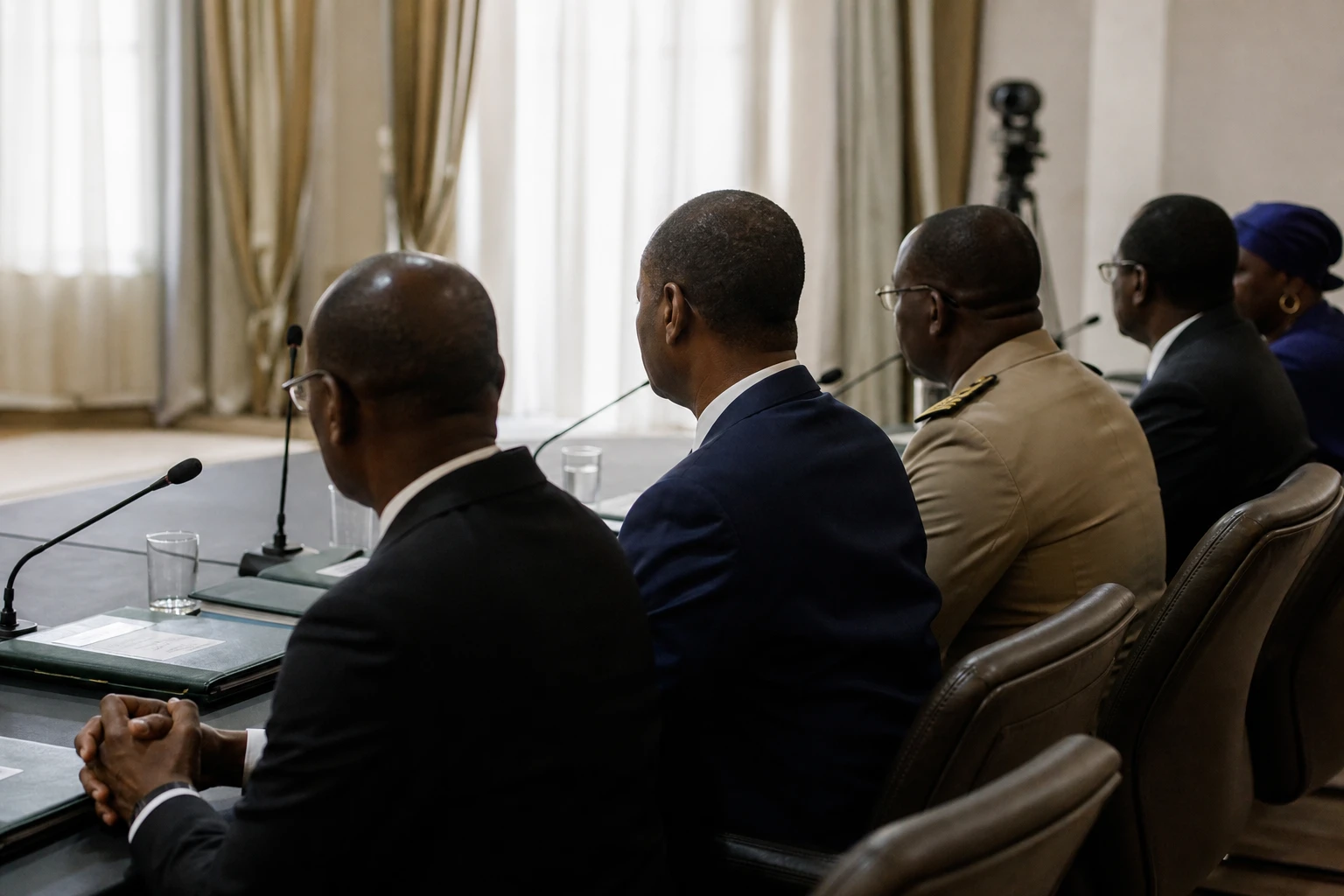
On the same day, Assimi Goïta pardoned Yann Christian-Bernard Vézilier, described by the Malian authorities as a French intelligence agent. He had been sentenced to 20 years in prison in early June 2026 for undermining state security, in a case Bamako described as an attempt to destabilise the country. Several international media outlets reported the conviction, noting that the case unfolded against the backdrop of already severely strained relations between Mali and France since the coups of 2020 and 2021.
The pardon does not amount to a political about-turn. On the contrary, it allows the government to retain control of the symbolism. On the one hand, Bamako shows that it is not backing down on substance: it stands by its interpretation of the case, its sovereignty rhetoric and its accusation of foreign interference. On the other, it eases a dispute that was limiting its diplomatic room for manoeuvre. The reference to a “brotherly country” that helped bring the case to a conclusion, without naming it, suggests that discreet mediation was needed. In the language of Mali’s transition, this is a way to present a step towards resolving the crisis without appearing to retreat.
What this means for Malians and the region
For the families of the released soldiers, the issue is human before it is strategic. For the military institution, it is a matter of restoring the belief that the Malian Armed Forces (FAMa) can bring their men home, even after months in detention. For the government, the goal is broader: to demonstrate that the transition is neither isolated nor powerless, even as the armed insurgency continues to weigh on roads, garrisons and major trade routes. In Bamako, regional capitals and rural areas, this protracted war has different effects. In cities, it fuels a heightened sense of risk and the closure of civic space. In the countryside, it disrupts travel, informal trade and access to markets.
Regionally, Mali remains at the heart of a reshaped Sahel. The Confederation of Sahel States wants to present itself as a sovereign bloc facing external pressure. But the military reality is a reminder that regional cooperation, discreet mediation and balanced relations with neighbours remain indispensable. The recent thaw with Algeria, as well as ongoing exchanges with other African partners, shows that Bamako cannot afford to focus solely on confrontation with its armed enemies. It must also stabilise its diplomatic environment.
At continental level, this episode says something broader about Africa’s military-led transitions. When security deteriorates, governments often seek to regain the initiative through judicial crackdowns, displays of sovereignty or tightly controlled negotiations. The Malian case shows that these tools can deliver tactical results. They cannot, however, replace a lasting political solution to the conflict in the north and centre, or a framework for resolving the crisis accepted by actors who do not all recognise the same authority. Beyond Bamako, that is where part of the Sahel’s future will be decided.