Algeria
 Egypt
 Libya
 Morocco
 Sudan
 Tunisia
 Benin
 Burkina Faso
 Cabo Verde
 Côte d'Ivoire
 Ghana
 Guinea
 Guinea-Bissau
 Liberia
 Mali
 Mauritania
 Niger
 Nigeria
 Senegal
 Sierra Leone
 The Gambia
 Togo
 Cameroon
 Central African Republic
 Chad
 DR Congo
 Equatorial Guinea
 Republic of the Congo
 São Tomé and Príncipe
 Burundi
 Comoros
 Djibouti
 Eritrea
 Ethiopia
 Kenya
 Madagascar
 Malawi
 Mauritius
 Mozambique
 Rwanda
 Seychelles
 Somalia
 South Sudan
 Tanzania
 Uganda
 Angola
 Botswana
 Eswatini
 Lesotho
 Namibia
 South Africa
 Zambia
 Zimbabwe
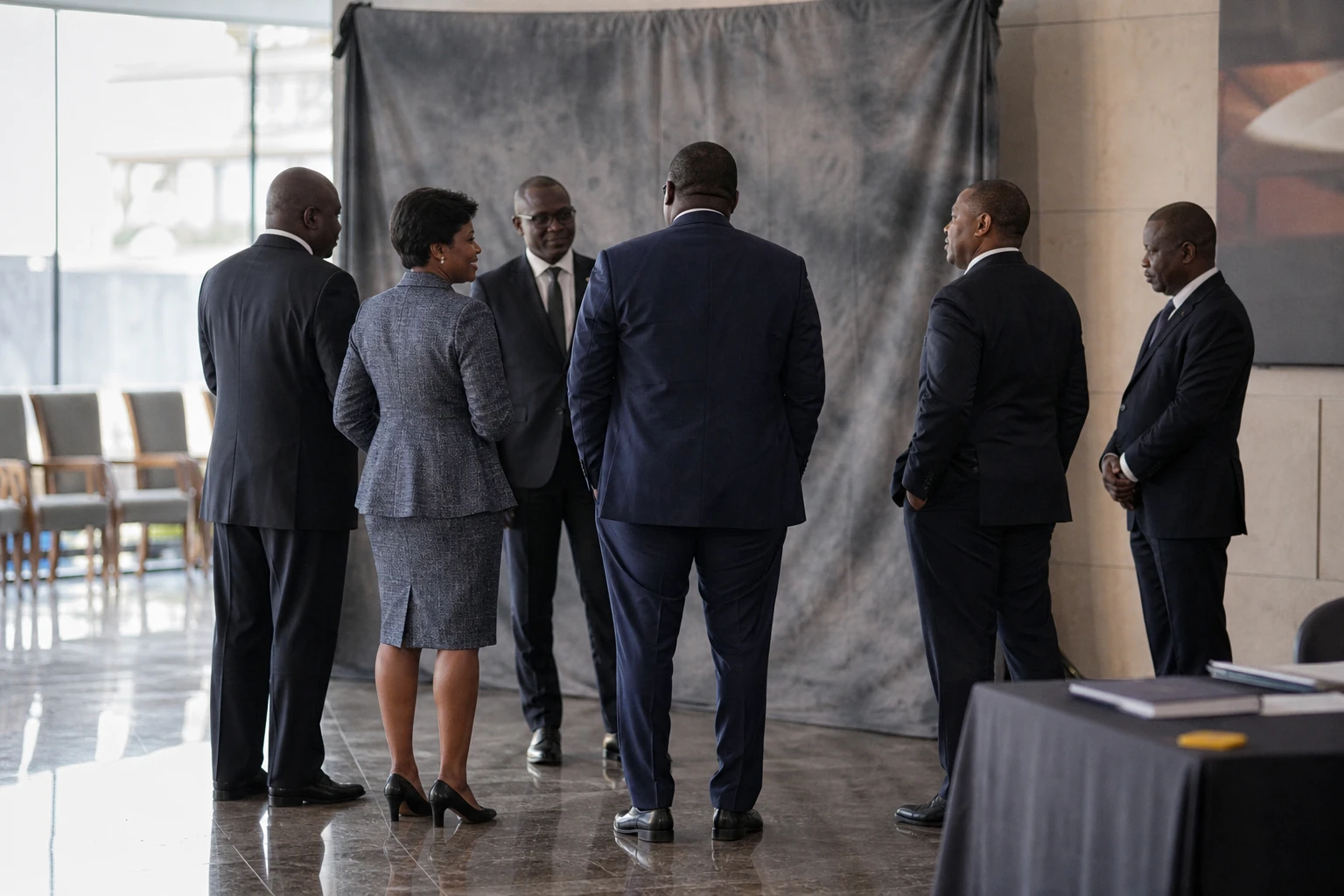
In Libreville as in Paris, a publishing house is more than books lined up on a shelf. It is often an outpost, a cultural filter and sometimes a place of symbolic repair for authors seeking to be read without being reduced to stereotypes.
Christian-Brice Ondo’s career follows this logic. Born in Libreville, Gabon, and now based in France, he launched Les Éditions Obangame in 2021, a company registered in Saint-Maur-des-Fossés and run by him. The publishing house has already published works listed in France’s legal deposit, including Cartharsis by Sokhna Ndao.
A Gabonese publisher between the diaspora and the book market
This publisher’s story says something important about the cultural journeys of Gabonese people outside the country. Rather than a story of rupture, it shows a flow of exchange. Creators trained or based in Europe continue to work with authors from Central Africa, West Africa and the diaspora. This exchange feeds a transnational literary space no longer dependent solely on the major publishing capitals. It also reflects readers’ habits, particularly those of people seeking stories close to their social, family and urban experiences. The African Union, in its thinking on the African diaspora and cultural renaissance, also emphasises the importance of the link between the continent and the diaspora.
Obangame’s approach is based on a lean structure, and therefore one that is cautious financially. The companies register lists a SAS established in April 2021, with modest capital, specialising in book publishing. In other words, it is a small-scale operation rather than an industrial group. This size means selecting few titles, but championing them methodically. It is a common model in independent publishing, where the quality of the catalogue often matters more than its volume.
The choice of authors is driven by encounters rather than large-scale scouting. This approach is consistent with niche publishing that pays close attention to texts carried by distinctive voices. It also explains why the place given to women authors has become central to the catalogue. This is not a passing trend. It is a way of opening up space for Afro-descendant women’s stories, which are often underrepresented in the most visible channels. The publication of Cartharsis confirms this editorial direction.
One point of context also needs correcting. The name “Obangame” has been presented as linked to an African expression evoking solidarity. However, its precise linguistic attribution should not be asserted without verification, as it is not reliably established by the sources consulted. This caution is useful. In publishing, as in journalism, a name conveys an intention. It is not enough to prove a linguistic origin.
What this model says about Gabon and Central Africa
The story of a Gabonese publisher based in France also points to a broader question: how are Central African cultural industries taking shape beyond national borders? In 2025, CEMAC held consultations on a regional cultural strategy, emphasising the promotion of cultural and creative industries, social cohesion, and the links between culture and education. This framework shows that the book is not merely an object of prestige. It can become a sector of activity, a source of employment and a tool for regional integration.
For Gabon, the challenge is twofold. On the one hand, the country has a pool of talent, visible in literature, music, thought and audiovisual media. On the other, the domestic market remains small and distribution channels are concentrated. In this context, diaspora publishers play a supporting role. They serve as a bridge between authors and readers, and also between African capitals and audiences based in Europe. This is particularly true for Libreville, where local cultural scenes need links beyond the country without losing their national roots.
This reality has a continental dimension. Afro-descendant publishing responds to a demand that extends beyond any one country. It accompanies the rise of an urban, connected African readership, and of a diaspora that wants to read something other than stories imposed from outside. In this landscape, the value of a small publishing house lies not only in its sales. It lies in its ability to give a platform to voices that would otherwise circulate too little. This is precisely where part of Africa’s cultural sovereignty is at stake.
The precedent to watch is clear: if CEMAC turns its cultural ambitions into concrete measures, publishing houses such as Obangame could benefit from a more favourable ecosystem, with more links between states, authors and publishers. Conversely, if public policies remain fragmented, these organisations will continue to bear most of the risk alone. That is often the fate of small independent publishers: they move quickly, but without a safety net. Their success then speaks as much to the vitality of creators as to the limits of the market.