Algeria
 Egypt
 Libya
 Morocco
 Sudan
 Tunisia
 Benin
 Burkina Faso
 Cabo Verde
 Côte d'Ivoire
 Ghana
 Guinea
 Guinea-Bissau
 Liberia
 Mali
 Mauritania
 Niger
 Nigeria
 Senegal
 Sierra Leone
 The Gambia
 Togo
 Cameroon
 Central African Republic
 Chad
 DR Congo
 Equatorial Guinea
 Gabon
 Republic of the Congo
 São Tomé and Príncipe
 Burundi
 Comoros
 Djibouti
 Eritrea
 Ethiopia
 Madagascar
 Malawi
 Mauritius
 Mozambique
 Rwanda
 Seychelles
 Somalia
 South Sudan
 Tanzania
 Uganda
 Angola
 Botswana
 Eswatini
 Lesotho
 Namibia
 South Africa
 Zambia
 Zimbabwe
A staple grain, an escalating bill
In Kenya, maize is not just one crop among many. It is the basis of the daily meal, a major animal-feed ingredient and an immediate barometer of the cost of living. When supply tightens, Nairobi feels it quickly, as do Kisumu, Eldoret, Mombasa and the rural markets that depend on harvests and the roads linking them.
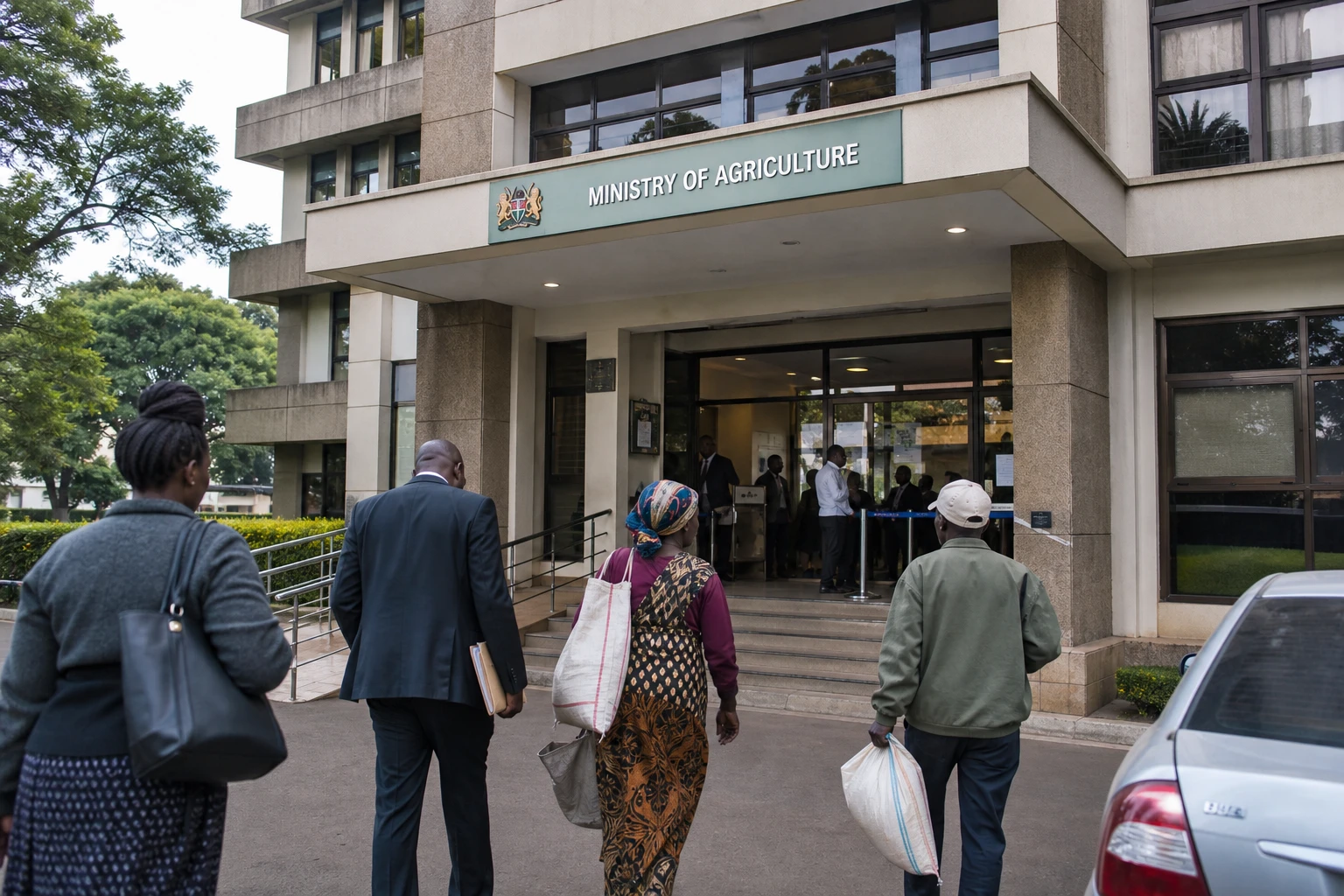
The signal from the Ministry of Agriculture is therefore serious. The country expects a deficit of around 5.4 million bags, or nearly 486,000 tonnes, by the end of September 2026. This estimate comes as maize prices are already above their usual averages in several Kenyan markets, according to FEWS NET, with pressure expected to persist in the capital until early 2027.
The government is not starting from scratch in addressing this shortfall. In June 2026, the ministry said maize production had risen from 34 million bags in 2022 to 67 million in 2025, while imports fell over the same period. But this recent improvement does not automatically protect the current season from a climate or logistical shock.
Harvests first exposed to rain, then drought
Kenya remains heavily dependent on rain-fed agriculture. Parts of the Rift cereal belt and western growing areas rely on short weather windows. When the rains arrive too early and then stop during critical stages of maize growth, yields fall quickly. This is precisely the type of weather pattern flagged by the ministry, which links the expected deficit to early rains followed by a prolonged drought.
Added to this is a more familiar, but decisive, problem: access to inputs. Delays in distributing subsidised fertiliser disrupted planting and crop management, according to Kenyan authorities. In a system where smallholders produce most of the maize consumed in the country, a delay of just a few weeks can be enough to tip the season off course.
This vulnerability is not confined to Kenya. FEWS NET is already reporting maize prices above the five-year average in several markets, including Nairobi, and expects wholesale prices in the capital to remain persistently higher, at 9 to 19% above the five-year average through January 2027. High fuel costs and limited local supply are sustaining the pressure.
Turning to imports, but within narrow limits
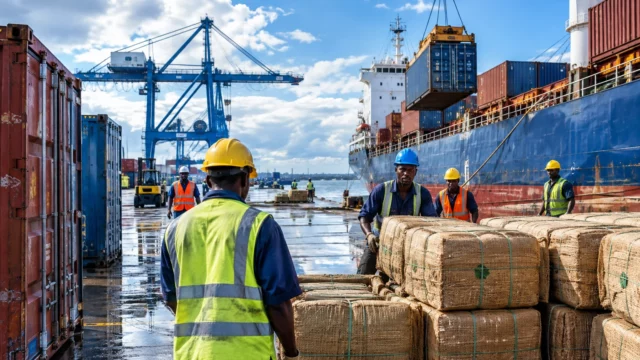
To cushion the shock, Nairobi plans to import 1 million bags of maize, or around 90,000 tonnes, to replenish strategic reserves. The announced volume covers only a fraction of the expected deficit. The government may therefore have to expand its purchases if the final harvest confirms the more cautious forecasts.
Sources of supply are also constrained. According to the US Department of Agriculture’s March 2026 report, Kenyan maize imports were expected to reach 800,000 tonnes in the 2025/2026 season, up from 250,000 tonnes the previous year. The same document notes that most of the volume would come from Tanzania and Zambia, with some trade facilitated by the mechanisms of the East African Community and COMESA, regional blocs that provide preferential access among member states.
This detail matters. It shows that Kenya’s food security depends not only on its own weather, but also on the smooth flow of regional trade. When production falls short in Nairobi, the response often comes from Arusha, Lusaka or other grain markets in East and Southern Africa. Kenya is thus part of an interconnected space in which deficits, like surpluses, can quickly cross borders.
There is also a structural limit. The USDA report states that Kenya maintains a 50% tariff on maize from outside the EAC/COMESA region. In practice, this pushes the country to look first to its immediate neighbours. This is a safety net, but also a constraint, because any climate disruption among regional suppliers immediately reduces room for manoeuvre.
Prices, purchasing power and stability at stake
For urban households, the issue is first seen in the bill. For rural families, it is also a matter of income: selling less, selling later, or buying grain at a higher price to meet their food needs. In both cases, maize acts as a social amplifier. A moderate percentage increase quickly becomes real pressure on the food basket, especially for households that depend on the market.
The livestock sector is also exposed. Maize is used in feed for poultry, pigs and cattle. If grain becomes more expensive, production costs rise, potentially feeding through to the prices of eggs, chicken, milk and meat. The problem is therefore not only agricultural; it affects the entire Kenyan food chain, from farm to retailer.
At the same time, the authorities are seeking to show that they have a broader strategy. In July 2026, the government unveiled a KSh1.08 trillion agri-food investment plan, with a focus on irrigation, climate resilience and modernising value chains. This direction reflects a clear policy choice: to rely less on rainfall and do more to secure production.
What this case says about East Africa
The Kenyan case resonates beyond Nairobi. In the East African Community, maize is one of the most politically sensitive commodities because it combines mass consumption, economic sovereignty and price stability. A Kenyan deficit could therefore prompt renewed debate over stocks, imports and regional trade corridors. It also shows that resilience policies cannot be limited to emergency announcements.
The next steps will hinge on three concrete indicators: the actual size of the 2026 harvest, the state’s ability to deliver inputs on time, and how prices in Nairobi evolve in the coming months. If the weather remains unfavourable, Kenya will probably have to import more, with the risk that pressure is passed directly on to consumers. If rainfall stabilises and regional stocks hold up, the country will be able to contain the shock. Either way, maize remains central to Kenya’s predicament and, more broadly, to food security in East Africa.