Algeria
 Egypt
 Libya
 Morocco
 Sudan
 Tunisia
 Benin
 Burkina Faso
 Cabo Verde
 Côte d'Ivoire
 Ghana
 Guinea
 Guinea-Bissau
 Liberia
 Mali
 Mauritania
 Niger
 Nigeria
 Senegal
 Sierra Leone
 The Gambia
 Togo
 Cameroon
 Central African Republic
 Chad
 DR Congo
 Equatorial Guinea
 Republic of the Congo
 São Tomé and Príncipe
 Burundi
 Comoros
 Djibouti
 Eritrea
 Ethiopia
 Kenya
 Madagascar
 Malawi
 Mauritius
 Mozambique
 Rwanda
 Seychelles
 Somalia
 South Sudan
 Tanzania
 Uganda
 Angola
 Botswana
 Eswatini
 Lesotho
 Namibia
 South Africa
 Zambia
 Zimbabwe
A message, a sanction and an already tense digital climate
In Libreville, the battle over information is no longer being fought only in newsrooms. It is also playing out through administrative decisions, as Gabonese authorities tighten their control of the digital space. Since the suspension of social media ordered by the High Authority for Communication on 17 February 2026, the country has been subject to stricter controls on online content.
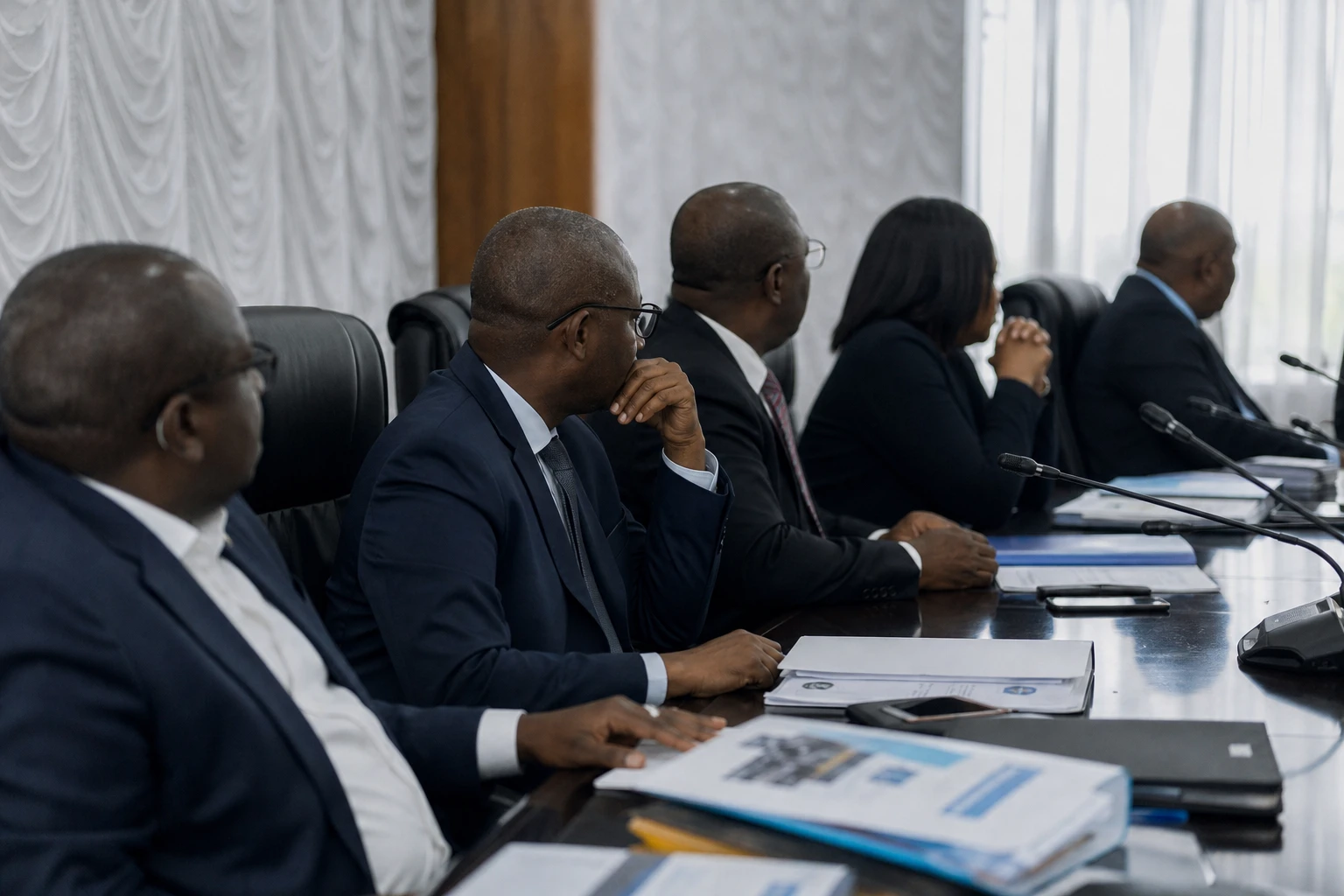
In this context, the HAC’s suspension of online outlet Info 241 carries significance beyond a single website. It says something about the balance of power between political authority, the regulator, digital platforms and the local press in Brice Clotaire Oligui Nguema’s Gabon.
What the HAC says, and what the outlet disputes
According to the decision made public, the HAC suspended Info 241 until further notice after it published an article deemed insulting to the Gabonese president and his family. The regulator said the text in question repeated remarks that were “insulting”, “scandalous” and of “rare virulence” towards the head of state.
The article concerned a Gabonese influencer based in France, known as Lanlaire, whose real name is Anges Landry Mbeng. It dealt with personal accusations, financial allegations and insinuations about the president’s private life. It should be noted, however, that these points were reported claims that are disputed, not facts established by a court in the sources consulted.
Info 241, for its part, denounced a decision taken, it said, without a careful reading of the article in question. Its response shows that the dispute is not only about the content of a text, but also about how the limits of public criticism are interpreted in Gabon.
A tighter legal framework since the 17 February events
Info 241’s suspension has not come in a legal vacuum. It is part of a sequence that began with the suspension of social media in Gabon, announced by the HAC on 17 February 2026 “until further notice”. The measure was justified by the proliferation of defamatory, insulting and hateful content, as well as alleged risks to public order and national security.
The government subsequently backed this approach, presenting it as an effort to preserve public order, social cohesion and peace. A few days later, the presidency defended the suspension as an “act of sovereignty and responsibility”, while announcing a draft ordinance to regulate the use of social media more effectively.
The trajectory matters. Following the transition that began in the wake of 30 August 2023, Gabon regained its full place in African institutions, with the lifting of suspension measures within the African Union on 30 April 2025 and the lifting of a partial suspension from the Commonwealth in July 2025. But at home, the regulation of public speech remains tightly controlled.
What the case means for the media, political families and the public
For Gabonese media, the message is clear: political commentary is becoming riskier, especially when it touches on those close to the government. The sanction against Info 241 is a reminder that the HAC can act quickly, with an immediate impact on publication and the continued operation of a media outlet.
For the president’s supporters, this firmness meets a demand for respect for institutions and protection of the head of state’s privacy. Several of his supporters have also called for legal action against Lanlaire and those who amplify his messages. But this interpretation does not resolve the fundamental question: how can the fight against defamation be distinguished from an excessive restriction of public debate?
For citizens, the stakes are tangible. When social media is restricted and a media outlet can be suspended until further notice, access to pluralistic information narrows. This affects first and foremost connected urban residents in Libreville, Port-Gentil and Franceville, but also digital entrepreneurs, small media outlets, traders and the diaspora, who use these channels to follow the news and circulate information.
The issue is not unique to Gabon. Across Central Africa, several states are trying to strike a balance between digital regulation, the fight against online abuse and the protection of civil liberties. Within the CEMAC area, this case feeds into a wider debate about the role of regulatory authorities, the responsibility of platforms and institutions’ ability to respond without stifling the press.
A Gabonese case, but a continental debate
The Gabonese case now has continental significance. It raises a question confronting many African countries: how can digital content be regulated without turning control into a political reflex? Gabon’s response will be closely watched, especially as the country has sought since 2025 to demonstrate a return to institutional normality on the African stage.
For now, the focus is on Libreville. What happens next will depend on the avenues of appeal available, the precise terms of the HAC’s decision and how the government chooses to apply its new digital framework. At this stage, one thing is certain: the freedom to publish, comment and criticise those in power has once again become central to public life in Gabon.