Algeria
 Egypt
 Libya
 Morocco
 Sudan
 Tunisia
 Benin
 Burkina Faso
 Cabo Verde
 Côte d'Ivoire
 Ghana
 Guinea
 Guinea-Bissau
 Liberia
 Mali
 Mauritania
 Niger
 Nigeria
 Senegal
 Sierra Leone
 The Gambia
 Togo
 Cameroon
 Central African Republic
 Chad
 DR Congo
 Equatorial Guinea
 Gabon
 Republic of the Congo
 São Tomé and Príncipe
 Burundi
 Comoros
 Djibouti
 Eritrea
 Ethiopia
 Madagascar
 Malawi
 Mauritius
 Mozambique
 Rwanda
 Seychelles
 Somalia
 South Sudan
 Tanzania
 Uganda
 Angola
 Botswana
 Eswatini
 Lesotho
 Namibia
 South Africa
 Zambia
 Zimbabwe
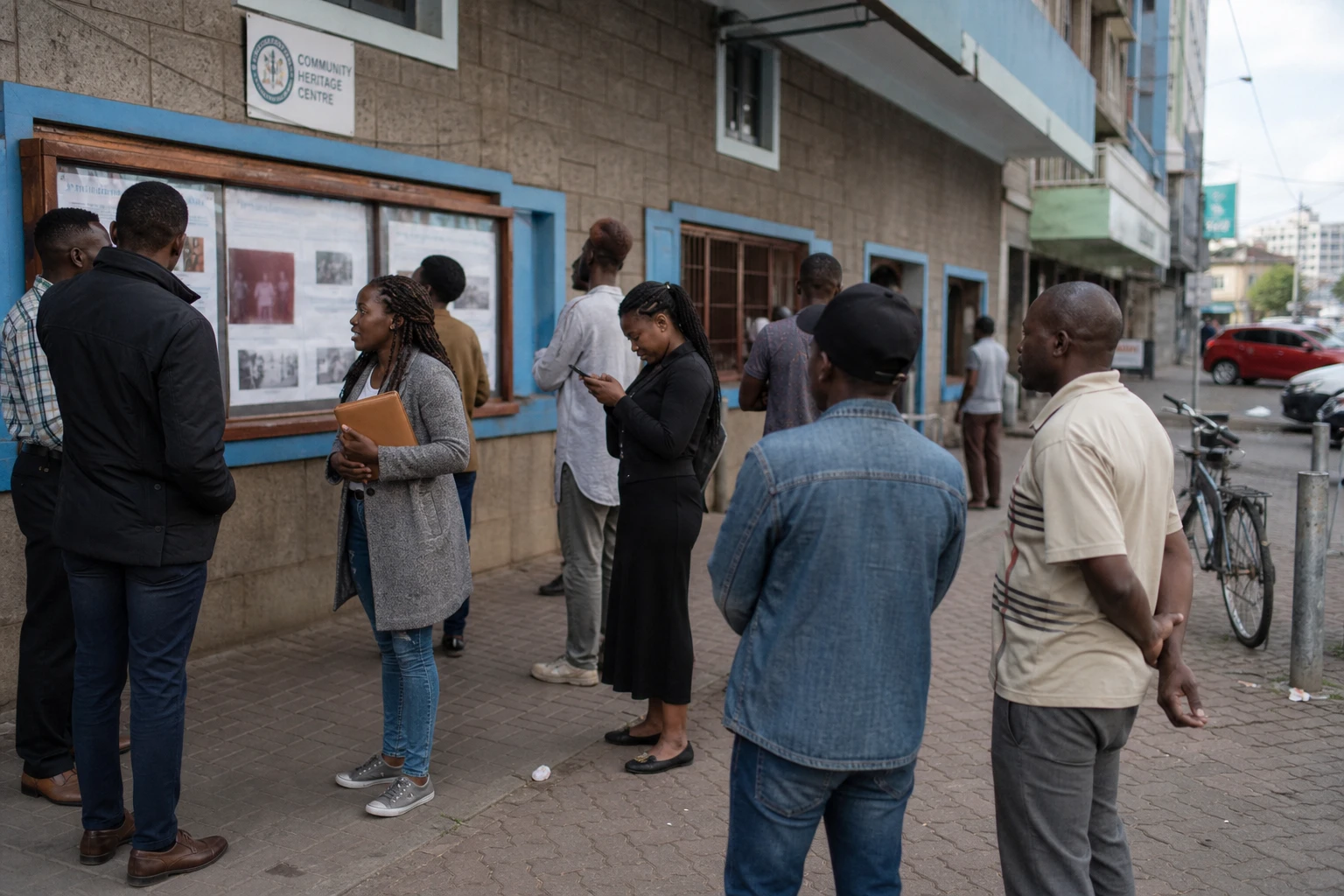
When the memory of a struggle goes beyond one person’s story
In Nairobi, the memory of the Mau Mau is about more than a war of liberation. It also tells of a long battle for land, dignity and women’s place in national history. In this memory, Muthoni wa Kirima holds a distinctive place: a fighter who became a symbol, both for veterans of the uprising and for a generation of Kenyans rediscovering the cost of independence.
Kenya today is still shaped by this history. The country is a pillar of the East African Community, whose headquarters are in Arusha, and, like much of the region, it continues to face tensions over land, colonial memory and the redistribution of resources. These issues are not confined to the past: they remain part of debates about social justice and recognition for former fighters.
A woman of the forest, a memory long relegated to the margins
Muthoni wa Kirima died on 4 or 5 September 2023, according to reports published at the time of her death; several Kenyan media outlets and the Kenya News Agency described her then as the only woman to have attained the rank of Field Marshal among the Mau Mau. Sources also agree on one essential point: she was in her twenties when she joined the movement, and she survived the colonial war and then independence.
The Mau Mau, also known in some historical accounts as the Kenya Land and Freedom Army, led an uprising against British colonial rule in the 1950s. A state of emergency was declared in October 1952, after which repression intensified in the country’s central regions, particularly around settlers’ lands and the forests where fighters took refuge. The uprising contributed to the path towards independence, achieved on 12 December 1963.
Muthoni wa Kirima’s story sheds light on a dimension of the conflict that is often overlooked: the role of women. A University of Nairobi study on the role of Kikuyu women in the Mau Mau highlights how crucial their contribution was to the movement’s survival. They transported food, carried messages and equipment, and some fought in the forest alongside men. Historian Margaret Gachihi sums up this reality simply: without them, the movement would probably neither have lasted as long nor retained the same capacity to act.
Within this wider picture, Muthoni wa Kirima embodied a rare profile. According to historical accounts and testimony cited by Kenyan media, she worked as a messenger before being beaten and then joining the forest fighters herself. She is said to have remained there until independence. This sequence says much about the colonial war: an armed struggle, but also a war of displacement, surveillance, fear and local solidarity.
What the Mau Mau case still reveals
Land lay at the heart of the conflict. The Mau Mau’s demands combined access to dispossessed land, opposition to the colonial order and a break with an economic system based on plantations and forced or coerced labour. The memory remains vivid because the land issue has never disappeared from Kenya’s political landscape. Instead, it has evolved into a question of reparations, redistribution and inheritance.
The Kenyan state also kept this past at arm’s length for a long time. The Mau Mau movement remained banned until 2003, when the government lifted the ban and allowed its former members to be rehabilitated more fully. Years later, the United Kingdom also agreed an out-of-court settlement with Kenyan victims of the emergency period and the uprising, a sign that the issue was not only a matter of national memory but also an unresolved colonial dispute.
Recognition came late for the veterans. For their families, it remains partial. In Kenyan politics, the subject is still sensitive because it touches on the national narrative, compensation, land and the place of former fighters in the public imagination. In this sense, Muthoni wa Kirima is more than a military figure. She is also a reminder that independence did not settle every debt owed by history.
A Kenyan and East African resonance
The significance of this story extends beyond Kenya. Across the East African Community, where debates continue over inherited borders, access to resources and political balances, the memory of anti-colonial struggles still feeds discussion about genuine sovereignty. Each state in the region carries comparable legacies in its own way: contested land, incomplete reparations, uneven archives and competing memories.
Muthoni wa Kirima’s story also serves as an important reminder for the continent: the history of African independence cannot be told only through prominent male figures or political capitals. It was also shaped on the margins, in forests and villages, through support networks and the actions of women whom the archives long underestimated. In contemporary Kenya, recognition has come late, but it is changing how the nation tells its own story.
What needs watching now is less a single event than the consolidation of this memory in institutions, school curricula, reparation policies and land debates. As long as these issues remain unresolved, the history of the Mau Mau will continue to speak to Kenya’s present. And, by extension, to an East Africa still seeking ways to honour its founding struggles without confining them to commemoration alone.