Algeria
 Egypt
 Libya
 Morocco
 Sudan
 Tunisia
 Benin
 Burkina Faso
 Cabo Verde
 Côte d'Ivoire
 Ghana
 Guinea
 Guinea-Bissau
 Liberia
 Mali
 Mauritania
 Niger
 Nigeria
 Senegal
 Sierra Leone
 The Gambia
 Togo
 Cameroon
 Central African Republic
 Chad
 DR Congo
 Equatorial Guinea
 Gabon
 Republic of the Congo
 São Tomé and Príncipe
 Burundi
 Comoros
 Djibouti
 Eritrea
 Ethiopia
 Kenya
 Madagascar
 Malawi
 Mauritius
 Mozambique
 Rwanda
 Seychelles
 Somalia
 South Sudan
 Uganda
 Angola
 Botswana
 Eswatini
 Lesotho
 Namibia
 South Africa
 Zambia
 Zimbabwe
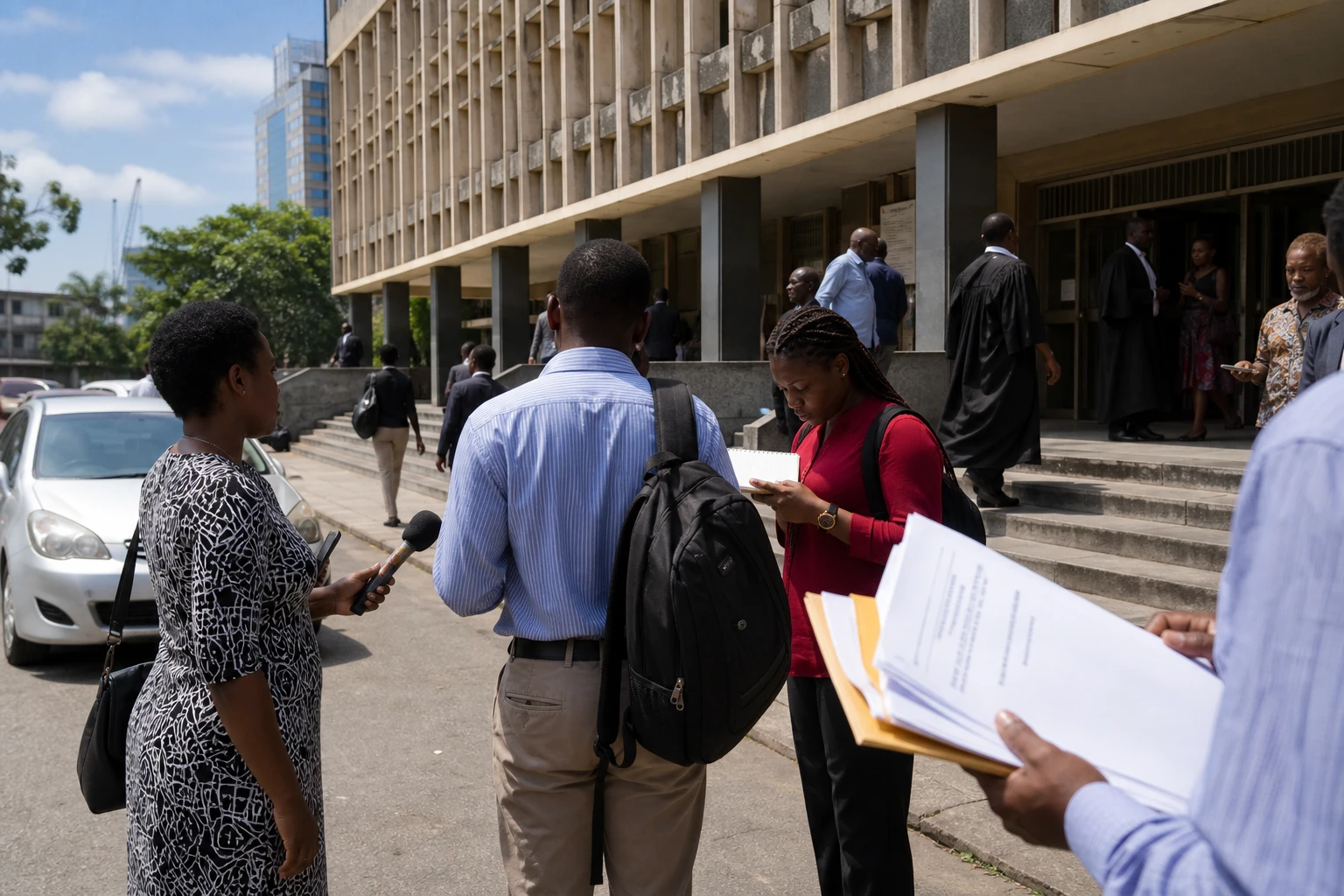
In Dar es Salaam, a legal case that goes beyond Lissu
In Tanzania’s economic capital, the debate is not only about an opposition figure. It also concerns the space left for pluralism, the credibility of the courts and the political climate ahead of a highly tense electoral cycle. Tundu Lissu, president of Chadema, the main opposition party, is being prosecuted for treason, an offence punishable by death in Tanzania.
The case is part of a broader sequence of events. Chadema was temporarily suspended from political activity in June 2025 by the Dar es Salaam High Court in a separate internal dispute, before the measure was subsequently clarified and then challenged. At the same time, political tensions in Tanzania, a member of the East African Community, are resonating far beyond Dodoma, the administrative capital, reaching the regional institutions based in Arusha.
Trial resumes after months of delays
On Monday 10 August, or during that month’s judicial proceedings, the Lissu case resumed at the Dar es Salaam High Court after several interruptions. Hearings had already been repeatedly adjourned, and Tanzanian media and international news agencies had described proceedings that were constantly resumed, suspended and rescheduled.
According to information made public during the hearings, prosecutors accuse Tundu Lissu of calling for the 2025 elections to be prevented from taking place unless electoral reforms were adopted. He was arrested in April 2025 after a political rally in the south of the country, then charged with treason. The defence argues that the prosecution’s case is weak, particularly after an appeal court refused to allow the prosecution to expand its evidence at a late stage.
The Chadema leader appeared at the hearing in a defiant mood. Press reports described him smiling, with his fist raised, and determined to expose what he considers abuses of power. At this stage, the defence is seeking a finding that the prosecution has not established a sufficiently solid body of evidence to proceed with the trial.
A procedural issue has also drawn attention: opposition party officials have questioned the identity of a witness presented by the prosecution, suggesting there may have been a serious case of mistaken identity, or even impersonation. This allegation has not been independently confirmed in the sources consulted, but it illustrates how closely contested the case is, on both procedural and substantive grounds.
What the case reveals about the political balance of power
The substance of the case goes beyond Tundu Lissu himself. He is no fleeting activist. For a long time, he has been one of the most prominent figures in Tanzania’s opposition, survived an assassination attempt in 2017 and was Chadema’s candidate in the 2024 presidential election. His trial therefore brings together several concerns: freedom of expression, the right to demonstrate, judicial independence and the treatment of opposition parties in a system dominated since independence by the ruling CCM.
The government, for its part, presents the proceedings as an ordinary criminal case. But the context weighs heavily. In June 2025, a High Court injunction suspended Chadema’s activities in a separate dispute. A few weeks later, the political climate hardened further, with new restrictions on gatherings and a decision to hold some hearings under tight security. In this landscape, opponents see less a judicial debate than a system closing in.
Tanzanian law gives the justice system an extremely powerful lever: treason is expressly punishable by death under the Penal Code. This severity makes the trial a major political case, preventing the proceedings from being treated as routine. For the public, the question is tangible: can electoral reforms be challenged without crossing into the most serious category of criminal offence? For the opposition, the question is even more direct: can it continue to exist as a national force if its leaders are isolated, suspended or prosecuted?
The effects are also geographical. In Dar es Salaam, where the media, lawyers and much of the formal economy are concentrated, every hearing becomes an institutional test. In the regions, where information often travels by radio, social media or local gatherings, the impact is felt differently: greater caution, more fear of speaking out, and an opposition forced to defend its visibility one case at a time.
A Tanzanian case, but also an East African one
Tanzania is not an isolated case. In East Africa, political balances are also played out before judges, in electoral commissions and on the streets. The country holds a particular place in the East African Community: it is one of its historic pillars, and Arusha is home to its main regional institutions. When tensions rise in Dar es Salaam, the very terms of regional stability are called into question.
The case has real continental significance. The Lissu case comes as several foreign partners and human rights organisations closely monitor the space available to the opposition and the handling of electoral deadlines in Tanzania. In the months ahead, the country will face increased scrutiny from African and international observers, as well as strong expectations at home: whether forthcoming elections will be contested in an open environment or in an already constricted political space.
Beyond the verdict, the case will say much about Tanzania’s institutional trajectory. It will show whether the justice system can remain an arbiter perceived as impartial. It will also show whether the opposition can still express disagreement without being disqualified in advance. And finally, it will show whether the stability often emphasised in Dodoma and Arusha can endure without genuine pluralism.