Algeria
 Egypt
 Libya
 Morocco
 Sudan
 Tunisia
 Benin
 Burkina Faso
 Cabo Verde
 Ghana
 Guinea
 Guinea-Bissau
 Liberia
 Mali
 Mauritania
 Niger
 Nigeria
 Senegal
 Sierra Leone
 The Gambia
 Togo
 Cameroon
 Central African Republic
 Chad
 DR Congo
 Equatorial Guinea
 Gabon
 Republic of the Congo
 São Tomé and Príncipe
 Burundi
 Comoros
 Djibouti
 Eritrea
 Ethiopia
 Kenya
 Madagascar
 Malawi
 Mauritius
 Mozambique
 Rwanda
 Seychelles
 Somalia
 South Sudan
 Tanzania
 Uganda
 Angola
 Botswana
 Eswatini
 Lesotho
 Namibia
 South Africa
 Zambia
 Zimbabwe
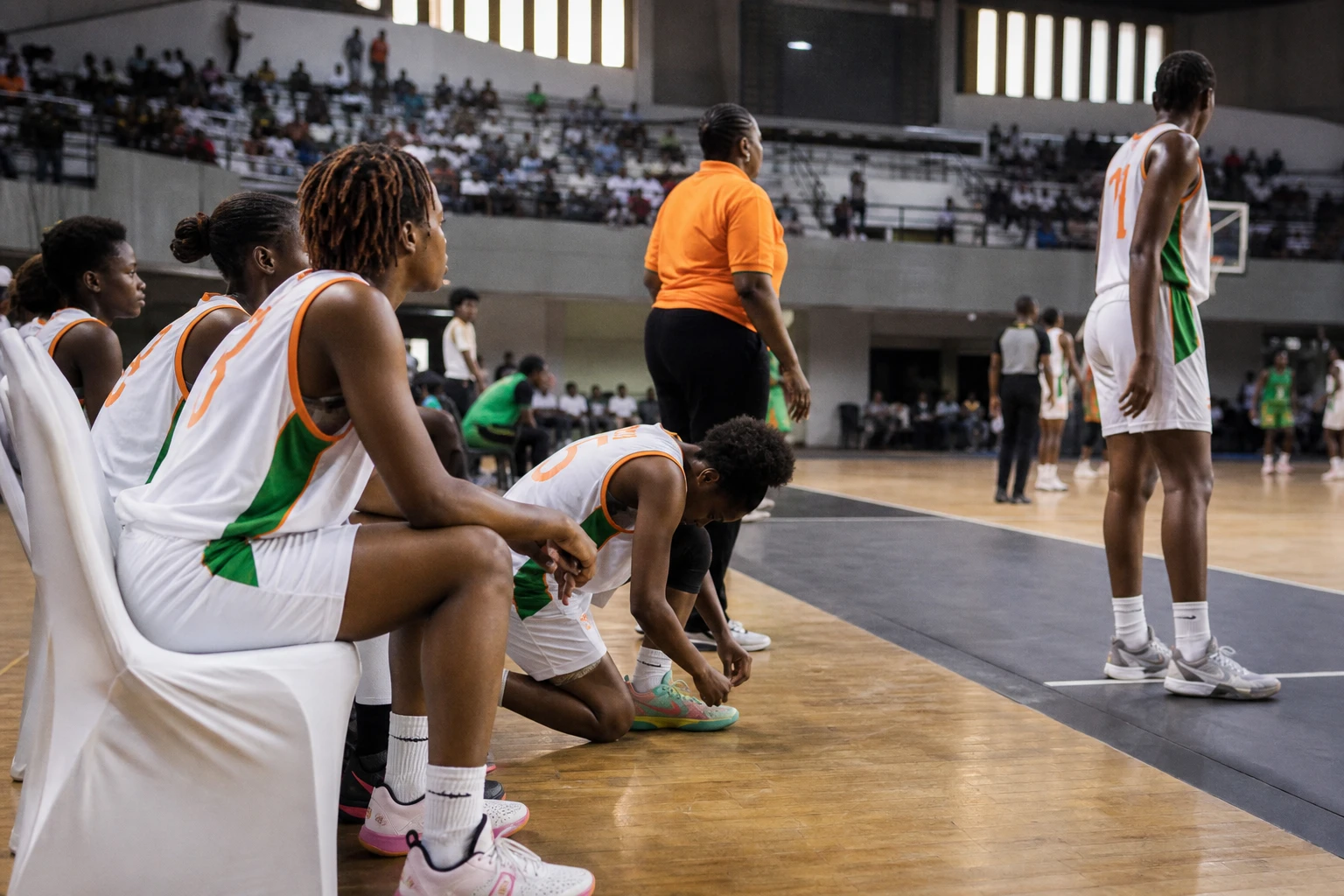
In Abidjan, young women are playing for more than a tournament
In a packed Palais des Sports de Treichville, the women’s U18 AfroBasket has already delivered its first lesson. The margins are sometimes wide, but above all they tell of the gap in maturity between the continent’s leading basketball programmes and teams still learning the game. For hosts Côte d’Ivoire, the stakes go beyond the scoreboard.
Hosting a continental youth competition demonstrates organisational capacity, but it is also a bet on the next generation. After staging the Women’s Africa Cup of Nations in Abidjan in 2025, Côte d’Ivoire’s economic capital is reinforcing its status as a stronghold of African basketball. FIBA has also awarded Côte d’Ivoire the hosting rights for the 2026 U18 AfroBaskets for women and men, with the women’s finals scheduled to take place in Abidjan from 5 to 16 August. The tournament also serves as a pathway to the 2027 U19 World Cup, for which the top two teams will qualify. FIBA sets out the tournament format and its global stakes here.
Mali and Egypt stand out, while Côte d’Ivoire are solid at home
On Saturday 8 August, the results confirmed the standings in Groups A and B. Mali overwhelmed Morocco 103-30. Egypt beat Benin 95-48. Côte d’Ivoire defeated Uganda 80-44. And Kenya got back on track against the Central African Republic, winning 74-36.
In Group B, Mali and Egypt secured their places in the quarter-finals with two wins from two matches. Morocco and Benin, meanwhile, are already out of contention for the top two places. Monday’s Mali-Egypt clash will mainly determine the group standings and, therefore, their opponents in the knockout round.
Mali remain the benchmark of the tournament. The defending champions have a formidable record in women’s youth basketball, with nine continental titles at this level. The Malians had already made a strong start with a 124-20 win over Benin. Against Morocco, they stepped up the pace again. After a more closely contested first quarter, the game quickly got away from their opponents. The margin exceeded 70 points. Suzane Fatoumata Dembélé again proved a key pillar of the team.
Egypt, too, confirmed their growing form. After an opening win over Morocco, the Egyptians kept Benin in check with the same intensity, using an aggressive defence and asserting their dominance in the paint. Benin nevertheless found some reserves in the final quarter, inspired by Stivine Erine Fifamin Tchiakpé, but the gap was already too wide.
Côte d’Ivoire have made a solid start to the tournament. After a convincing win over the Central African Republic, the Ivorians beat Uganda with discipline. The game was more closely contested at first, before the home team took control in the opening quarter. Marlyne Esther Adahe stood out in a team that managed to dictate the pace. At this level of competition, emotional control matters as much as technical ability.
What these scores say about women’s basketball in Africa
These early margins reveal a great deal about women’s U18 basketball in Africa. On one side, established nations such as Mali and Egypt arrive with collective understanding, international experience and a winning culture already in place. On the other, countries such as Morocco, Benin, Uganda, Kenya and the Central African Republic are also here to learn, improve and gauge the distance they still have to cover.
The tournament format heightens this contrast. The groups are short. Every match counts. A poor start can quickly weigh on what follows. But this apparent harshness also has a benefit: it forces federations to strengthen scouting, preparation and support for girls from the grassroots level. Without that, the gap opens up early and is hard to close.
For Côte d’Ivoire, the stakes are twofold. In sporting terms, the team must perform well at home and finish among the top eight to remain in contention for a place at the world championships. Institutionally, Abidjan is using this period to strengthen its position as a hub for African basketball. The FIBA Africa headquarters are in the city. The international federation has also sent further signals of confidence, following several events held in Côte d’Ivoire in recent months. FIBA has confirmed Côte d’Ivoire as host of both 2026 U18 tournaments.
This momentum is part of a broader trajectory. In West Africa, youth competitions often serve as a testing ground. They reveal the quality of training centres, the depth of domestic leagues and the ability of federations to produce players ready for the highest level. Mali, already established among the continent’s leading powers, is using the tournament to maintain its lead. Côte d’Ivoire is seeking to turn home advantage into lasting progress. The rest of the field is trying to close the gap without settling for learning alone.
A tournament to follow beyond the court
The rest of the championship will show whether the current hierarchy holds to the end or an outsider manages to upset the established order. For now, the quarter-finals are already taking shape, with a clear picture emerging: Mali and Egypt are advancing with confidence, while Côte d’Ivoire must deliver at home to turn a good start into a genuine continental campaign.
Beyond the immediate result, the tournament has pan-African significance. The U18 players are shaping the next generation of senior national teams. The players seen in Abidjan today could go on to strengthen the teams that will represent the continent in FIBA competitions. A significant part of the future of African basketball is being shaped here: in youth arenas, by federations building strong structures, and in countries able to host these events without treating them as one-off occasions.