
 Algeria
 Egypt
 Libya
 Morocco
 Sudan
 Tunisia
 Burkina Faso
 Cabo Verde
 Côte d'Ivoire
 Ghana
 Guinea
 Guinea-Bissau
 Liberia
 Mali
 Mauritania
 Niger
 Nigeria
 Senegal
 Sierra Leone
 The Gambia
 Togo
 Cameroon
 Central African Republic
 Chad
 DR Congo
 Equatorial Guinea
 Gabon
 Republic of the Congo
 São Tomé and Príncipe
 Burundi
 Comoros
 Djibouti
 Eritrea
 Ethiopia
 Kenya
 Madagascar
 Malawi
 Mauritius
 Mozambique
 Rwanda
 Seychelles
 Somalia
 South Sudan
 Tanzania
 Uganda
 Angola
 Botswana
 Eswatini
 Lesotho
 Namibia
 South Africa
 Zambia
 Zimbabwe
A new institutional tier at a time when pluralism remains a sensitive issue
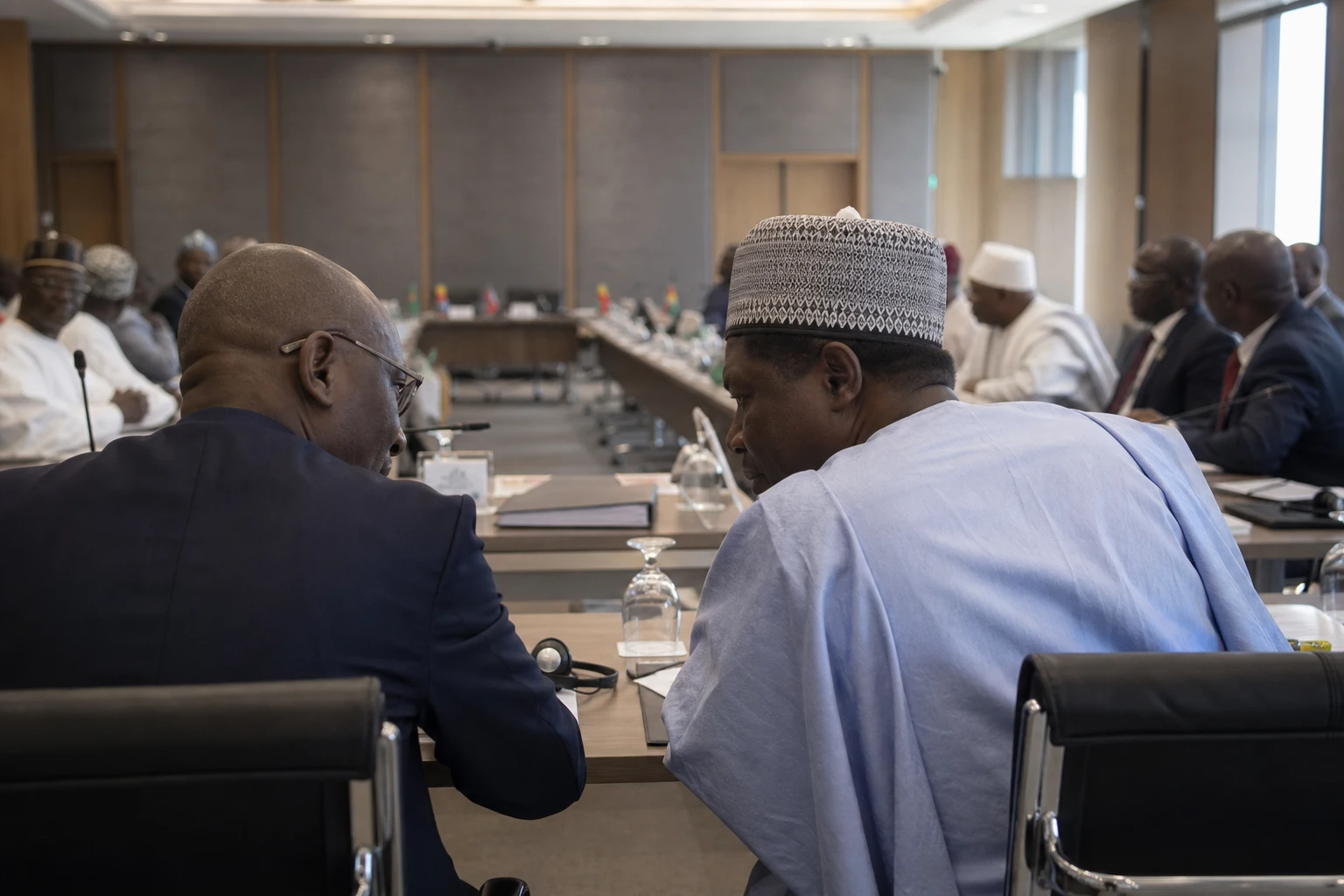
Benin has just added an upper chamber to its political architecture in Porto-Novo. The Senate, created by the constitutional amendment of December 2025, was installed in late July 2026, with its first presidency entrusted to Patrice Talon, the former head of state. The emergence of a new institution comes in a country where debate over the balance of power and the role of the opposition remains heated.
The issue goes beyond protocol. In a state where the National Assembly has often been criticised for its supposedly overly homogeneous political make-up, the Senate’s proponents present its arrival as a tool for institutional regulation. Its detractors, by contrast, see the risk of a further tightening of control if the new chamber does not reflect genuine political diversity.
What the Senate changes in Benin’s political landscape
The Democrats, the main opposition force, responded cautiously but firmly after the institution was established. Habibou Woroucoubou, a prominent party figure and former MP, said he hoped the Senate would bring political pluralism to life; otherwise, he said, it would become merely a way of repositioning officials thought to have left the front line. The response reflects the position of a party that had opposed the constitutional amendment introducing the Senate.
The opposition’s criticism rests on a simple question: can an upper chamber correct institutional imbalances if its composition is still seen as close to the government? In Benin’s case, the answer is decisive, because since 1990 the country has built its political identity on pluralism – the coexistence of several political leanings and parties. The Senate will therefore be judged not only by its formal rules, but also by its practices.
The immediate context is also shaped by the presidential transition launched in 2026. The presidency confirmed that Patrice Talon was preparing to leave office, while Romuald Wadagni took up his position as head of state. In this handover, the Senate’s establishment sends a strong institutional signal: Benin is pursuing reforms, but doing so as the political community closely watches the redistribution of roles between former and new leaders.
Between regulation, the legacy of power and opposition concerns
The controversy also centres on Patrice Talon. His appointment to lead the new chamber prompts an obvious political interpretation: his supporters say he brings experience to an institution intended to stabilise public life; his opponents see him as embodying the continued influence of former leaders in decision-making mechanisms. The debate is significant, because Benin’s revised Constitution has given the Senate a distinctive place in the balance of institutions.
This debate directly affects Beninese people, though not in the same way across different communities. In the political capital, Porto-Novo, and in urban centres where parliamentary debate is closely followed, the Senate is seen as one more instrument in the machinery of the state. In municipalities outside the main centres, where expectations focus first on jobs, public services and access to infrastructure, the issue is more concrete: what real purpose will a new institution serve if it has no visible effect on daily life?
The opposition is not only challenging the Senate’s existence. It is challenging the risk that it will become a chamber for adjustments in favour of the ruling camp. This is where the word “pluralism” takes on its full meaning. It is not a slogan, but a regime’s ability to allow political disagreements, checks and balances, and decisions that are not predetermined. Benin was long praised as one of West Africa’s most structured political arenas; the question now is whether that reputation can withstand the multiplication of institutions without sufficient clarity about their roles.
The debate is also part of a broader regional period of change. In West Africa, ECOWAS is going through a period of political and security realignment, while several states are seeking to reorganise their institutions to achieve greater stability. The case of Benin therefore draws interest beyond its borders: it shows how a country can expand its constitutional architecture without necessarily dispelling suspicions of concentrated power.
A development to watch in the coming months
The case’s continental significance lies in a question that has become central in Africa: how can institutions be reformed without narrowing the space for political competition? Benin offers a clear test. If the Senate plays a role in moderation, mediation and oversight, it can be presented as a useful innovation. If, on the contrary, it reinforces the impression of a political system with little openness, it will become another symbol in the African debate over the strength of checks and balances.
What happens next will depend on the chamber’s actual composition, its first decisions and how it works alongside the National Assembly, the Constitutional Court and the executive. In practice, it is not the Senate’s existence that will be judged so much as its ability to produce clear decisions, respect political balances and avoid becoming a mere extension of the government in power. In Benin, institutional consolidation will now be played out on a broader stage than the National Assembly chamber in Porto-Novo.



