Algeria
 Egypt
 Libya
 Morocco
 Sudan
 Tunisia
 Benin
 Burkina Faso
 Cabo Verde
 Côte d'Ivoire
 Ghana
 Guinea
 Guinea-Bissau
 Liberia
 Mali
 Mauritania
 Niger
 Nigeria
 Senegal
 Sierra Leone
 The Gambia
 Togo
 Cameroon
 Central African Republic
 Chad
 DR Congo
 Equatorial Guinea
 Gabon
 Republic of the Congo
 São Tomé and Príncipe
 Burundi
 Comoros
 Djibouti
 Eritrea
 Ethiopia
 Kenya
 Madagascar
 Malawi
 Mauritius
 Mozambique
 Rwanda
 Seychelles
 Somalia
 South Sudan
 Tanzania
 Angola
 Botswana
 Eswatini
 Lesotho
 Namibia
 South Africa
 Zambia
 Zimbabwe
When the health response also depends on roads, borders and trust
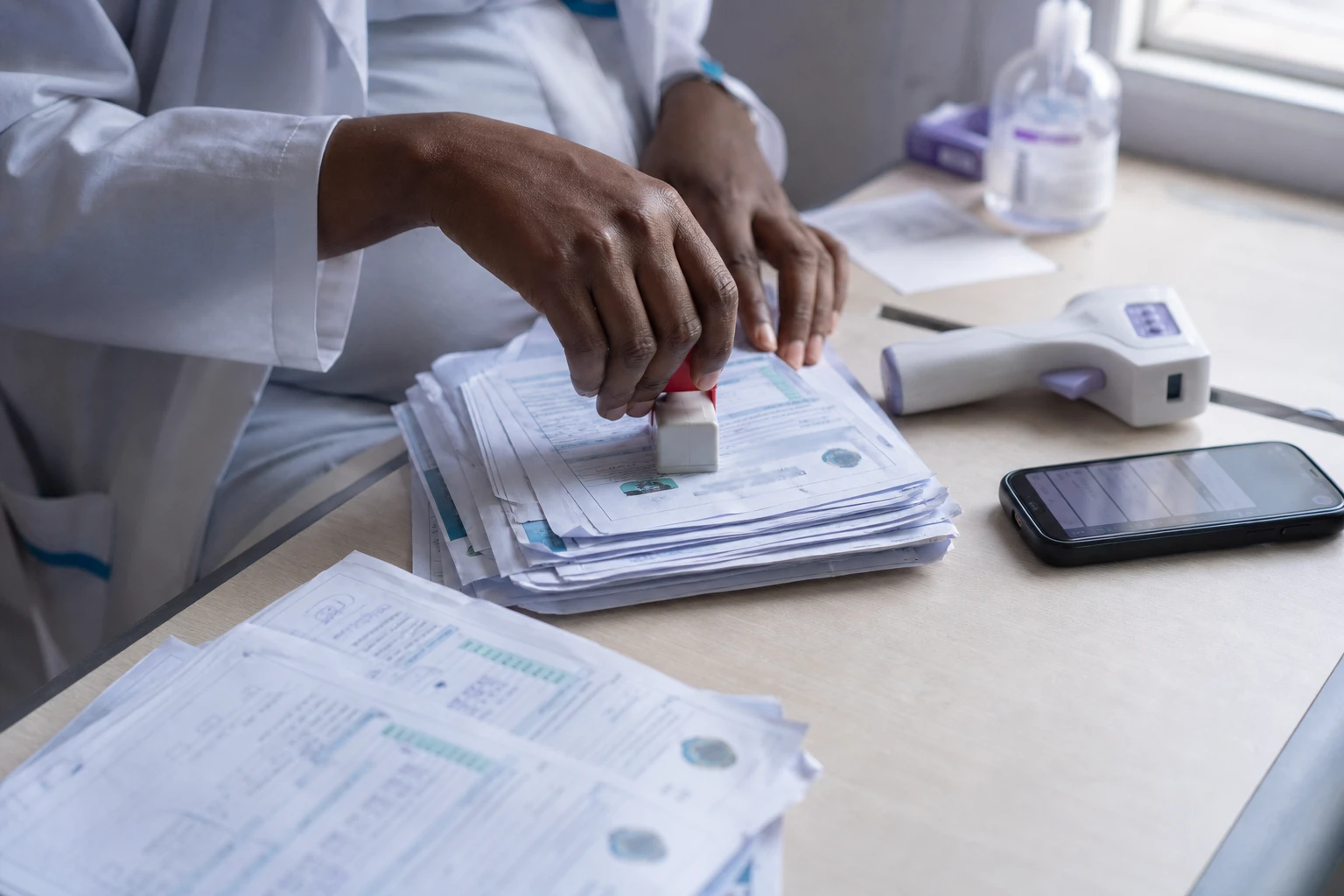
In the east of the Democratic Republic of the Congo, an epidemic never stops at the edge of a health zone. It moves along trade routes, through displacement camps, among families separated by borders and through already fragile healthcare networks. This explains the scale of the Ebola outbreak in 2026, as the response continues to depend on the speed of detection, community acceptance and regional coordination.
On 5 August 2026, the United States announced an additional US$242m for the Ebola response in DR Congo, preparedness in Uganda and humanitarian assistance linked to the crisis. The package brings direct US aid for this health emergency to more than US$512m, according to Washington.
A response within an established regional framework
The virus involved is Bundibugyo, an Ebola strain for which no vaccine or treatment has been specifically approved. On 5 June, the WHO and Africa CDC launched a US$518m continental preparedness and response plan for June-November 2026, based on a «single response» involving countries, partners and communities.
This framework matters because the crisis affects a densely connected area spanning Ituri, North Kivu and South Kivu, as well as neighbouring Uganda. Ugandan authorities declared their outbreak over on 28 July, after 42 days without a new local case, while maintaining heightened vigilance at points of entry. The WHO nevertheless says the risk of reintroduction from DR Congo remains real.
The facts: expanded US support, but a crisis still under way
According to the US Department of State, the US$242m announced on 5 August will fund epidemiological surveillance, screening at borders, isolation and treatment capacity, health infrastructure in affected areas, and communications campaigns to counter misinformation. The same announcement says the package is in addition to the US$350m already mobilised for DR Congo, South Sudan and Uganda as part of a US$1.8bn US contribution to the UN-coordinated humanitarian response.
The political message is clear: Washington says it wants to support the response where it is most useful, while commending Kampala’s response. The US support also forms part of a commitment made at the G7 on 16 June, where partners noted that the United States had already deployed more than US$370m for health and humanitarian work in the region, with a pledge to provide up to a further US$500m for Ebola.
On the ground, the situation in DR Congo remains the most concerning. The WHO regional bulletin dated 26 July says the outbreak continued to intensify, with sustained transmission, rising mortality and ongoing geographical expansion. The WHO says the cumulative number of cases has exceeded that of the two previously documented Bundibugyo outbreaks, making this the largest outbreak of its kind recorded to date.
What this means for Congolese people, beyond the figures
In DR Congo, Ebola affects more than hospitals. It disrupts travel, local trade, funerals, farming and attendance at health centres. The AP reported on 5 August that rapid transmission is being exacerbated by access difficulties, delays in contact tracing, armed violence and mistrust among some residents. In this context, the response depends as much on logistics as on trust.
Health communication is therefore a frontline tool. It must persuade without being heavy-handed, explain without patronising, and address misinformation that spreads quickly in areas affected by displacement. US funding explicitly provides for awareness campaigns. But on the ground, these messages will only carry weight if they are shared by healthcare workers, community outreach workers, local authorities and organisations operating in the east of the country.
For DR Congo, the challenge is also institutional. The epidemic is testing the ability of the Ministry of Public Health, Hygiene and Social Welfare to coordinate a response in provinces already under pressure. It is also testing the strength of cross-border arrangements with Uganda, which managed to contain the outbreak on its territory after a rapid response.
A continental warning on health sovereignty
This crisis is a reminder of a reality that is often underestimated: health security in Africa is shaped not only in laboratories, but also by the ability of states to fund, lead and harmonise their response. The US$518m continental plan launched by Africa CDC and the WHO is specifically intended to prevent fragmented approaches and duplication. It puts affected countries at the centre, with an emphasis on African coordination rather than passive dependence.
The implications therefore extend beyond DR Congo. The outbreak affects regional mobility, border surveillance arrangements, public health policies in Central Africa and continental cooperation mechanisms. The next phase will play out on three fronts: an effective fall in new transmissions in DR Congo, sustained vigilance in Uganda, and donors’ ability to keep pace with growing needs rather than limiting themselves to announcements.
For Kinshasa, the challenge is immediate. For Central Africa, it is structural. As long as eastern provinces remain exposed to insecurity, population displacement and interruptions to access to healthcare, every health alert will have a regional dimension. Once again, the Ebola response tells us as much about the state of health systems as it does about how the continent organises its own protection.