Algeria
 Egypt
 Libya
 Morocco
 Sudan
 Tunisia
 Benin
 Burkina Faso
 Cabo Verde
 Côte d'Ivoire
 Ghana
 Guinea
 Guinea-Bissau
 Liberia
 Mali
 Mauritania
 Niger
 Nigeria
 Senegal
 Sierra Leone
 The Gambia
 Togo
 Cameroon
 Central African Republic
 Chad
 DR Congo
 Equatorial Guinea
 Gabon
 Republic of the Congo
 São Tomé and Príncipe
 Burundi
 Comoros
 Djibouti
 Eritrea
 Ethiopia
 Kenya
 Madagascar
 Malawi
 Mauritius
 Mozambique
 Rwanda
 Seychelles
 Somalia
 South Sudan
 Tanzania
 Uganda
 Angola
 Botswana
 Eswatini
 Lesotho
 Namibia
 Zambia
 Zimbabwe
Social pressure that extends beyond South Africa’s borders
In South Africa, migration is no longer just a matter of border control. It now affects the social climate, diplomatic relations and the country’s place in the southern African region.
The issue is sensitive because it brings together employment, security, access to services and perceptions of foreigners in working-class neighbourhoods and major urban centres. In a country that remains one of the continent’s leading economies, every flare-up of tensions around migrants has repercussions far beyond Pretoria.
The South African government has sought to shift the debate. Its message is clear: irregular migration cannot be treated as a problem affecting South Africa alone, or as an issue to be dealt with through occasional deportations. According to Pretoria, it must be discussed at the African level, with countries of origin, transit and destination. This approach is in keeping with the spirit of Agenda 2063, the continental framework linking integration, mobility and development.
Pretoria seeks to avoid diplomatic isolation
The point of friction emerged within the African Union. According to several corroborating sources, including the Associated Press, the pan-African organisation rejected a proposal from Ghana to put migration tensions in South Africa on the agenda of its next coordination meeting, scheduled for October 2024. Pretoria opposed the move, arguing that it risked making South Africa the sole party blamed for a broader phenomenon.
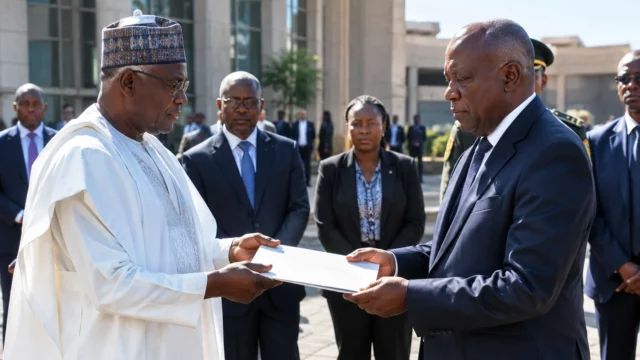
South African Minister of International Relations Ronald Lamola set out this position at a press conference in Pretoria, at the headquarters of the Department of International Relations and Cooperation, known by the acronym DIRCO. He stressed that population movements do not arise in a political vacuum. They are linked to the economy, unemployment, governance and conflict, as well as development gaps between neighbouring countries. In several public statements, the department has also advocated a pan-African approach to migration based on cooperation rather than stigmatisation.
This position is not an isolated one. The African Union itself has adopted a strategic framework on migration, the Migration Policy Framework for Africa, which notes that population movements, if better organised, can also support development. The organisation also reaffirmed in 2024 that migration should be treated as a development issue, not simply as a security problem.
In southern Africa, Pretoria knows the discussion involves not only Nigeria or Ghana, with whom diplomatic tensions have attracted attention. It also concerns immediate neighbours such as Malawi, Mozambique and Zimbabwe, whose nationals live and work in South Africa in large numbers, or seek a more stable status there. Relations with these countries weigh heavily on the stability of the Southern African Development Community, SADC.
Deportations, street anger and the question of root causes
The issue took a more hardline turn because of anti-immigration protests. Groups such as March and March have called for the deportation of migrants in an irregular situation and a visible tightening of border controls. In several localities, migrants said they had been assaulted. Once again, the South African government had to contend with two realities at the same time: pressure from part of the public and the need to protect fundamental rights.
The government has also highlighted its repatriation operations. Pretoria said at least 68,000 people had been sent back between June and July 2024, either through deportations or repatriation. This figure should be treated with caution: the authorities have not clearly specified the exact split between supervised voluntary departures and administrative deportations. They did, however, say that most of those concerned came from Malawi, followed by Zimbabwe and Mozambique.
This point is central. A policy of mass removals may calm some of the public in the short term. But it does not address the causes driving people to leave: income disparities, weak public services, insecurity, the informal economy and the closure of some legal routes for movement. This is precisely what Lamola sought to emphasise when he spoke of “push and pull factors” — what attracts people to South Africa and what drives them to leave their country of origin. This analytical framework is consistent with recent African research on migration governance.
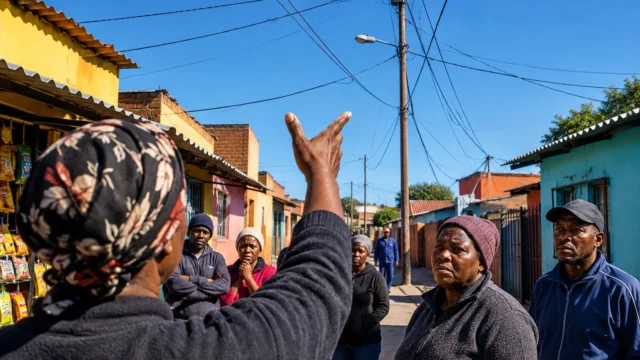
For communities, the issue is tangible. In cities, competition for low-skilled jobs, housing and some public services fuels tensions. In border areas, the movement of people also raises administrative and humanitarian questions. The state faces a dual challenge: enforcing the law without allowing violence against foreigners to become normalised. For neighbouring countries, the episode revives questions about the social cost of labour migration, long presented as a quiet pillar of the regional economy.
A test for southern Africa and the African Union
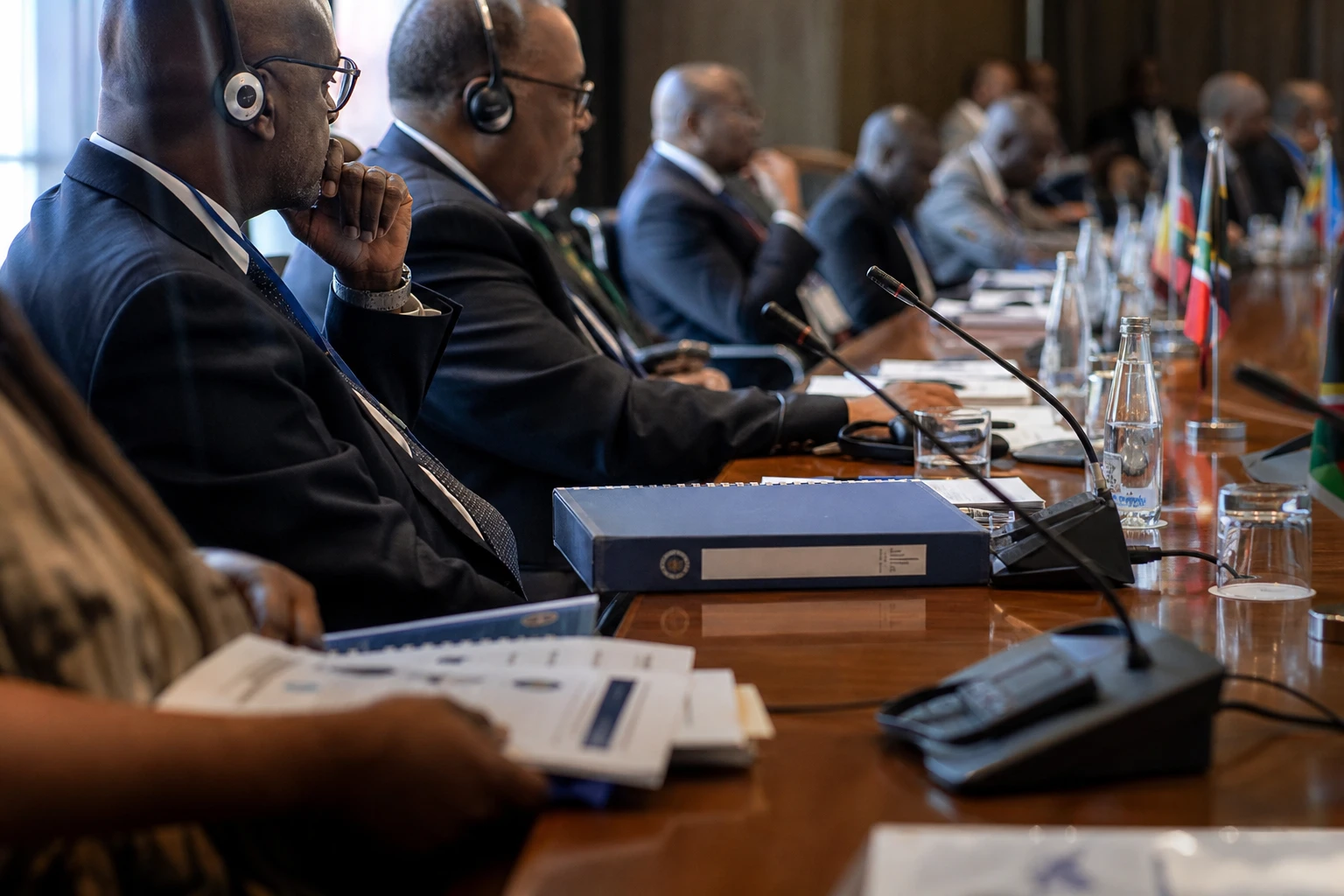
The SADC summit, held in Harare in August 2024, showed that South Africa’s domestic crises can quickly take on a regional dimension. Mobility, cross-border work and forced returns are already among the issues that directly affect member states. The debate opened by Pretoria therefore goes beyond relations between South Africa and its immediate neighbours. It touches on the continent’s ability to devise joint responses within the framework of the African Union and regional economic communities.
At the pan-African level, the affair is a reminder of a simple truth: no capital can manage the effects of structurally entrenched regional migration on its own for long. Pretoria wants to avoid being singled out as solely responsible. Countries of origin, for their part, expect their nationals to be protected. The African Union, meanwhile, faces its own promise of integration: enabling people to move with greater dignity, without denying security and sovereignty constraints.
What happens next will depend on the balance struck between diplomacy, borders and employment. That is where the credibility of South Africa’s response will be decided. More broadly, it will test Africa’s ability to speak with one voice on mobility that it can neither demonise nor leave without rules.