Algeria
 Egypt
 Libya
 Morocco
 Sudan
 Tunisia
 Benin
 Burkina Faso
 Cabo Verde
 Côte d'Ivoire
 Ghana
 Guinea
 Guinea-Bissau
 Liberia
 Mali
 Mauritania
 Niger
 Nigeria
 Senegal
 Sierra Leone
 The Gambia
 Togo
 Central African Republic
 Chad
 DR Congo
 Equatorial Guinea
 Gabon
 Republic of the Congo
 São Tomé and Príncipe
 Burundi
 Comoros
 Djibouti
 Eritrea
 Ethiopia
 Kenya
 Madagascar
 Malawi
 Mauritius
 Mozambique
 Rwanda
 Seychelles
 Somalia
 South Sudan
 Tanzania
 Uganda
 Angola
 Botswana
 Eswatini
 Lesotho
 Namibia
 South Africa
 Zambia
 Zimbabwe
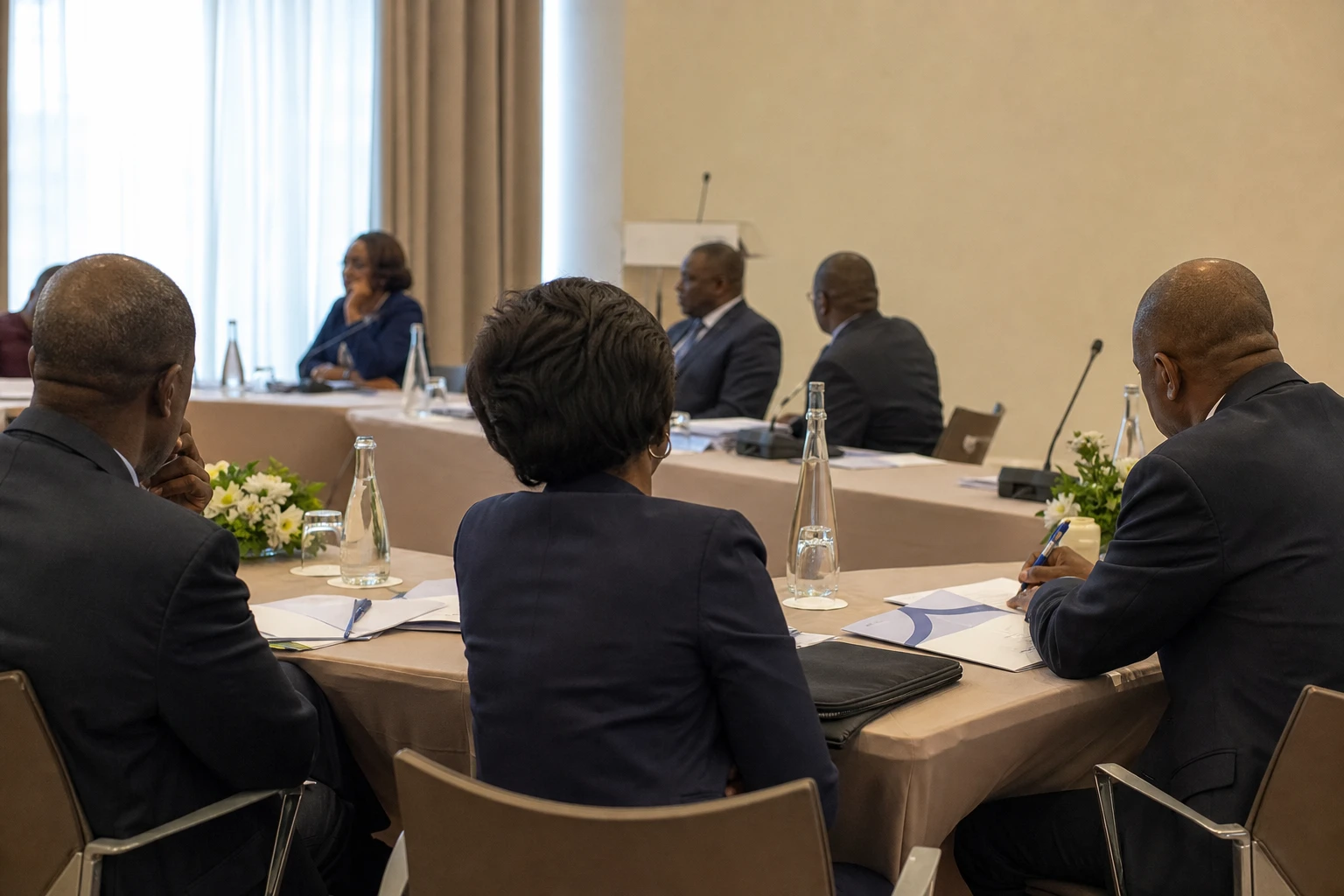
In Yaoundé, asylum logic turned on its head
When someone has secured protection against being returned to their country, they may think they have bought time, perhaps even a chance to start again elsewhere. In the case shaking Yaoundé, however, that security ended at the border of a third country: Cameroon, where migrants expelled from the United States say they find themselves without clear status or papers, and fear they may ultimately be sent back to the places they fled. Rights organisations and several media outlets have already documented this “third-country transfer” mechanism, used by Washington to circumvent certain judicial protections.
The issue goes beyond the migration dispute itself. It touches on the right to asylum, state sovereignty and Cameroon’s image in a Central Africa already marked by mass displacement. The country belongs to CEMAC, the Central African Economic and Monetary Community, which brings together six states: Cameroon, Congo, Gabon, Equatorial Guinea, the Central African Republic and Chad. Meanwhile, UN agencies report that Cameroon remains a place of refuge and transit for refugees and internally displaced people, amid a severe humanitarian situation.
What is known about expulsions to Cameroon
The first cases made public in February 2026 showed that non-Cameroonian migrants had been sent to Yaoundé by the United States, despite protection orders issued by US courts. Lawyers described a group that included people from Zimbabwe, Ghana and Morocco. Human Rights Watch later said that, in January and February, 17 men and women from nine African countries had been transferred to Cameroon under a secret agreement. Other counts subsequently referred to additional arrivals, explaining why the figures made public vary according to the date and source.
The broader picture emerging from the raw information on the case is more extensive still: 36 nationals of nine African countries are said to have been expelled to Cameroon between January and May 2026. This increase is consistent with successive disclosures about a growing number of flights and the expansion of “third-country” agreements. AP reported that a new group of people had indeed been brought to Yaoundé in February, while US officials acknowledged the existence of flights without providing details. The common thread remains the same: people protected against direct return to their country of origin are left stranded in a state where they have no ties and no guarantee of long-term residence.
The nationalities cited in publicly available cross-checks point to a diverse group from across Africa: Angola, the Democratic Republic of the Congo, Ethiopia, Ghana, Kenya, Morocco, Senegal, Sierra Leone and Zimbabwe. This diversity confirms that Cameroon has not become a nearby destination, but an imposed transit point. The mechanism particularly affects people already in a precarious legal position: asylum seekers, people protected by a US judge, or migrants whose return to their country of origin could expose them to persecution or torture.
According to lawyers cited in international news reports, some detainees agreed to return to their countries of origin after arriving in Cameroon, while others continue to refuse, believing the choice to be dangerous. One of the most sensitive issues is precisely this indirect pressure: if the third country ends their detention and offers no option other than departure for the country that US courts had ruled out, the initial protection loses much of its force. Legal experts call this a form of indirect refoulement, or “chain refoulement”, already denounced by several NGOs.
What this case means for Cameroon and Central Africa
For Yaoundé, the case has immediate political implications. It puts the executive on sensitive ground: migration cooperation with Washington, even as the Cameroonian government has yet to publish the terms of any possible agreement. Investigative reports have referred to broader diplomatic exchanges between the two capitals, at a time when the United States has also negotiated or activated similar arrangements with other African countries. The sums and terms vary from one case to another, but the underlying logic is the same: outsourcing the management of expulsions to third countries.
This strategy also puts Cameroon face to face with its own legal obligations. The country is party to the 1951 Convention relating to the Status of Refugees, and its institutions already manage returns, displacement and the protection of vulnerable people, with support from the IOM and UNHCR. The argument put forward by those defending the people expelled is straightforward: people whom a court has expressly protected from return to their country of origin cannot be transferred to a country that is safe in appearance only. In practice, this undermines access to lawyers, appeals and a clearly defined legal status.
On the ground, the consequences are very tangible. For people detained in Yaoundé, the issue is not abstract: they are waiting for a document, a hearing, a decision or a release ticket. For families back home, the uncertainty continues. And for the Cameroonian government, the issue lies at the intersection of diplomatic pressure, migration control and reputational risk. In a capital such as Yaoundé, where administrative decisions have an immediate bearing on individual rights, this kind of case quickly becomes a test of institutional transparency.
Across the continent, the Cameroon case is part of a wider trend. Ghana, Eswatini, Rwanda, South Sudan, the Democratic Republic of the Congo, Equatorial Guinea and other countries have already been mentioned in this new market in expulsions. The continent is thus becoming a testing ground for a US migration policy that advances through discreet agreements, without clear public debate about the safeguards offered to those affected. For Central Africa, the question will be whether these arrangements remain diplomatic exceptions or become an enduring precedent, at a time when CEMAC is seeking to strengthen regional cohesion and several states in the region are already bearing a heavy humanitarian burden.
Ultimately, this case resonates far beyond Yaoundé because it touches on a simple principle: can a state transfer someone whom a judge has protected to a third country, then consider its responsibility to end there? The next court rulings and further disclosures about possible agreements between Washington and African capitals will show whether this mechanism remains a diplomatic makeshift or becomes a new migration routine.