
 Algeria
 Egypt
 Libya
 Sudan
 Tunisia
 Benin
 Burkina Faso
 Cabo Verde
 Côte d'Ivoire
 Ghana
 Guinea
 Guinea-Bissau
 Liberia
 Mali
 Mauritania
 Niger
 Nigeria
 Senegal
 Sierra Leone
 The Gambia
 Togo
 Cameroon
 Central African Republic
 Chad
 DR Congo
 Equatorial Guinea
 Gabon
 Republic of the Congo
 São Tomé and Príncipe
 Burundi
 Comoros
 Djibouti
 Eritrea
 Ethiopia
 Kenya
 Madagascar
 Malawi
 Mauritius
 Mozambique
 Rwanda
 Seychelles
 Somalia
 South Sudan
 Tanzania
 Uganda
 Angola
 Botswana
 Eswatini
 Lesotho
 Namibia
 South Africa
 Zambia
 Zimbabwe
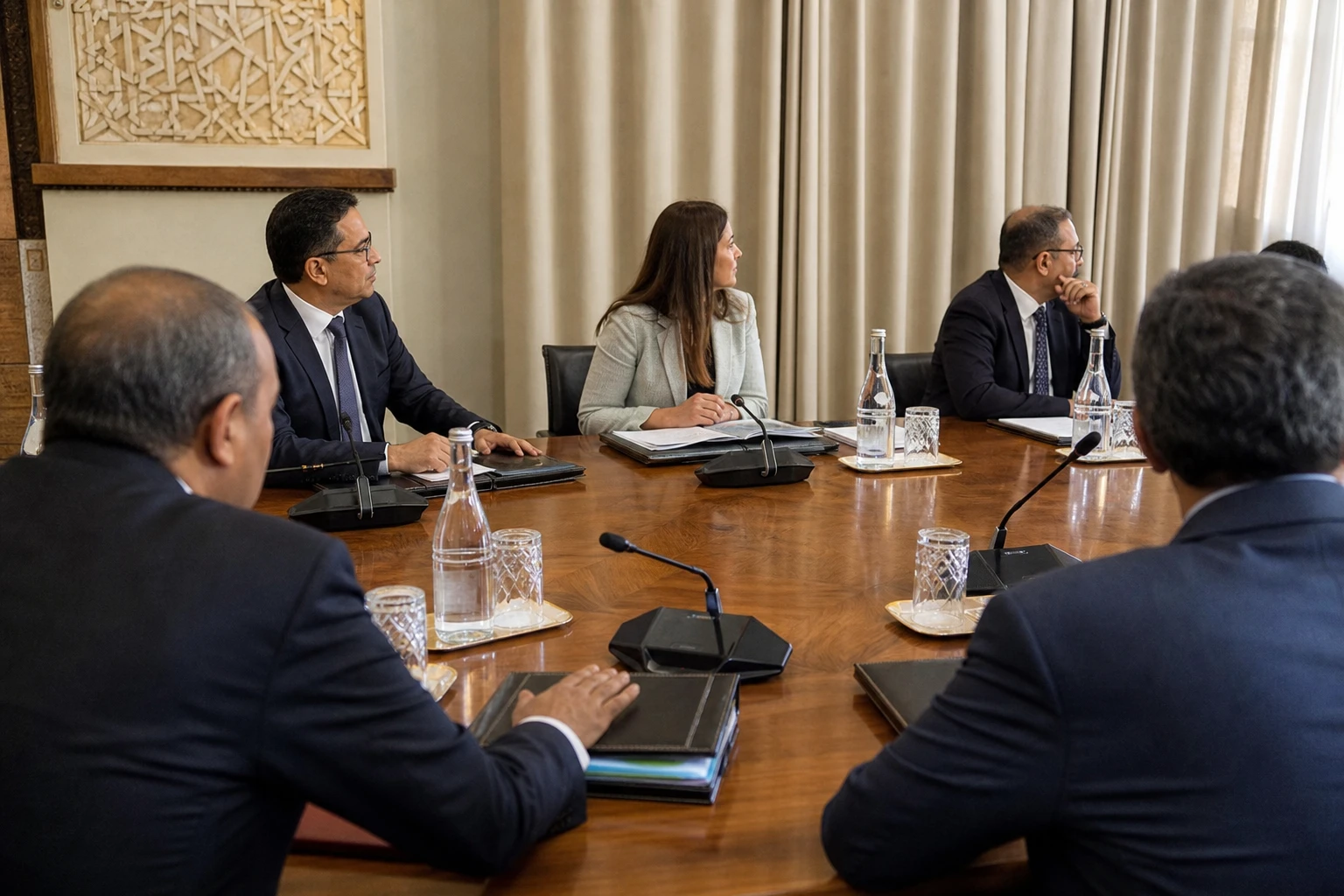
Between a closed border and migration pressure, an old fault line returns to the fore
On the edge of Morocco and the Spanish enclaves of Ceuta and Melilla, the border is never merely a line on a map. It brings together security, mobility, local trade and sovereignty issues that extend far beyond the two cities. The slightest surge in migration immediately revives a broader question: how should a border area be managed when families, workers, security forces and local authorities are permanently interdependent?
Against this backdrop, Juan José Imbroda, president of Melilla, has called for the creation of a 500-metre neutral zone along the borders of Melilla and Ceuta, following a fresh episode of intense migration pressure on Ceuta. The request comes amid a long-running sequence of events: the enclaves, on Morocco’s northern coast, have for years been sensitive crossing points between Africa and the Schengen area.
What the facts show: a political call, a security response and a judicial case on the Moroccan side
On 17 May 2021 and in the days that followed, Ceuta saw a mass influx of people setting off from northern Morocco, in a movement that temporarily disrupted the Spanish city and mobilised security forces on both sides of the border on a large scale. The figures most commonly cited at the time put arrivals at about 8,000 over a few days, with more than 6,500 returning to Morocco in less than a week. Other counts, published later, referred to nearly 73,500 returns or expulsions, but this figure apparently combines several waves, periods and counting methods; it should therefore be treated with caution.
During the May 2021 Ceuta crisis, international and Spanish media also reported deaths among people trying to reach the enclave by swimming, with tolls varying according to the time and source. Here too, cross-checking is essential: several sources confirmed the severity of the episode, but the exact total depends on the scope used and the point at which the count was made.
On the judicial front, Morocco’s courts have also brought prosecutions related to the unrest at the border. A first-instance case involved 25 suspects, facing charges ranging from armed resistance to security forces and violence against public officials to the destruction of public infrastructure and, for some, migrant smuggling. This information circulated in several versions, but it is consistent with a clear judicial approach: Rabat sought to distinguish the influx of migrants from suspicions of organisation, people-smuggling and rioting at the border.
For its part, Morocco has always presented migration as a matter of governance, not just policing. The Kingdom regularly points to its efforts to advance an agenda on migration and mobility at African level, particularly through the African Union. This position does not remove the need for controls, but places the debate in a broader framework: the movement of people, South-South cooperation and shared responsibility for the root causes of departures.
Why the “neutral zone” proposal matters for Morocco, Spain and the wider region
The proposal for a 500-metre buffer zone is not merely technical. It reflects a desire to redraw the relationship with a border that periodically becomes a flashpoint. For Melilla, it would mean greater distance between the city and crowds, but also tighter control over an area that is already heavily militarised. For Morocco, accepting such a zone would mean formalising an even more rigid border arrangement, at a time when managing crossings with Ceuta remains a sensitive issue in bilateral relations.
In the Moroccan towns near Ceuta and Melilla, the stakes are tangible. Fnideq, on the Moroccan side, depends heavily on small businesses, informal activities and cross-border movement. When crossings become more restricted, daily incomes are the first to shrink. For the authorities, by contrast, the priority becomes controlling crowds, combating smuggling networks and preventing mass departures. This imbalance explains why each border crisis looks different depending on whether one is speaking of government agencies, families, transport operators or traders.
The regional dimension is just as clear. Ceuta and Melilla are the European Union’s only land borders with the African continent. Their situation therefore continues to shape debates on European migration policy, cooperation between Rabat and Madrid, and, more broadly, the balance between North Africa, the western Mediterranean and the Schengen area. With each flare-up, the tension between security, asylum rights and economic mobility is also played out again.
An issue that extends beyond Ceuta and Melilla
For Morocco, the issue touches on a strategic priority: demonstrating that it remains a key player in regional stability, while rejecting the idea that its northern coast should serve as a pressure valve for European crises. For Spain, the challenge is to protect two exposed enclaves without giving the impression that a purely security-based response would be enough. And for the African Union, the episode is a reminder that no sustainable migration policy can work without cooperation with countries of origin, transit and destination.
One fundamental question remains: as long as the border is the only visible point of response, every shift in tensions may revive the same calls for closure, the same criticism and then the same return to normality. The events set in motion by Ceuta show instead that, in North Africa, the border has become a political negotiating space in its own right, where Moroccan sovereignty, Spanish security and the mobility of thousands of people intersect.



