Algeria
 Egypt
 Libya
 Morocco
 Sudan
 Tunisia
 Benin
 Burkina Faso
 Cabo Verde
 Côte d'Ivoire
 Ghana
 Guinea
 Guinea-Bissau
 Mali
 Mauritania
 Niger
 Nigeria
 Senegal
 Sierra Leone
 The Gambia
 Togo
 Cameroon
 Central African Republic
 Chad
 DR Congo
 Equatorial Guinea
 Gabon
 Republic of the Congo
 São Tomé and Príncipe
 Burundi
 Comoros
 Djibouti
 Eritrea
 Ethiopia
 Kenya
 Madagascar
 Malawi
 Mauritius
 Mozambique
 Rwanda
 Seychelles
 Somalia
 South Sudan
 Tanzania
 Uganda
 Angola
 Botswana
 Eswatini
 Lesotho
 Namibia
 South Africa
 Zambia
 Zimbabwe
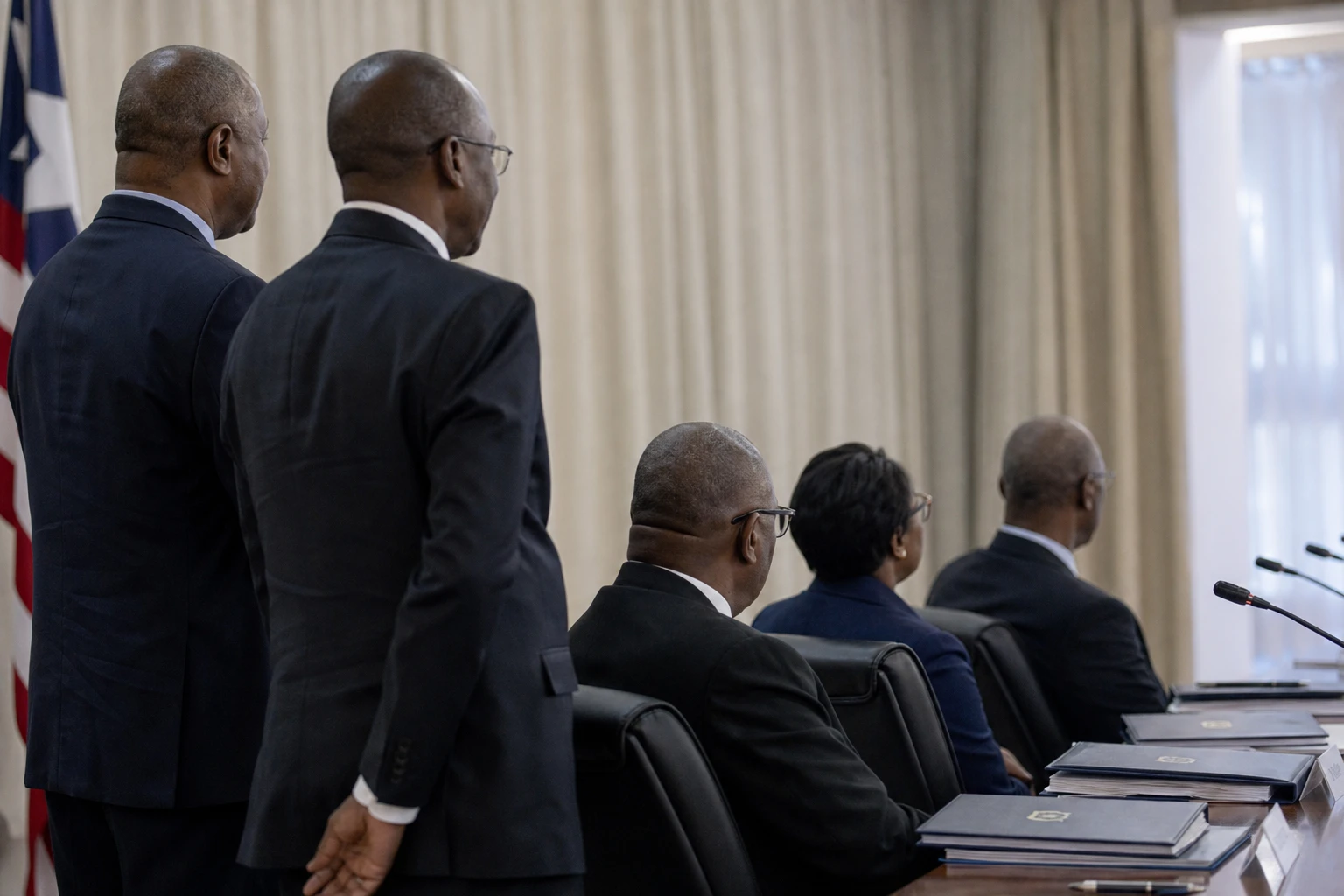
In Monrovia, drugs are no longer just a police matter
In Liberia, cocaine seizures tell more than the story of a smuggling route. They also reveal the vulnerability of the country’s points of entry, from airports to logistics warehouses, and the pressure this trafficking puts on the state. When officials tasked with screening goods are themselves suspected of allowing a shipment through, the issue is no longer merely criminal. It strikes at public trust.
President Joseph Boakai has put the case within a firm line already evident for several months. In Monrovia, his administration has suspended or removed various public officials in sensitive cases, in the name of institutional integrity. In the case of narcotics, the stakes are even broader: Liberia is not a major producing country, but it lies on a West African route that has become central to cocaine transit between South America and Europe.
What the investigation uncovered
The most recent events date back to late July 2026. Liberian authorities announced the destruction of around 4.2 tonnes of cocaine, with an estimated value of $336 million, following an operation described as the largest seizure in the country’s history. A few days earlier, they had already reported another major interception, valued at $317 million, with the arrest of two foreign nationals in Duazon, near Monrovia.
This wave of seizures triggered an internal investigation. Officials from the police, security services and airport have been implicated. They include senior officers from the highway patrol, the major crimes unit and a deputy commander assigned to the country’s main airport. According to information made public, officers allegedly helped escort the shipment after it arrived in Liberia.
The case did not come out of nowhere. In June 2026, authorities had already intercepted around 237.6 kilograms of cocaine at Roberts International Airport, outside Monrovia, with a stated value of more than $19 million. The investigation then involved the national police, the drug enforcement agency, security services, customs and other public institutions. That case provided a starting point for a broader reassessment of the control mechanisms in the airport chain.
Why this case goes beyond security alone
In Liberia, these seizures first and foremost undermine the credibility of institutions. The country is emerging from years of governance marked by corruption, unfinished reforms and administrations often accused of weak enforcement. Boakai, elected in 2023, has made administrative discipline and the fight against public-sector abuses a focus of his term. The problem here is that cocaine trafficking never thrives alone: it relies on complicity, logistical networks and grey areas where the state loses its ability to screen.
For the population, the impact is direct. In regional capitals and in Monrovia’s outlying neighbourhoods, cocaine is not a distant trade. It feeds networks of corruption, sustains parallel economies and sometimes fuels local consumption. For years, UNODC has highlighted West Africa’s emergence as a major transit area, where volumes bound for Europe cross states with uneven enforcement capacity. West African regional authorities have also put the monitoring of drug markets at the heart of their recent work.
The economic risk is twofold. On the one hand, traffickers exploit official infrastructure, notably airports, warehouses and logistics companies. On the other, the country’s image suffers among airlines, insurers, investors and security partners. A cocaine case on this scale is therefore no simple court story. It can affect the cost of controls, the reputation of commercial supply chains and Monrovia’s ability to demonstrate its reliability in the region.
A West African warning, not an isolated case
Liberia is part of a wider trend in West Africa. The region is regularly cited by UNODC and ECOWAS mechanisms as a transit corridor between South American producers and European markets. Recent seizures in Liberia, as well as elsewhere in the Gulf of Guinea and the Atlantic Sahel, show that trafficking is shifting towards areas where controls are permeable and local complicity is possible.
What Monrovia is watching today, then, is not just the outcome of a court case. It is the country’s ability to turn a border crisis into lasting reform. That requires credible investigations, sanctions that do not stop with those carrying them out, and genuine coordination between the police, customs, justice system and internal security. This is also where the issue takes on a continental dimension: as routes change, states that maintain effective controls strengthen the entire West African Atlantic seaboard. Those that hesitate, by contrast, offer networks a foothold.